
Physiology Monitoring and Alerting System and Process
a monitoring system and alerting technology, applied in the field of physiology monitoring and alerting system and process, can solve the problems of requiring relatively sophisticated and complex radar equipment, allowing unobtrusive monitoring of a person's physiology, and requiring a large amount of sophisticated radar equipmen
- Summary
- Abstract
- Description
- Claims
- Application Information
AI Technical Summary
Benefits of technology
Problems solved by technology
Method used
Image

Examples
Embodiment Construction
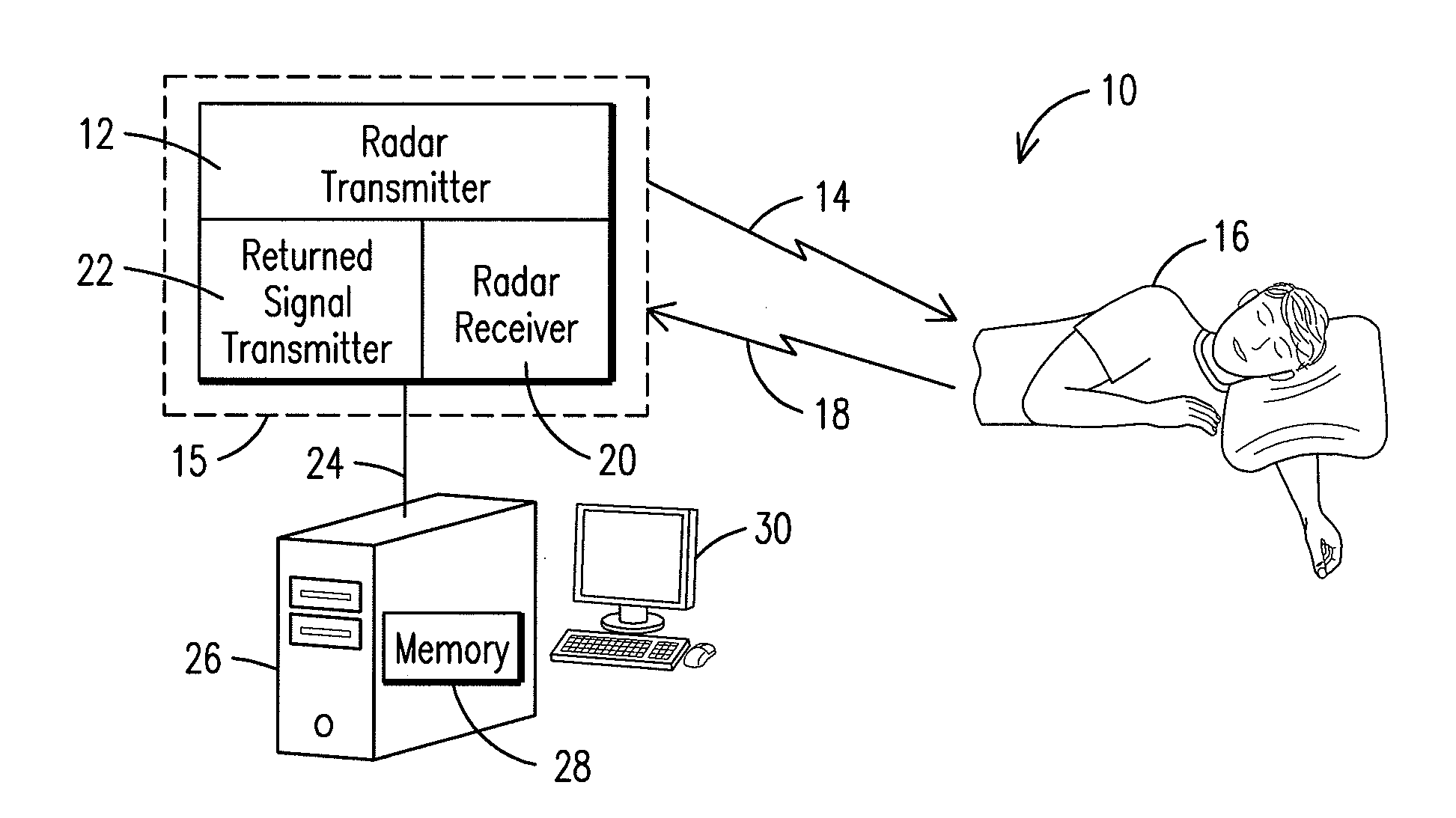
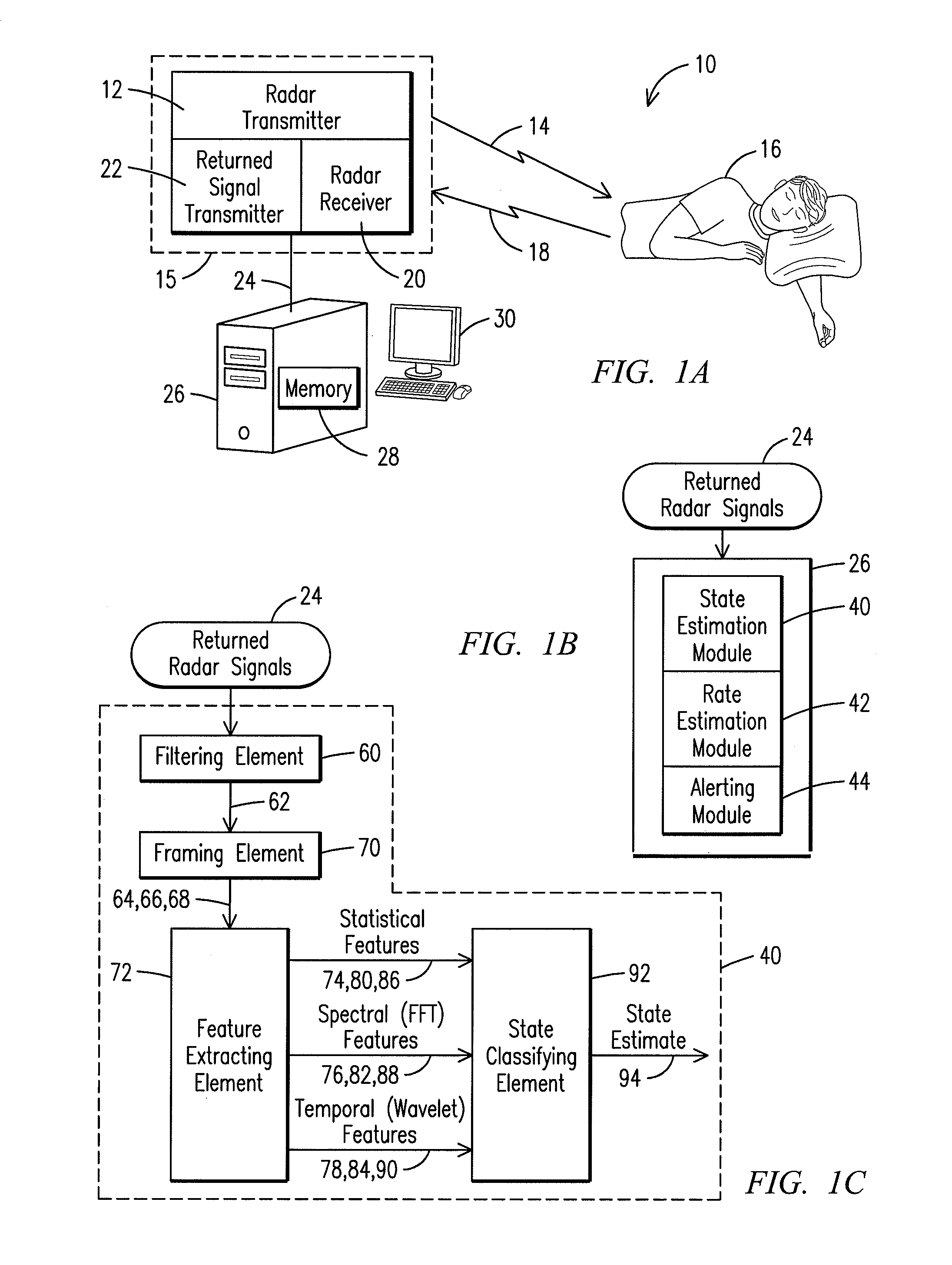
[0018]The present disclosure describes systems and techniques employing RADAR hardware together with software that permits physiological monitoring of subjects.
[0019]Many environments and applications exist where a low cost, unobtrusive physiology monitoring system provide benefit. For example, such a system would enable correctional institution staff to monitor inmate physiology. Information gathered from the system could alert prison staff to potential health problems, including suicide attempts. Other examples include physiological monitoring of patients at nursing homes, hospitals and care facilities. A further example relates to physiological monitoring of a person at home. However, RADAR units sophisticated enough to perform such monitoring have historically been too expensive for such institutions to afford.
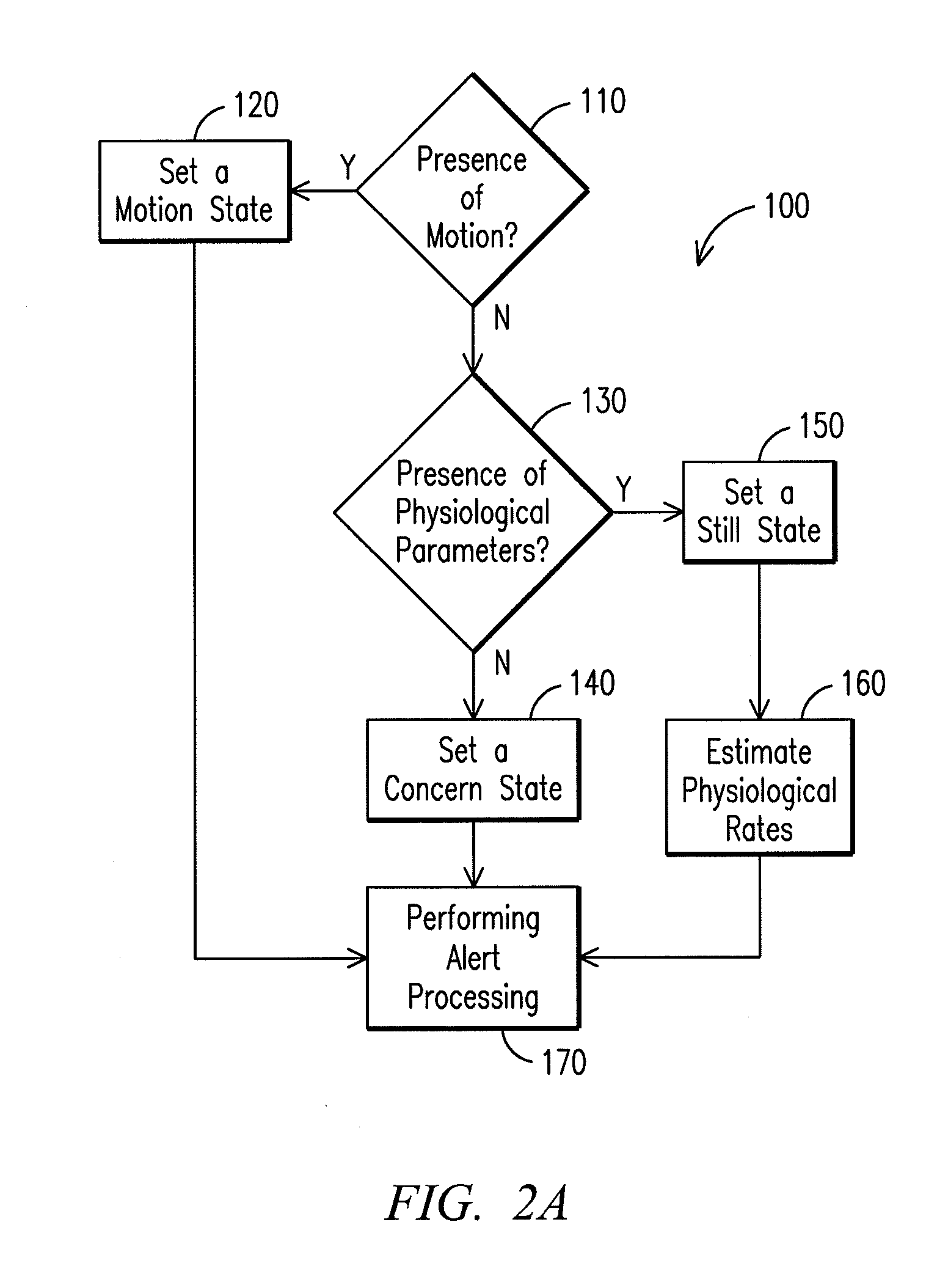
[0020]The present monitoring system in one embodiment can be viewed in terms of the hardware employed, and the processing performed to the signal returned to the RADAR rec...
PUM
 Login to View More
 Abstract
Description
Claims
Application Information
 Login to View More