

System for DNA Identification Hiding Personal Traits
a technology of dna sequence and personal traits, applied in the field of dna sequence identification system, can solve the problems of inability to submit samples, inability to detect and detect samples, and inability to detect samples,
- Summary
- Abstract
- Description
- Claims
- Application Information
AI Technical Summary
Benefits of technology
Problems solved by technology
Method used
Image

Examples
Embodiment Construction
[0009]A system creates unique personal identifiers from DNA level variants of a human individual within genetic markers. Advantageously, no personal, health-related biological information is inferable from the personal identifiers. The system enables a population to contribute DNA samples for purposes of establishing identity in a secure manner and also enables determining or excluding a DNA match of an acquired sample with individual samples of a pre-sequenced database of samples. The system enables entities to take advantage of the uniqueness properties of DNA level variants within genetic markers while overcoming reluctance to store personal biological information.
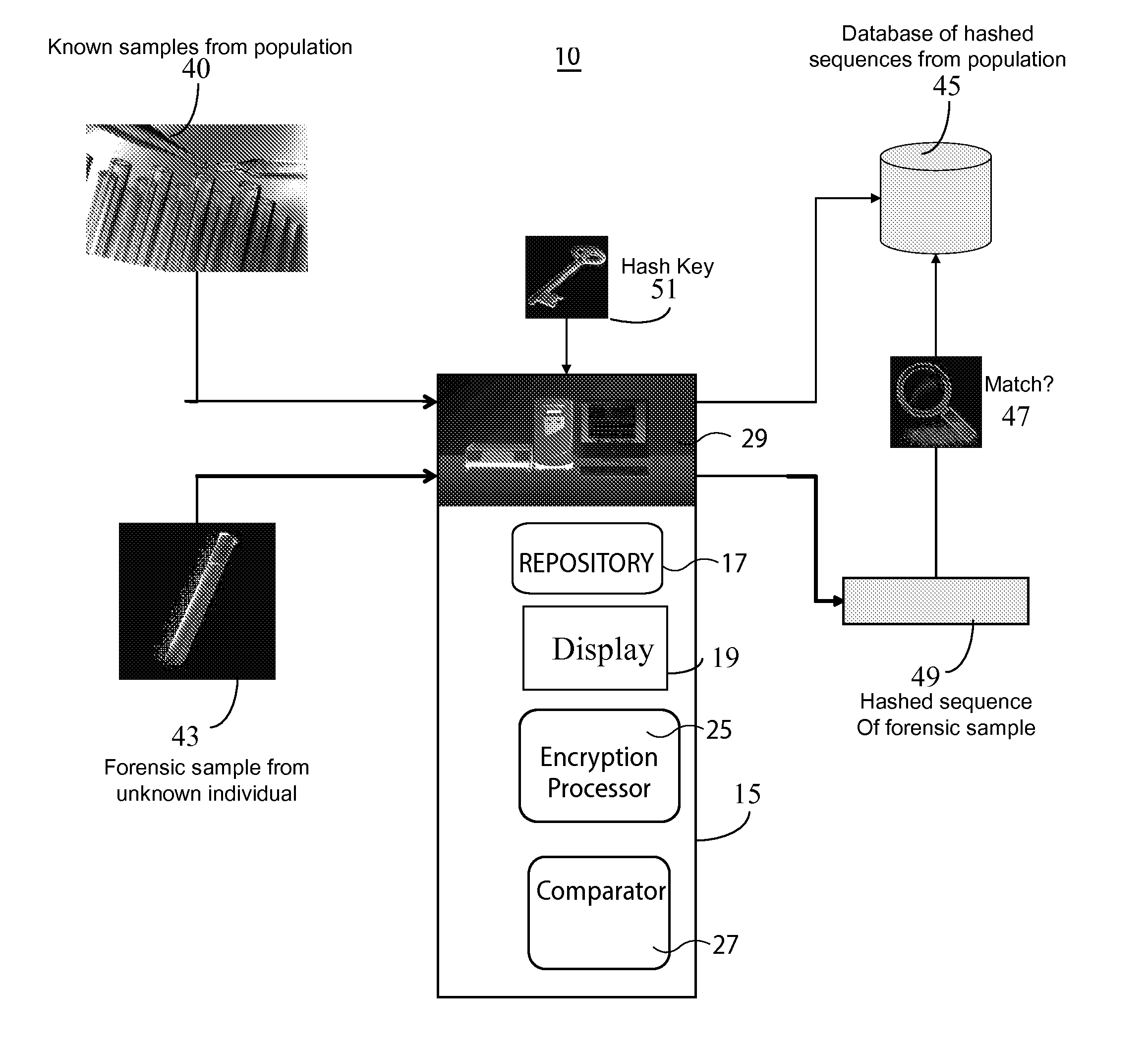
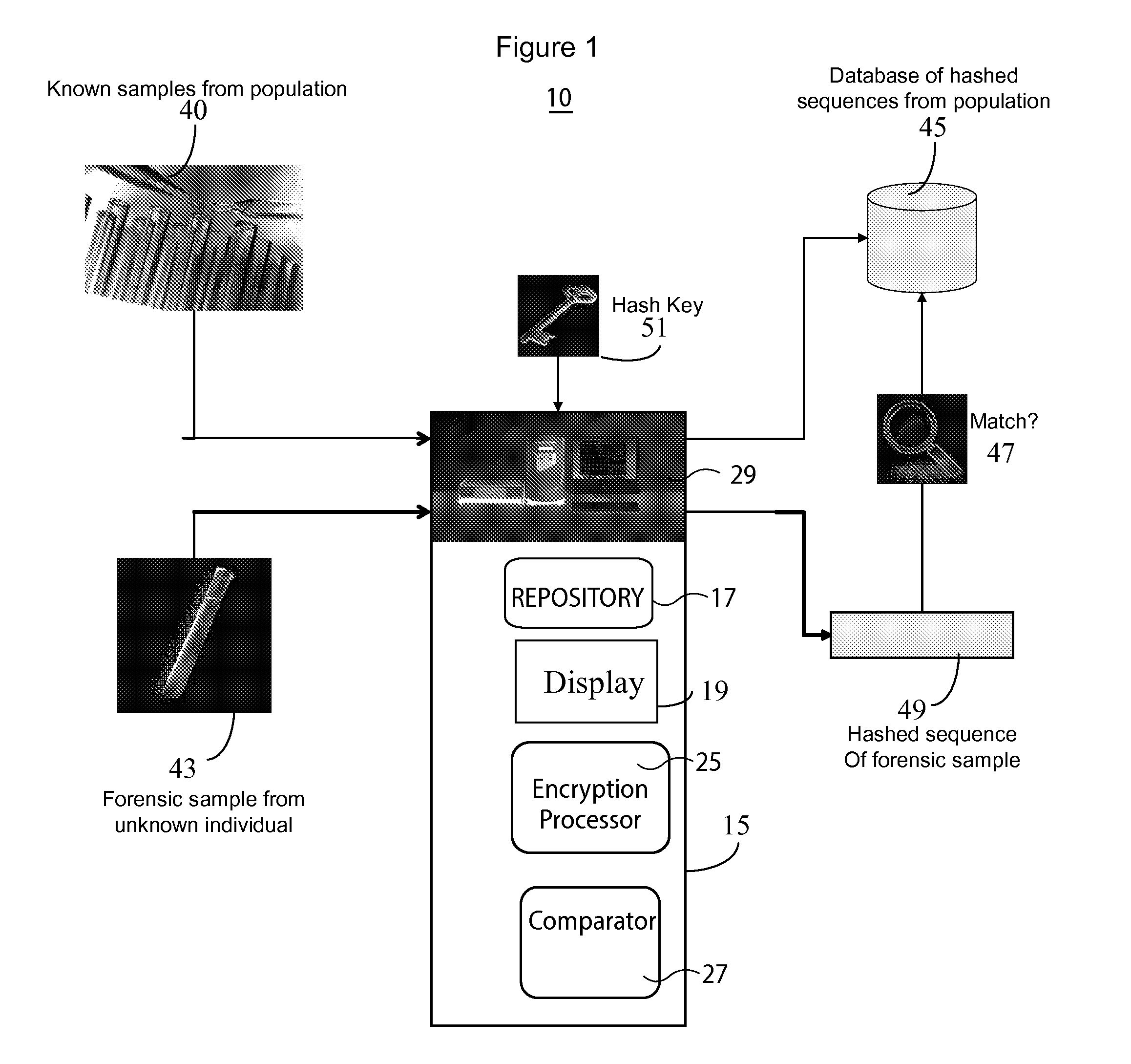
[0010]FIG. 1 shows system 10 for DNA sequence identification that hides personal and medical characteristics. System 10 includes one or more processing devices 15 comprising a DNA sequencing machine 29, display 19, encryption processor 25, at least one repository 17 and comparator 27. Display 19 includes a Graphical Use...
PUM
 Login to View More
 Abstract
Description
Claims
Application Information
 Login to View More