
System and Method for Adaptive Transmission Time Interval (TTI) Structure
- Summary
- Abstract
- Description
- Claims
- Application Information
AI Technical Summary
Benefits of technology
Problems solved by technology
Method used
Image

Examples
Embodiment Construction
[0020]The making and using of the presently preferred embodiments are discussed in detail below. It should be appreciated, however, that the present invention provides many applicable inventive concepts that can be embodied in a wide variety of specific contexts. The specific embodiments discussed are merely illustrative of specific ways to make and use the invention, and do not limit the scope of the invention.
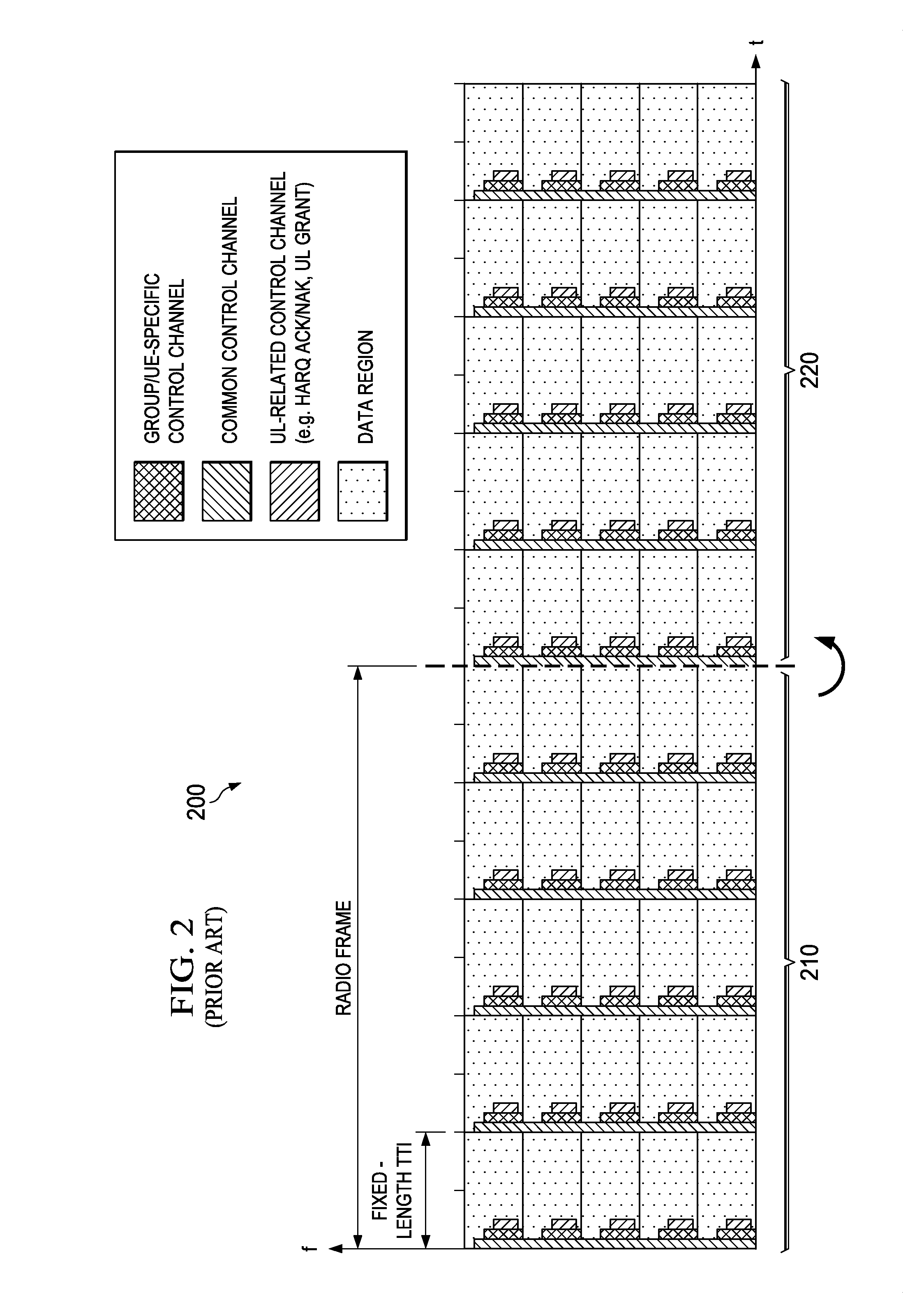
[0021]Conventional wireless networks use fixed length transport containers. For instance, networks operating under the third generation partnership (3GGP) long term evolution (LTE) release eight (rel-8) telecommunication standards use one millisecond (ms) transmission time intervals (TTIs). The length of a transport container can significantly affect latency performance and throughput performance of the network. Specifically, shorter transport containers achieve superior latency performance by providing more frequent transmission opportunities, while longer transport containe...
PUM
 Login to View More
 Abstract
Description
Claims
Application Information
 Login to View More