Enhanced fuel injection based on choke flow rate

a fuel injection and flow rate technology, applied in the field of vehicle fuel systems, can solve the problems of difficult emission control, poor drivability, and no longer constant pressure of the fuel injector, and achieve the effect of minimizing the time for fuel tank emptying and maximizing the mass flow ra

US20140311454A1Active Publication Date: 2014-10-23FORD GLOBAL TECH LLC
12 Cites 15 Cited by

Patent Information

Authority / Receiving Office
US · United States
Patent Type
Applications(United States)
Current Assignee / Owner
Publication Date
2014-10-23

Smart Images

  • Figure 1
    Figure 1
  • Figure 2
    Figure 2
  • Figure 3
    Figure 3
Patent Text Reader

Abstract

A method is described for adjusting the amount of gaseous fuel injected based on the sonic choked flow rate through a restriction. Because the sonic choke flow rate continues to decrease as tank pressure decreases, the method includes computing the sonic choke flow rate through the restriction based on system variables and enforcing the rate of CNG injection to be less than the sonic choke flow rate through the restriction. Thereby, the mass flow rate to the fuel injector can be substantially maximized to substantially minimize the time for fuel tank emptying, particularly during the last amount of tank emptying when the contents of the gaseous storage tank is low.
Need to check novelty before this filing date? Find Prior Art

Description

FIELD

[0001] The field of the description relates to vehicle fuel systems operating with gaseous fuels.BACKGROUND AND SUMMARY

[0002] Motor vehicles are known that operate on compressed natural gas. CNG is routed through a restriction and pressure regulator to supply CNG at a constant pressure to the engine fuel injectors.

[0003] A problem with motor vehicles operating on CNG is that as the tank nears empty, CNG supply to the engine fuel injector is no longer at constant pressure. Consequently, accurate control of the amount of CNG delivered to the engine becomes difficult to control as the fuel tank empties resulting in poor drivability and difficult emission controls.

[0004] One approach to addressing this problem has been to require tank refill when CNG pressure (e.g. tank pressure or fuel injection pressure) falls below a predetermined value. This type of approach results in frequent tank refills and limitation of the vehicle range of operation.

[0005] In another approach, for vehicles tha...

Examples

Embodiment Construction

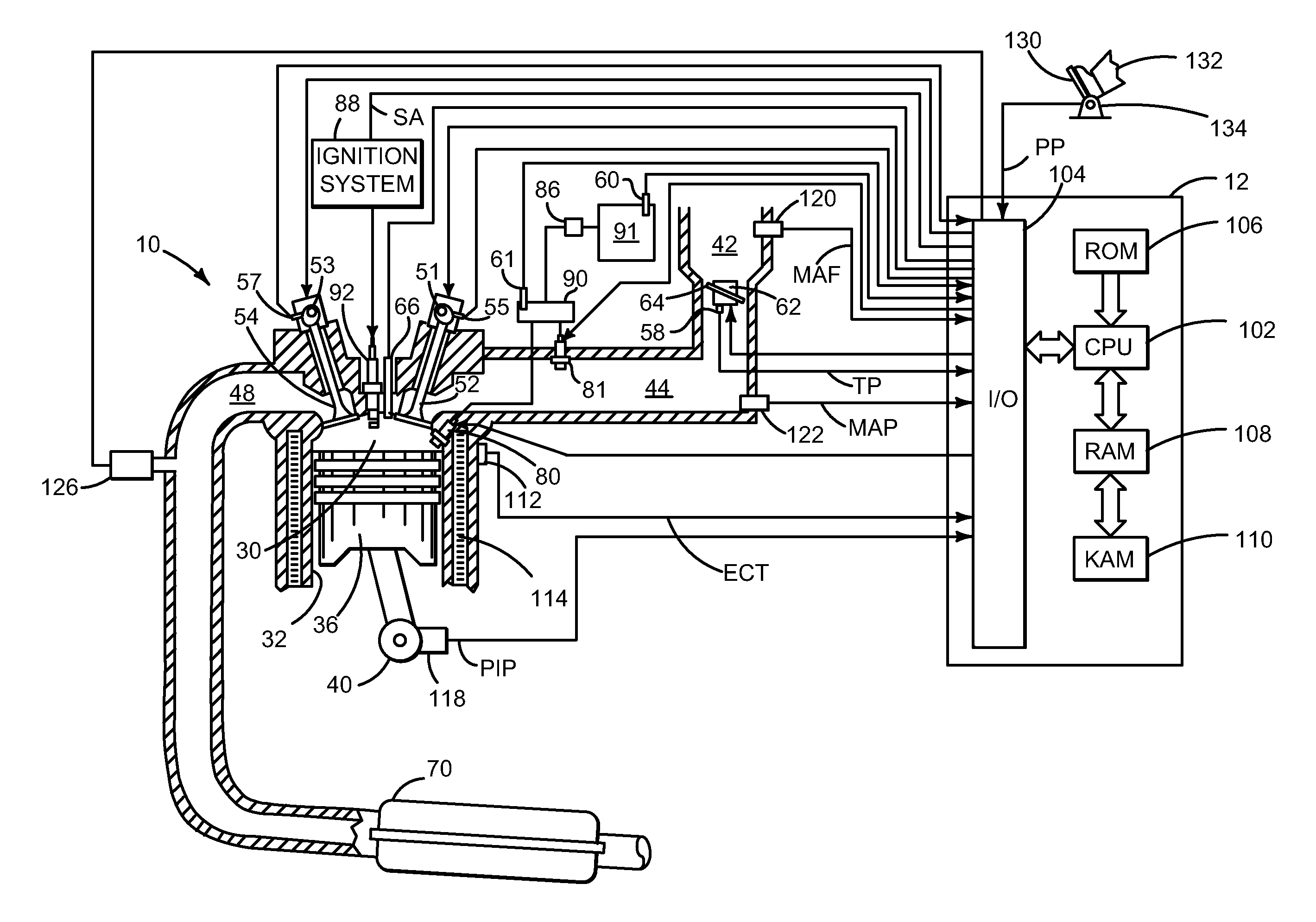
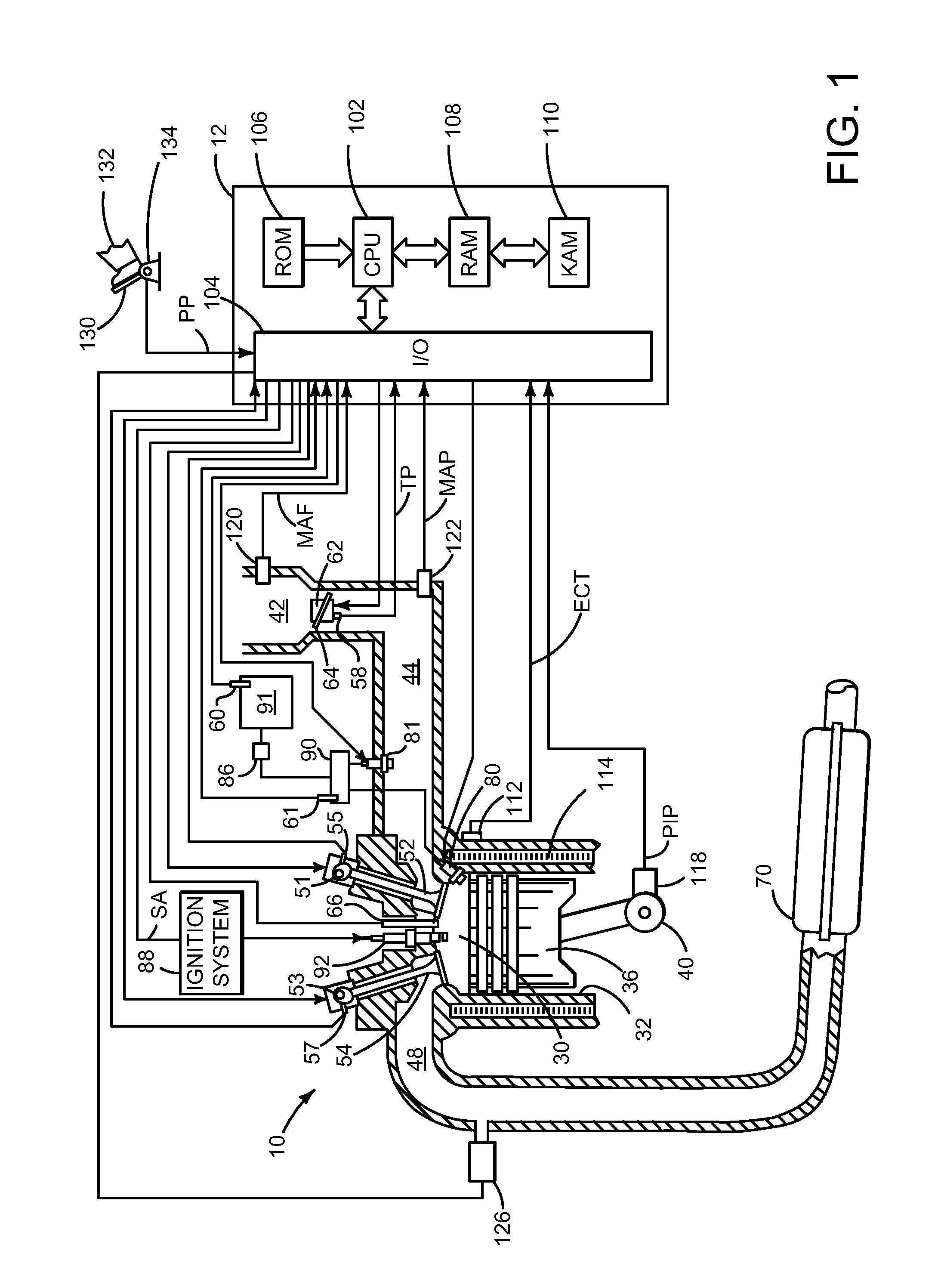
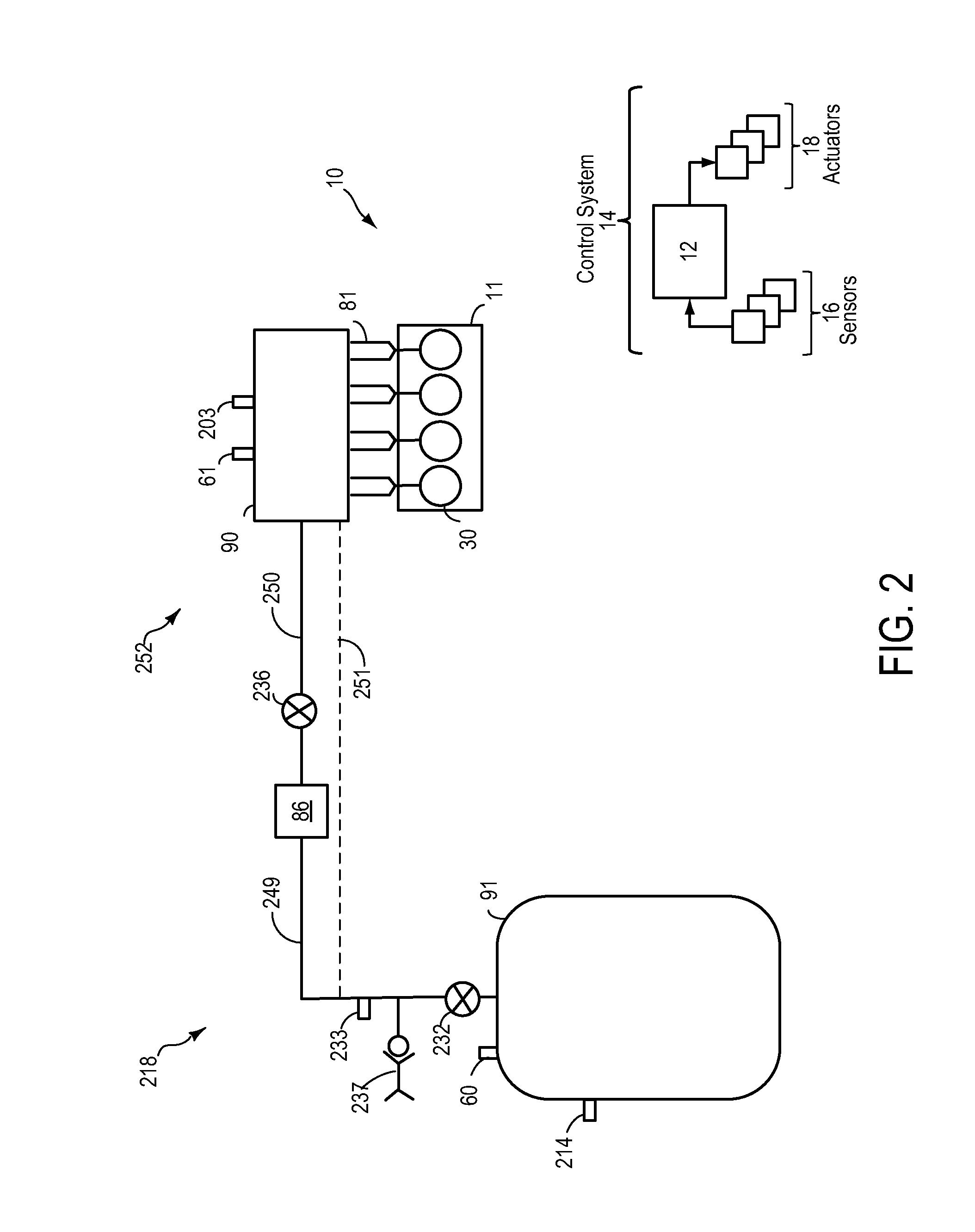
[0016]The present description is related to a method for adjusting the amount of gaseous fuel injected based on a calculated sonic choke flow rate, and co-fueling the engine with a liquid fuel in order to meet a desired load on the engine. Because the methods relate to an engine system, FIGS. 1-3 show schematic diagrams of exemplary systems within the engine. Then, FIG. 4 shows an example flow rate through a restriction during a choked sonic flow where the flow velocity remains constant. In FIGS. 5 and 6, flow charts of example methods for adjusting the rate of flow to substantially minimize time for fuel tank emptying while maintaining on average mass flow rate from the fuel injector to be less than mass flow rate of gaseous fuel delivered through a restriction to the fuel injector are included to illustrate the method. FIG. 7 then shows a simulated operating sequence according to the methods of FIGS. 5 and 6 when the engine has port gaseous fuel injectors. Thus, the sequence of FI...