Perceptually driven error correction for video transmission

a video and error correction technology, applied in the field of perception driven error correction for video sequences, can solve the problems of relying on computationally expensive local decoding and error propagation modelling, and avoiding the visibility of the measurement result, and reducing computational intensity

US20150296224A1Inactive Publication Date: 2015-10-15BRITISH TELECOMM PLC
3 Cites 19 Cited by

Patent Information

Authority / Receiving Office
US · United States
Patent Type
Applications(United States)
Current Assignee / Owner
Publication Date
2015-10-15
Estimated Expiration
Not applicable · inactive patent

Smart Images

  • Figure 1
    Figure 1
  • Figure 2
    Figure 2
  • Figure 3
    Figure 3
Patent Text Reader

Abstract

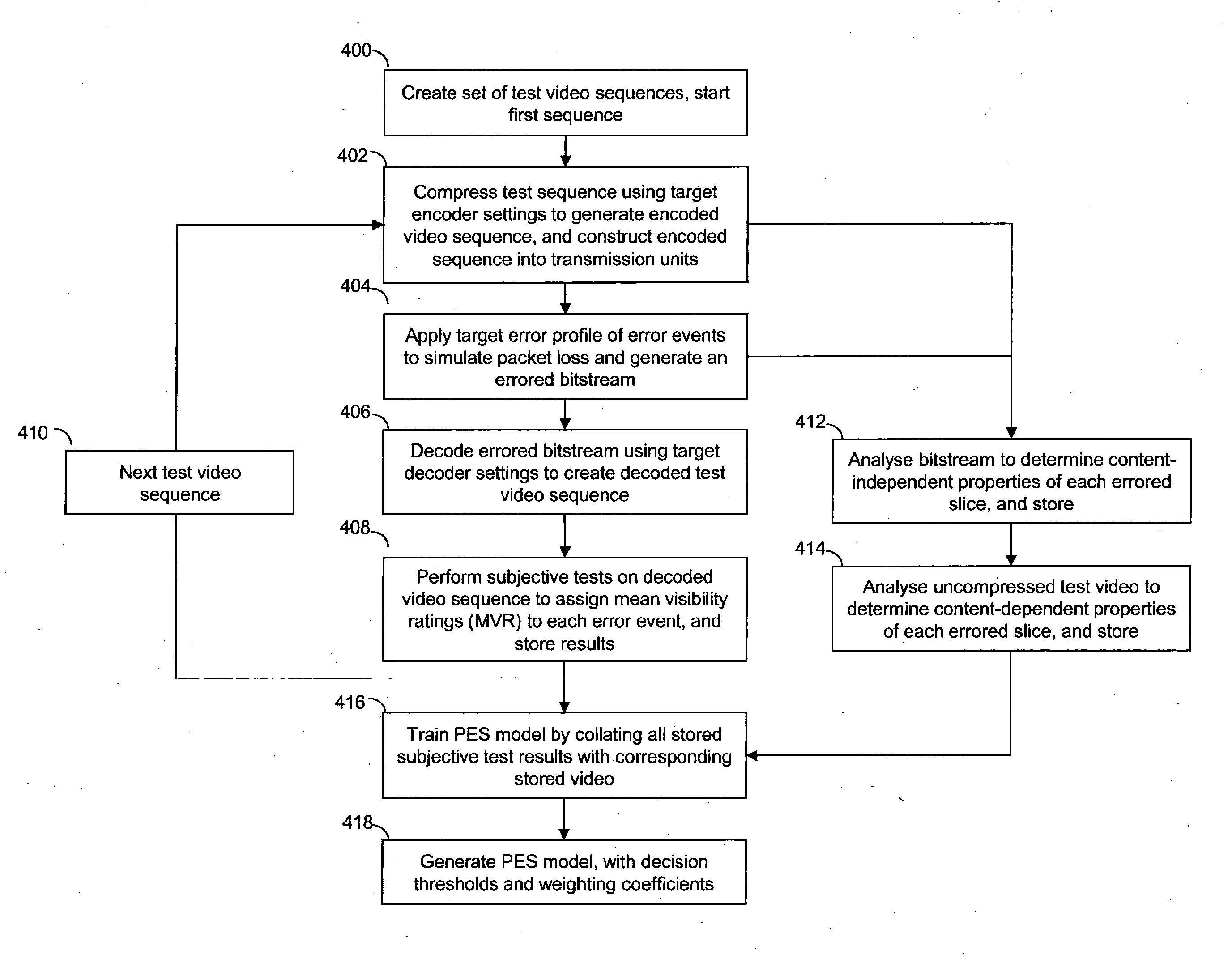
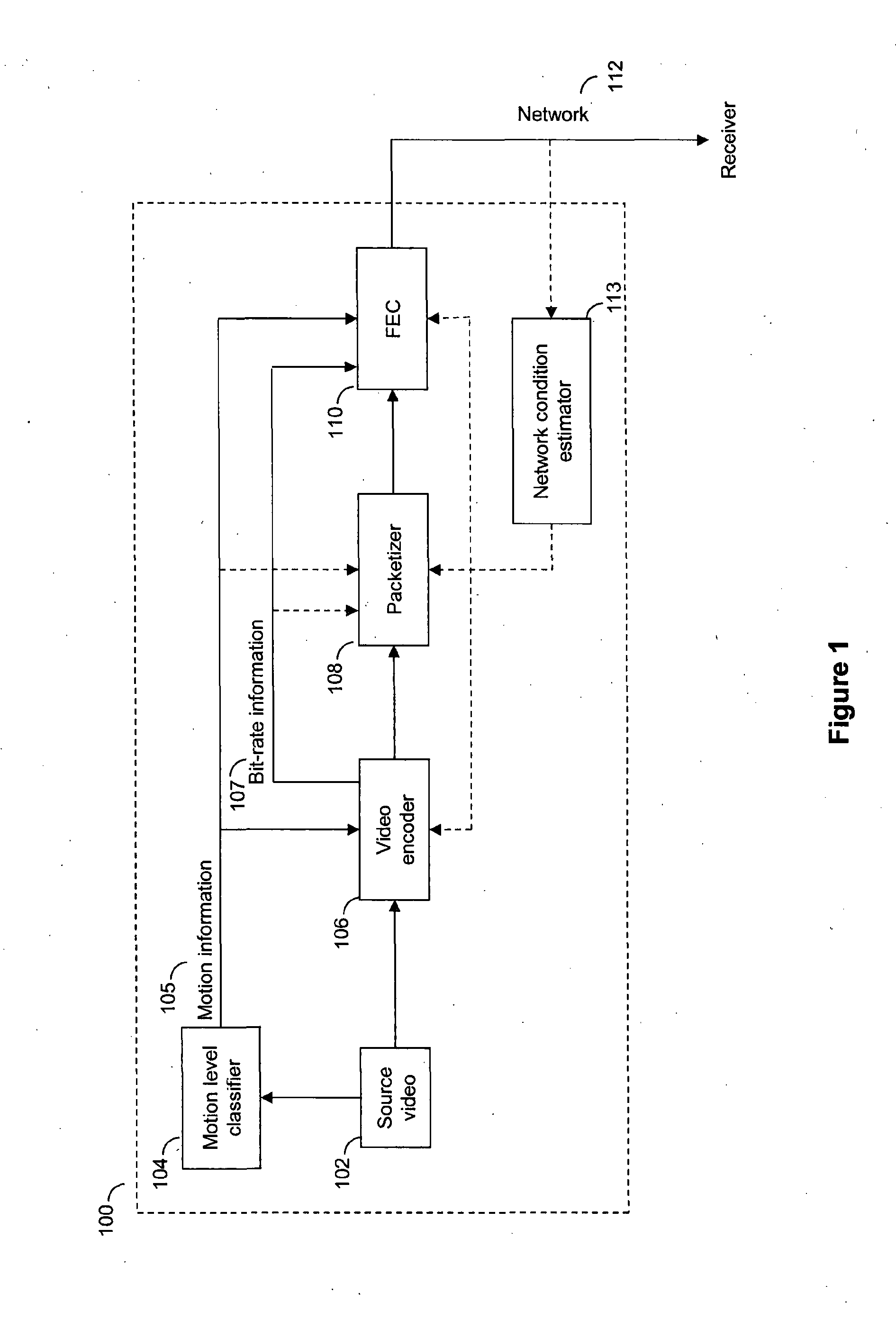
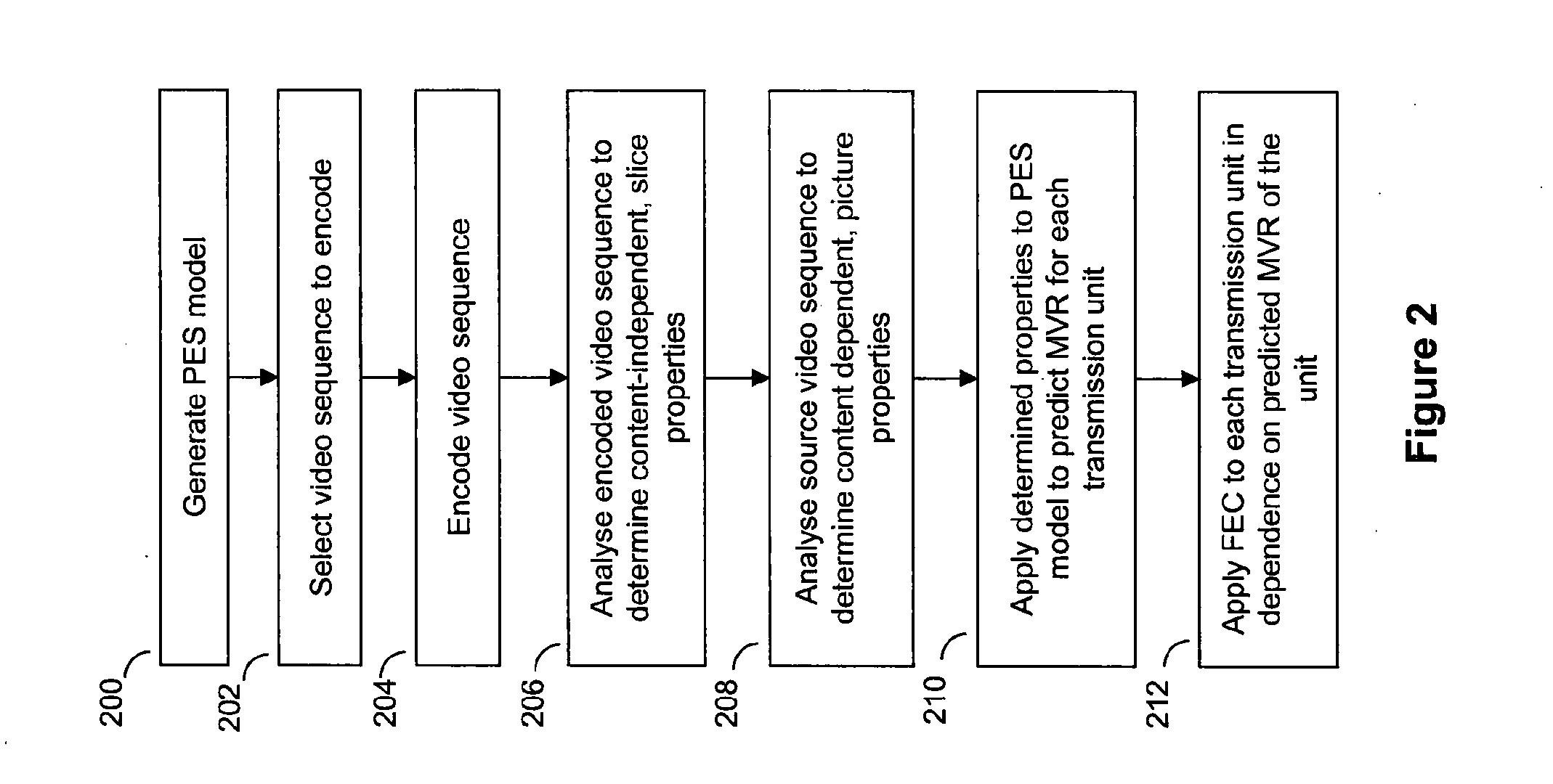
The invention presents a method of applying forward error correction selectively to an encoded video sequence before it is transmitted. Forward error correction is targeted at portions of the video that will be most noticeably affected by any potential packet loss during transmission. The targeting is done using a perceptual error sensitivity model, which effectively maps an error visibility rating onto content-dependent and content-independent properties associated with a given portion video. The encoder and decoder settings will be used for the actual video sequence where forward error correction is to be applied are used in the training of the model, as they have a significant effect on the perception of any errors. Then, to adaptively apply forward error correction, a selected video sequence is encoded, and the encoded bitstream is analysed to determine content-independent properties. A decoded version of the video sequence is also analysed to determine content-dependent properties being determined. The content-independent and content-dependent properties are used in conjunction with the perceptual error sensitivity model to predict which slices of the video sequence will be most significantly affected perceptually by packet loss, and thus target FEC to those areas accordingly.
Need to check novelty before this filing date? Find Prior Art

Description

FIELD OF THE INVENTION

[0001] This invention relates to error correction for a video sequence, in particular to an adapted forward error correction method where error correction is targeted on areas that are perceptually more sensitive to errors.BACKGROUND TO THE INVENTION

[0002] The increasing importance of live video services transmitted over the internet has highlighted the need for methods that can mitigate the effects of network impairments. For services unable to utilise retransmission to mitigate the effects of network losses, packet loss impairment (PLI) can have a major impact on the perceived video quality experienced by the end-user. Video sequences are usually compressed prior to transmission by encoding using a suitable video compression codec such as MPEG-2 or H264. Each frame of the encoded video sequence is made up of a number of macroblocks. Packet loss can occur to a given macroblock when the associated network packet that carries the macroblock is lost in the network ...

Examples

Embodiment Construction

[0032]The present invention is described herein with reference to particular examples. The invention is not, however, limited to such examples.

[0033]The invention presents a method of applying forward error correction selectively to an encoded video sequence before it is transmitted. Forward error correction is targeted at portions of the video (preferably at the slice level) that will be most noticeably affected by any potential packet loss during transmission. The targeting is done using a perceptual error sensitivity model, which effectively maps an error visibility rating (from subjective tests) onto various properties associated with a given portion video. The properties may be content dependent from the picture domain, such as spatial and temporal differences of the pixels, or may be content-independent properties from the encoded bitstream, such as spatial extent and temporal extent of the slice. The temporal extent results from some slices being used as a reference for other...