
Rack component and rack system
a technology of components and racks, applied in the field of rack components, can solve the problems of affecting the quality of workpieces, and reducing the efficiency of building workpieces, so as to reduce the thickness, reduce the cost, and save materials.
- Summary
- Abstract
- Description
- Claims
- Application Information
AI Technical Summary
Benefits of technology
Problems solved by technology
Method used
Image

Examples
Embodiment Construction
[0025]The following description of the preferred embodiment is presented to describe the present invention without limiting the scope of the appended claims in any manner whatsoever.
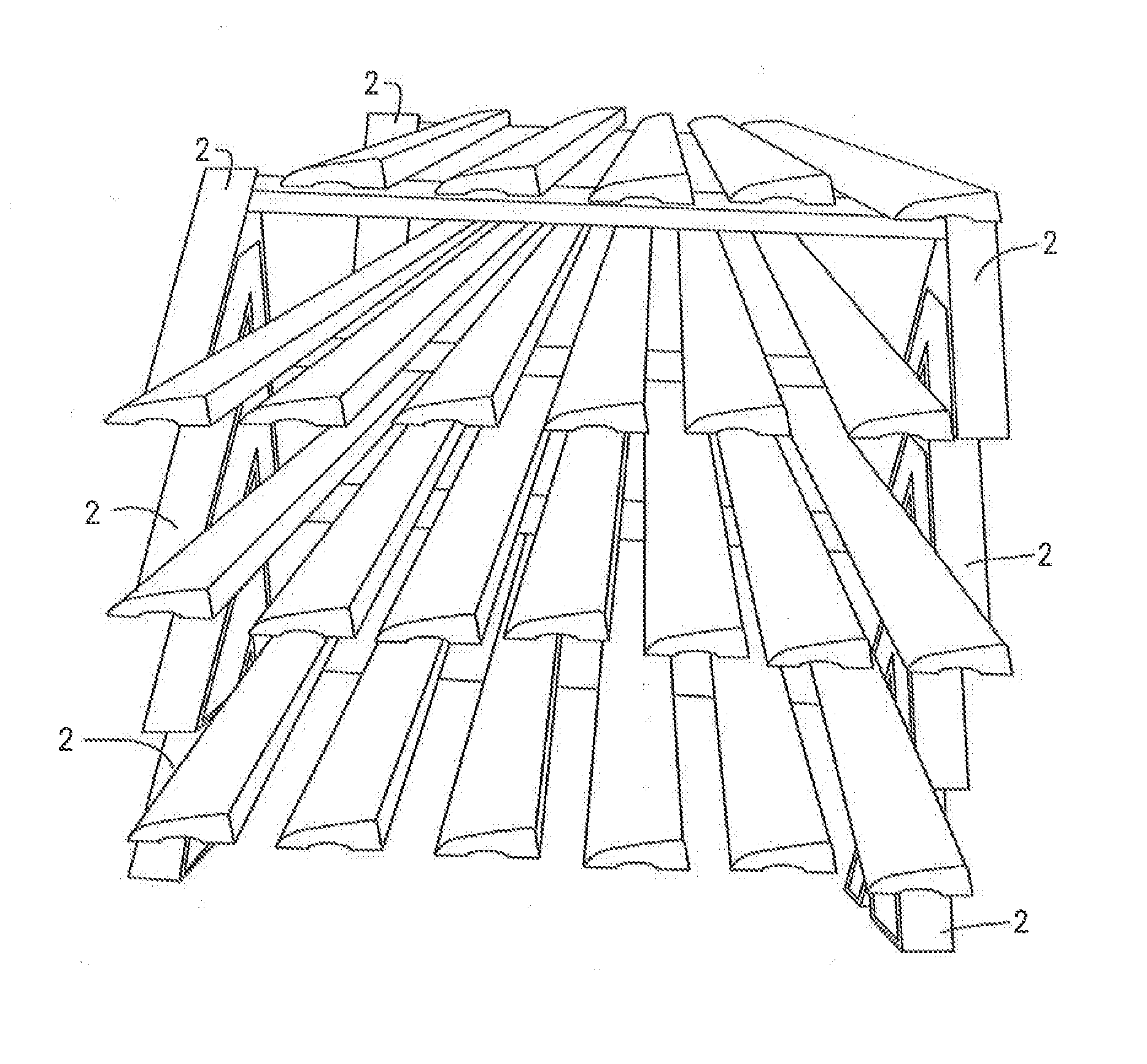
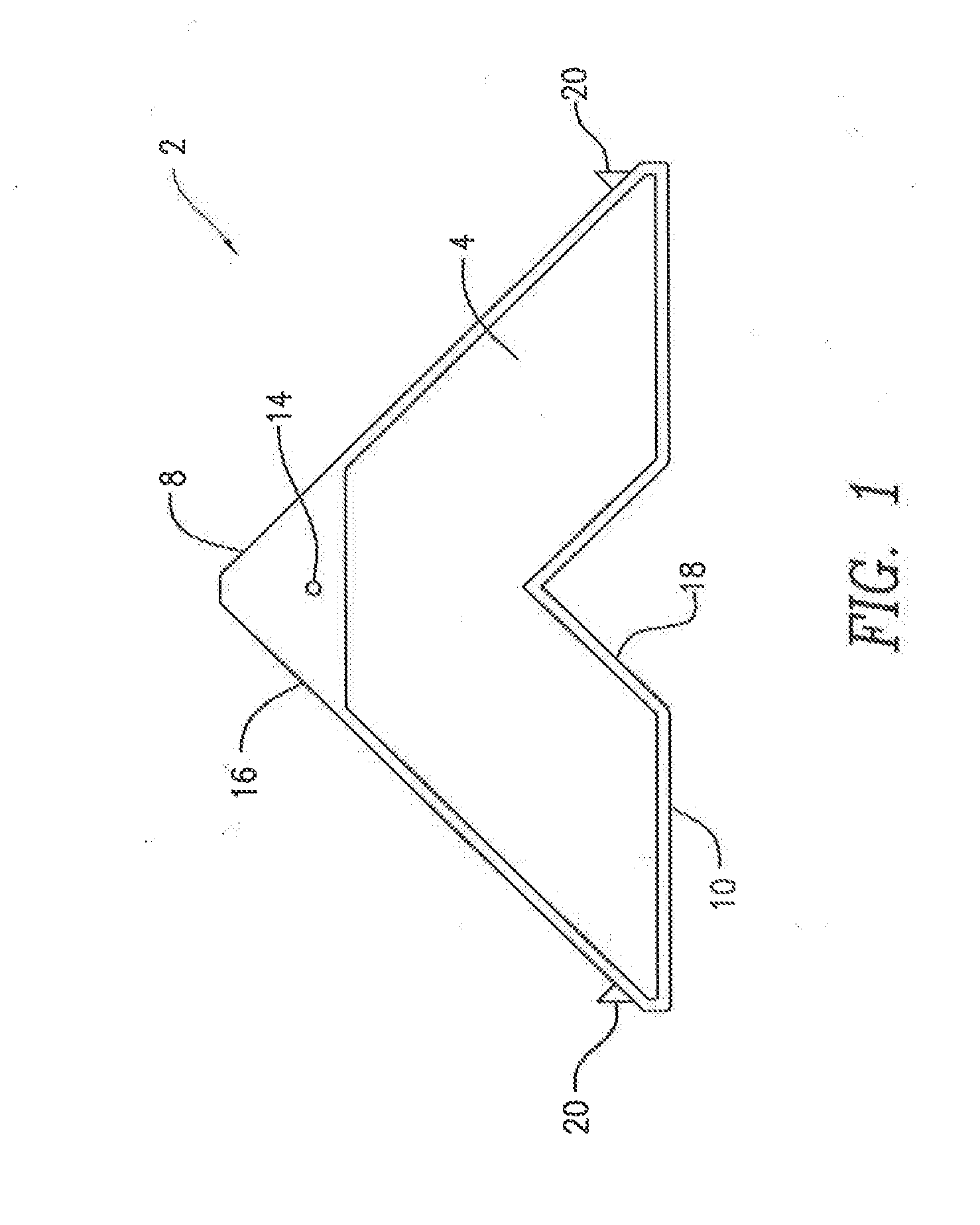
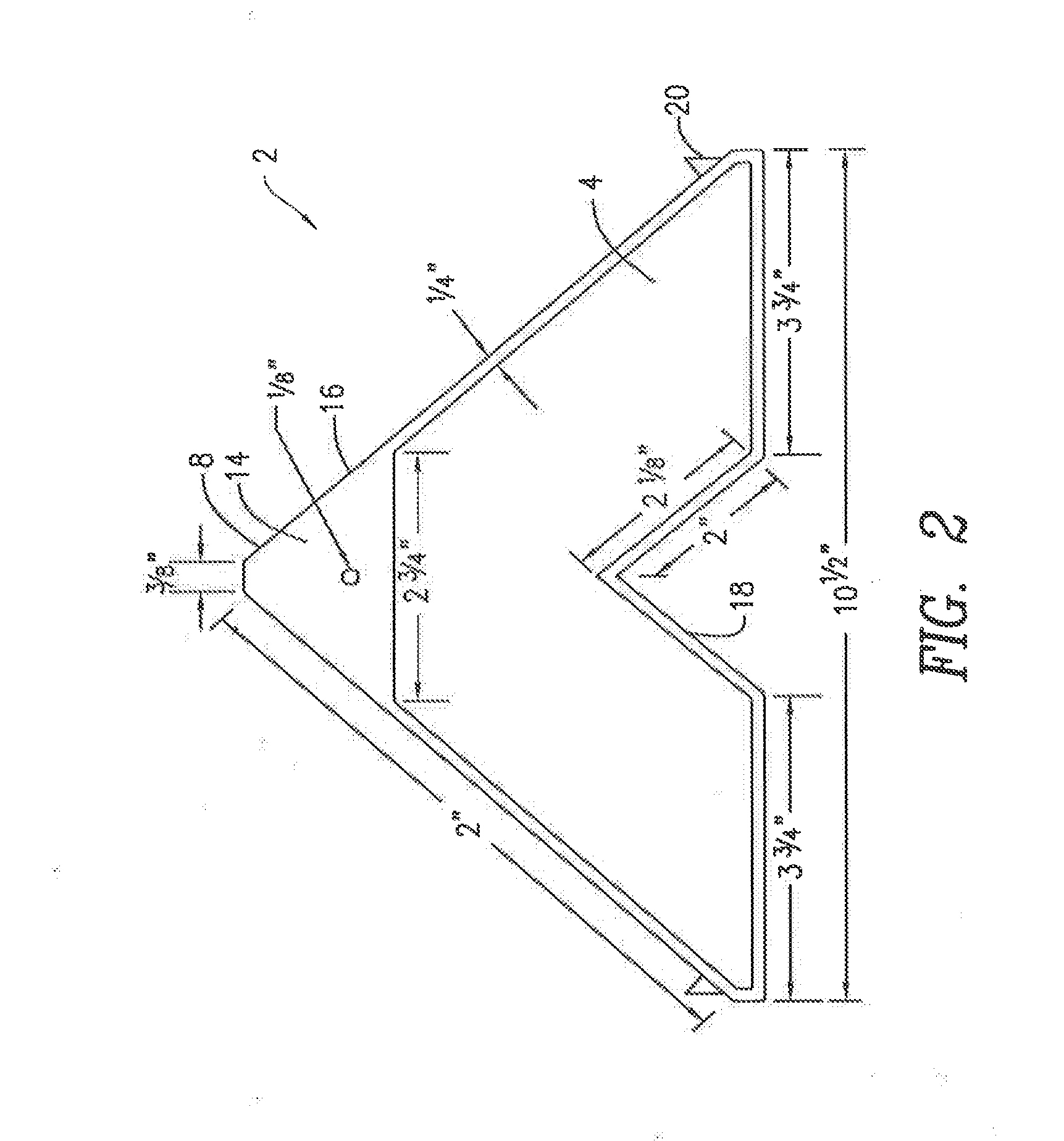
[0026]As shown in FIGS. 1-5, the present claimed invention is directed to a rack component, used as part of a rack system, where the rack component comprises a component body 2 having a front 4, a back 6, a top 8, a base 10, a width 12 between the front 4 and the back 6, and an aperture 14 near the top extending through the component body 2, wherein the top 8 of the component body comprises a top configuration 16 that is the negative of a bottom configuration 18 on the base 10 of the component body 2, such that the bottom configuration 18 on the base 10 of one component body 2 can receive the top configuration 16 on the top 8 of an adjacent component body 2.
[0027]In the most preferred embodiment, the component body 2 is generally in the shape of triangle with first and second sides of substantially equal...
PUM
| Property | Measurement | Unit |
|---|---|---|
| width | aaaaa | aaaaa |
| width | aaaaa | aaaaa |
| widths | aaaaa | aaaaa |
Abstract
Description
Claims
Application Information
 Login to View More