
Sensor device for a hazardous waste container
a technology for hazardous waste and sensors, applied in the direction of heat measurement, instruments, wireless commuication services, etc., can solve the problem of not being able to open the container to check on the gasses or vapors
- Summary
- Abstract
- Description
- Claims
- Application Information
AI Technical Summary
Benefits of technology
Problems solved by technology
Method used
Image

Examples
Embodiment Construction
[0020]Aspects of the invention are disclosed in the accompanying description. Alternate embodiments of the present invention and their equivalents are illustrated without parting from the spirit or scope of the present invention. It should be noted that like elements disclosed below are indicated by like reference numerals and the drawings.
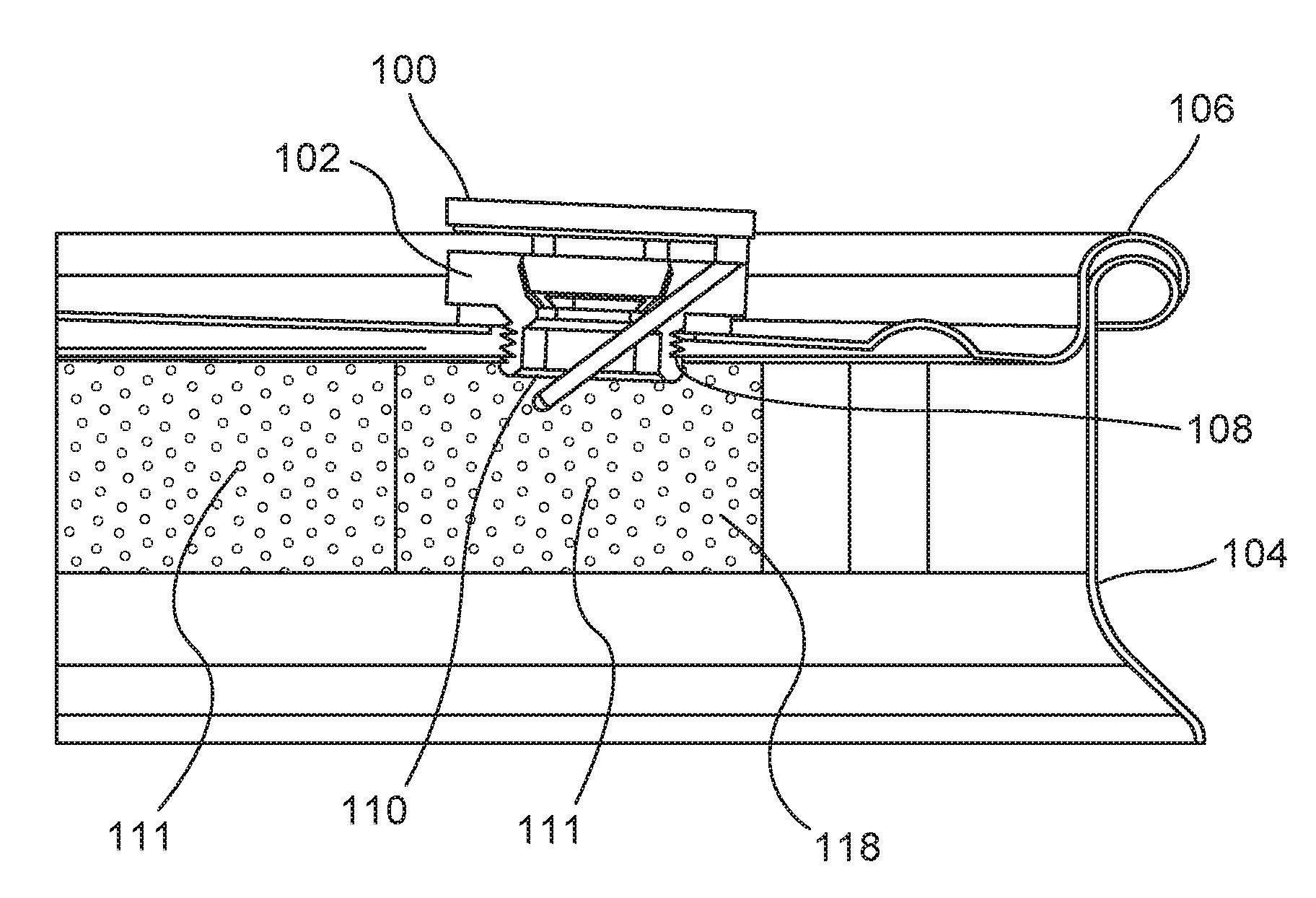
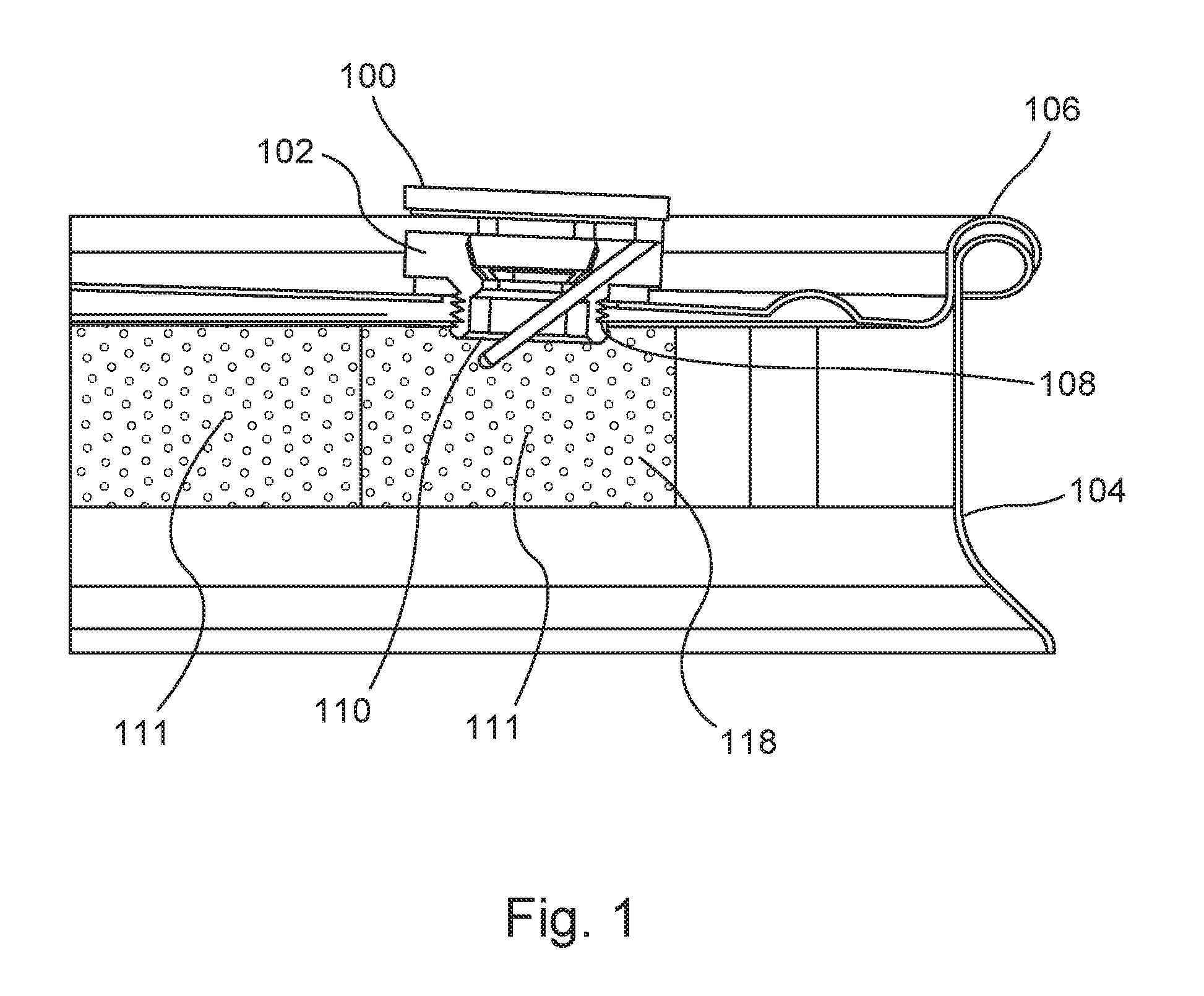
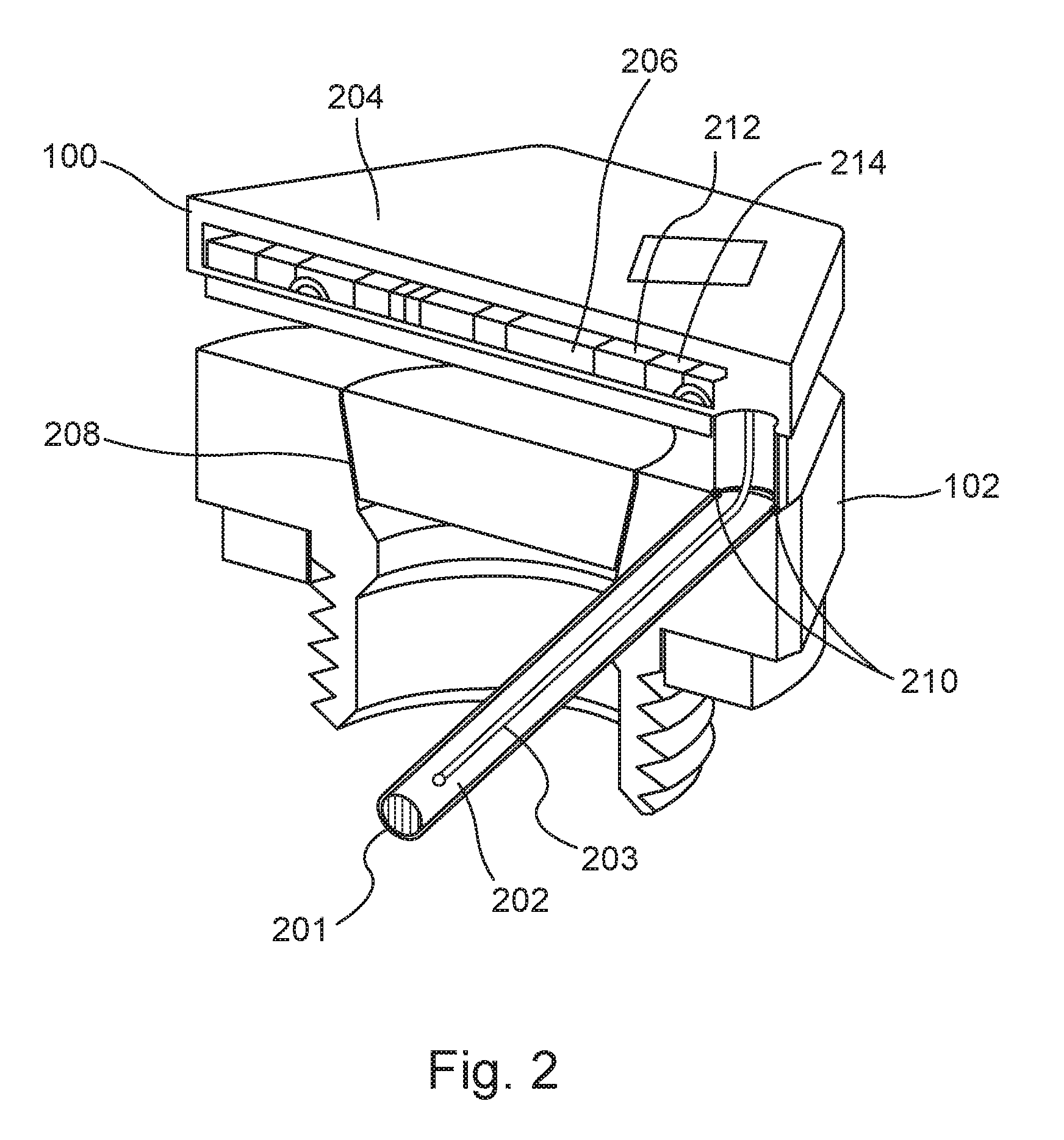
[0021]The disclosed embodiments implement monitoring technology around an active RFID platform. The disclosed device includes a thermocouple sealed sensor inside a housing that measures temperature and transmits the encrypted data to a receiver and a computer. The thermal data is then logged, tracked, and evaluated by the disclosed process. Thermal excursions may be measured. Upon detection of an event, alerts via email or messaging may be sent to a plurality of recipients. The dynamic temperature sensing may occur at set periods, such as daily, hourly, or every second, depending on a desired battery life.
[0022]The disclosed device may have an ope...
PUM
 Login to View More
 Abstract
Description
Claims
Application Information
 Login to View More