
Synergistic antibacterial activity of medium polarity oils in combination with antibacterial agents on bacterial biofilms
a technology of antibacterial agents and polarity oils, which is applied in the direction of aerosol delivery, prosthesis, cyclic peptide ingredients, etc., can solve the problems of difficult to substantially reduce or eliminate, difficult to penetrate the antibacterial active in the biofilm network, and a significant threat to human health, so as to reduce the bacteria in and/or eliminate the bacterial biofilm, increase the targeted delivery of the antibacterial agent, and improve the effect of antibacterial activity
- Summary
- Abstract
- Description
- Claims
- Application Information
AI Technical Summary
Benefits of technology
Problems solved by technology
Method used
Image

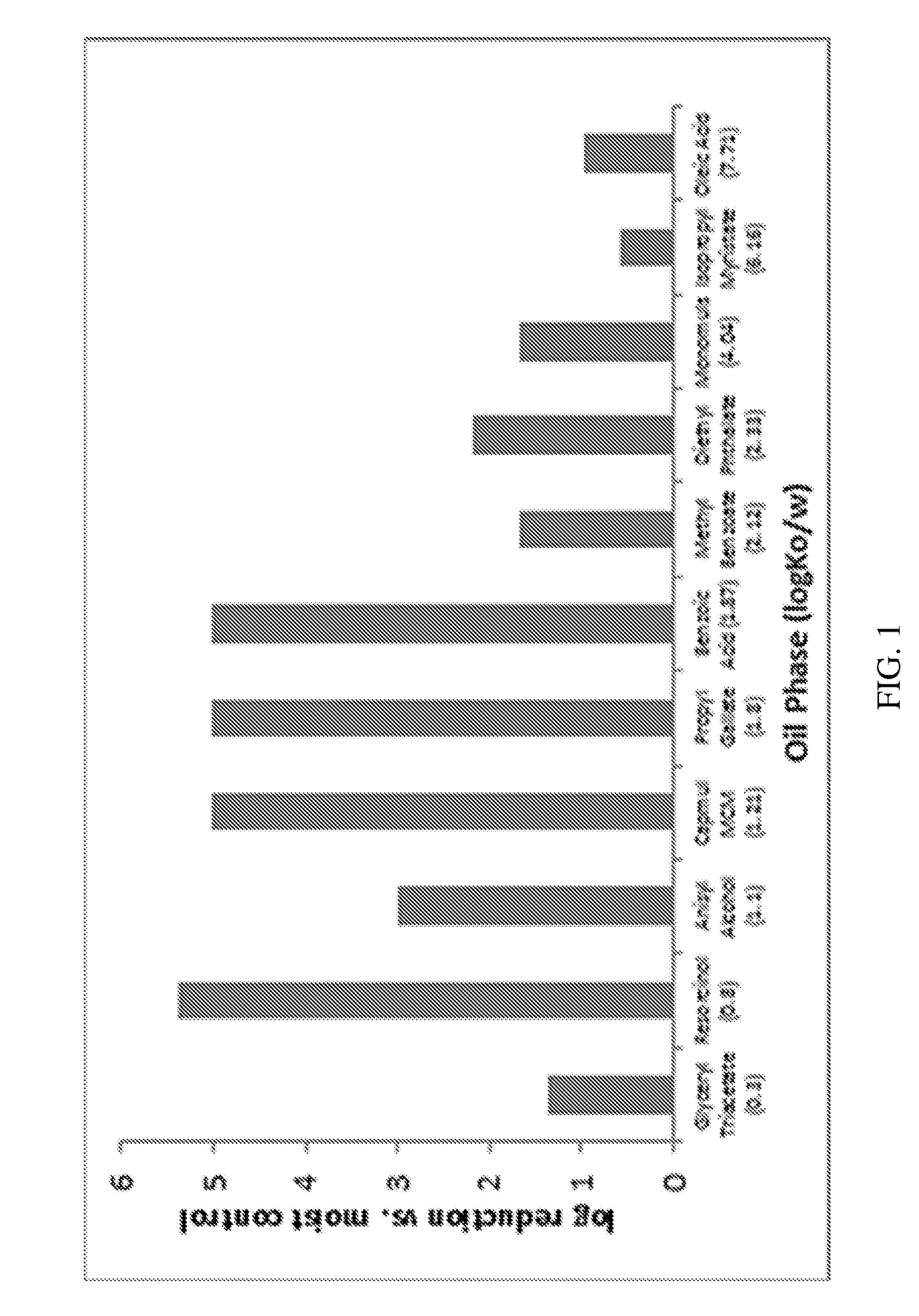
Examples
example 1
tion of Octanol-Water Partition Coefficient for CAPMUL MCM by ASTM Method
[0199]1. Prepared reference standard samples of compounds with known log P values shown in Table 2 at concentrations of approximately 200 mg / L in methanol.
[0200]2. Prepared test sample of CAPMUL MCM at a concentration of approximately 200 mg / mL in methanol.
[0201]3. Ran reference and test samples on HPLC using the parameters shown in Table 3.
[0202]4. Compared the retention times of the reference standards to the retention time of CAPMUL MCM to calculate the log P value of CAPMUL MCM as per ASTM method.
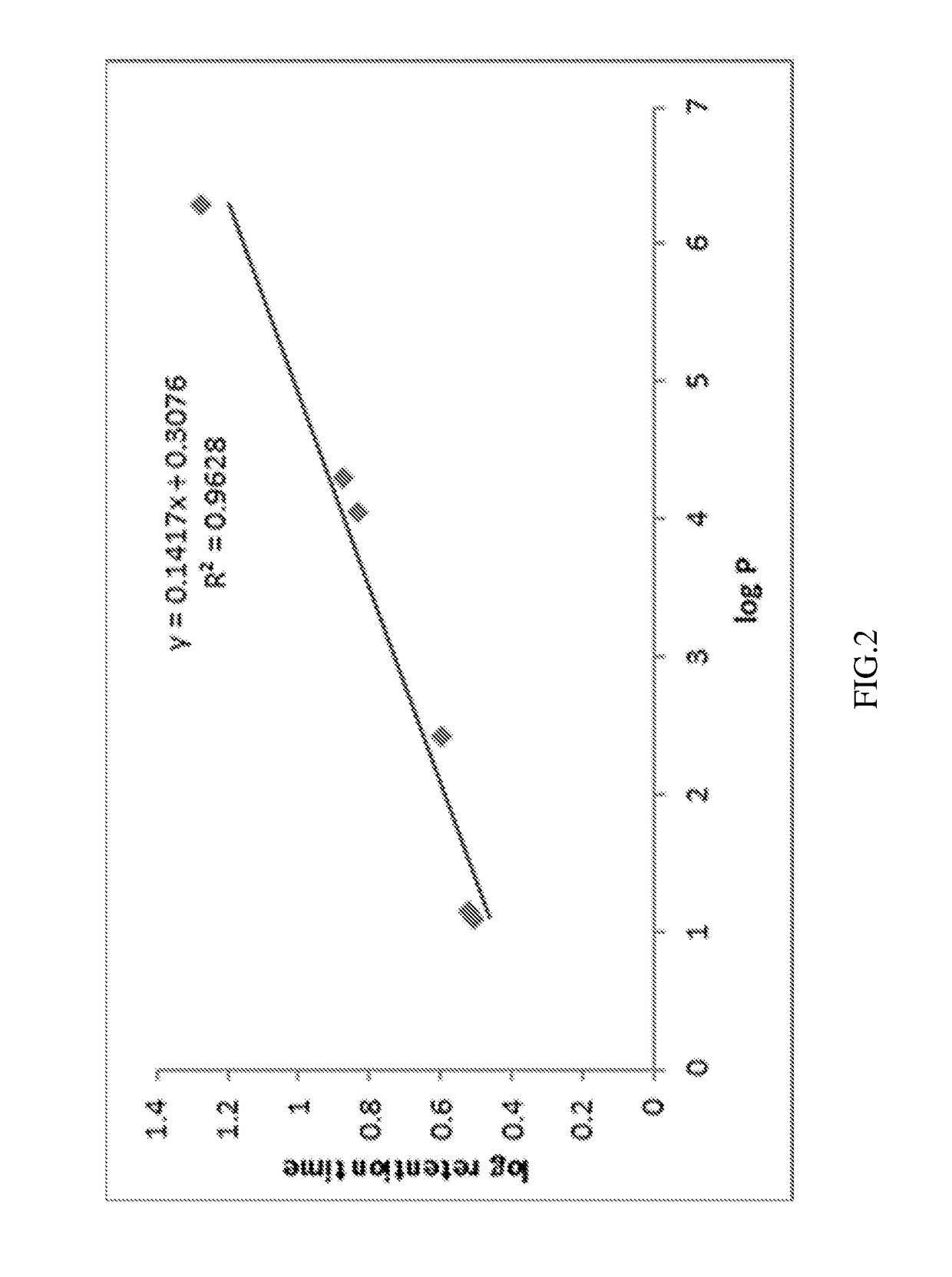
[0203]The retention times of the reference substances are shown in Table 2 and plotted in FIG. 2. The retention time of CAPMUL MCM is 3.011 giving a log P of 1.21 for CAPMUL MCM.
TABLE 2Reference Substancelog Plog retention timeAnisyl alcohol1.10.5008Phenoxyethanol1.160.5161Diethyl phthalate2.420.5944Benzyl cinnamate4.060.8331Benzyl salicylate4.310.8719Dibutyl sebacate6.31.2709
TABLE 3Mobile Phase Solvent A40:60 ACN / ...
example 2
ons
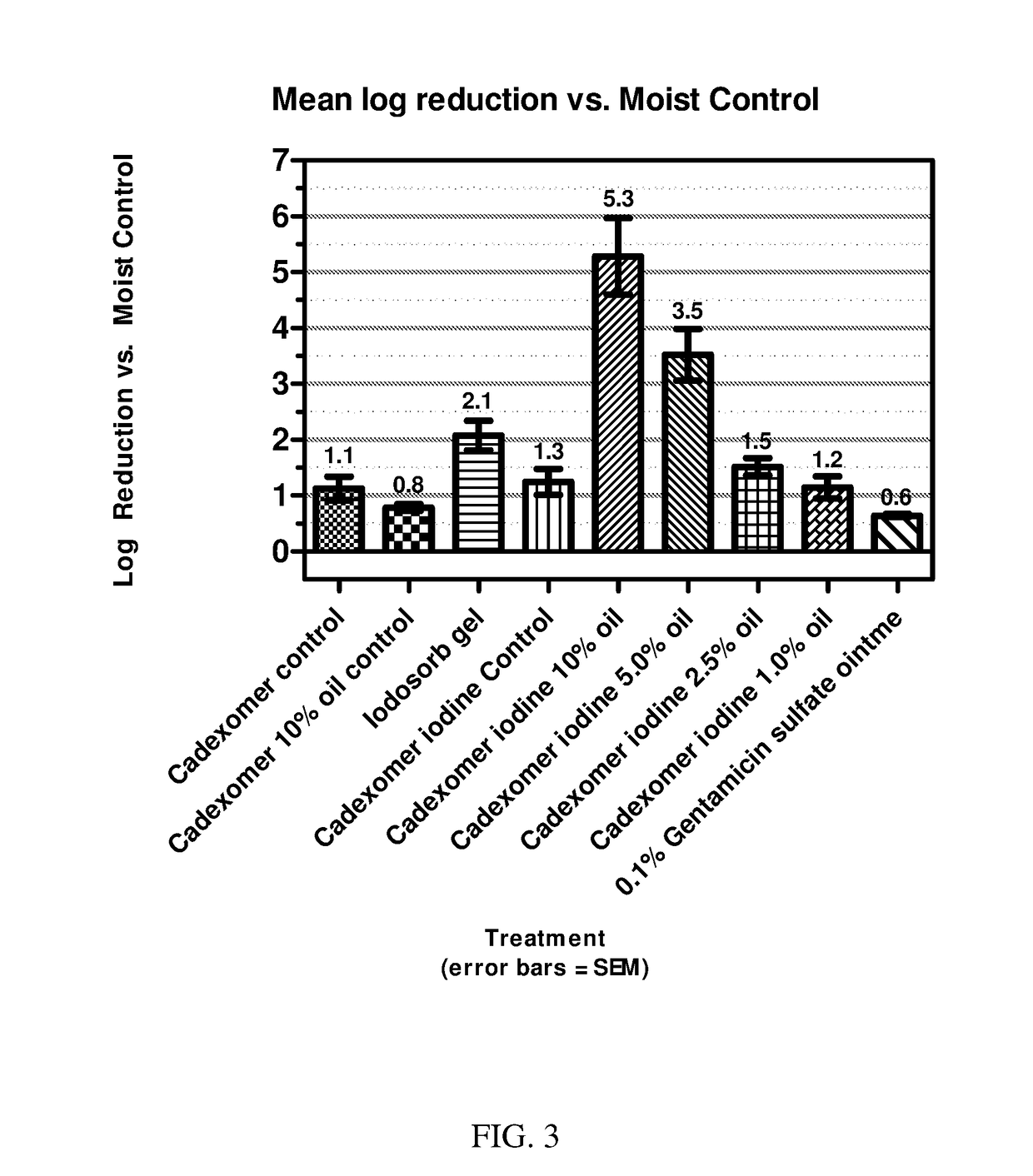
[0204]Various formulations were prepared and are shown in tables 4-9 below.
[0205]Cadexomer iodine based formulations are shown in Table 4.
TABLE 4Cadexomer Iodine Based FormulationsFormulaCadexomerCadexomerCadexomerCadexomer / CadexomerCadexomerComponentIodineIodine / 5%Iodine / 10%Cadexomer10% oilIodine / 2.5%Iodine(% w / w)ControloiloilControlcontroloil1% oilPEG-4003834.330.44130.43637.2PEG-4000109810.789.59.8Poloxamer2.11.81.62.21.61.91.9184CAPMUL—510—102.51MCM NFCadexomer505050——5050IodineCadexomer———4650——Base
[0206]Procedure (for concentration of each ingredient, see Table 4): Mixed all ingredients except cadexomer iodine and / or cadexomer base at 70° C. until uniform. Added cadexomer iodine or cadexomer base and mixed until uniform. Cooled to room temperature (RT) while mixing.
[0207]Silver chloride based formulations are shown in Table 5.
TABLE 5Silver Chloride Based FormulationsComponentFormula(% w / w)Ag aloneOil aloneAg + OilHEC 250 HX (Aqualon)111111Silver Chloride1—1CAPMUL MCM—1010Ph...
PUM
| Property | Measurement | Unit |
|---|---|---|
| Fraction | aaaaa | aaaaa |
| Fraction | aaaaa | aaaaa |
| Fraction | aaaaa | aaaaa |
Abstract
Description
Claims
Application Information
 Login to View More