
Defect detection using ultrasound scan data
- Summary
- Abstract
- Description
- Claims
- Application Information
AI Technical Summary
Benefits of technology
Problems solved by technology
Method used
Image

Examples
Embodiment Construction
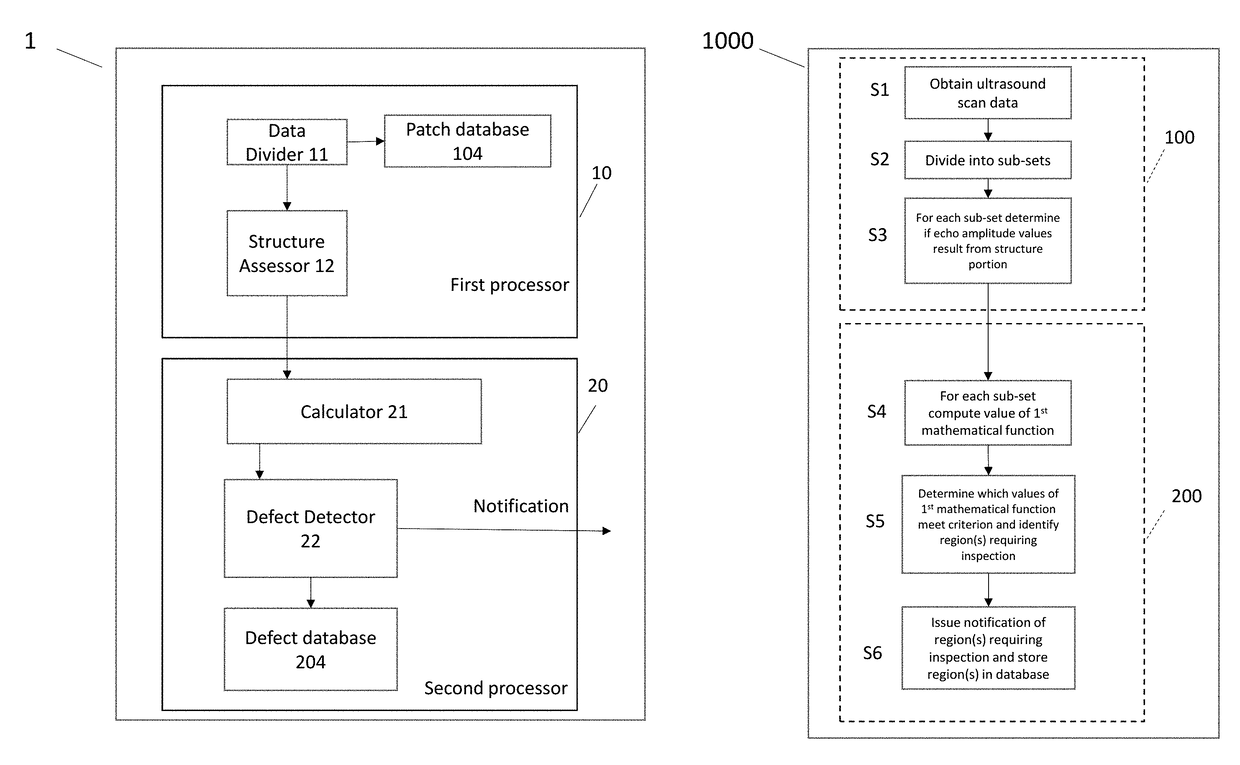
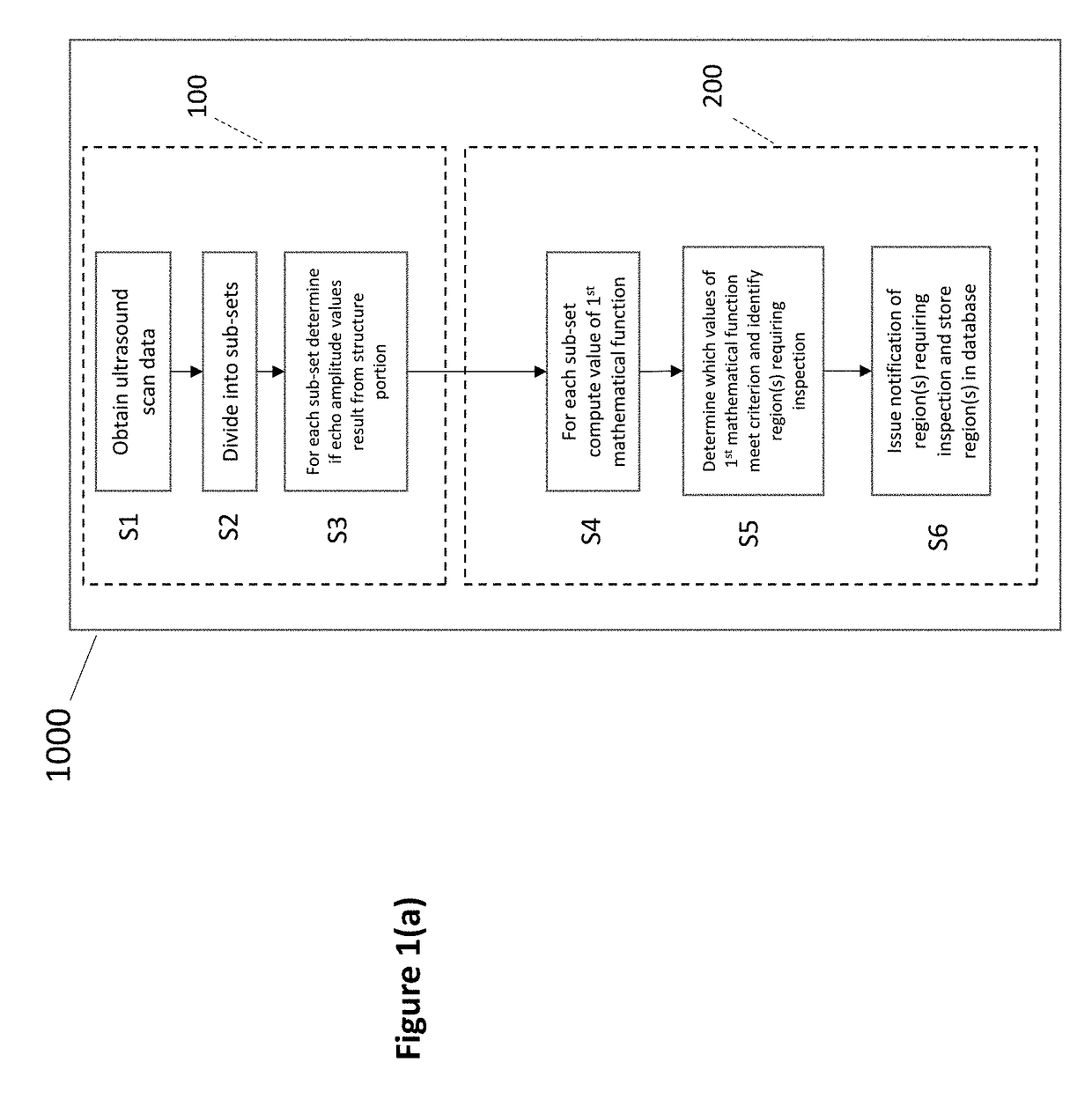
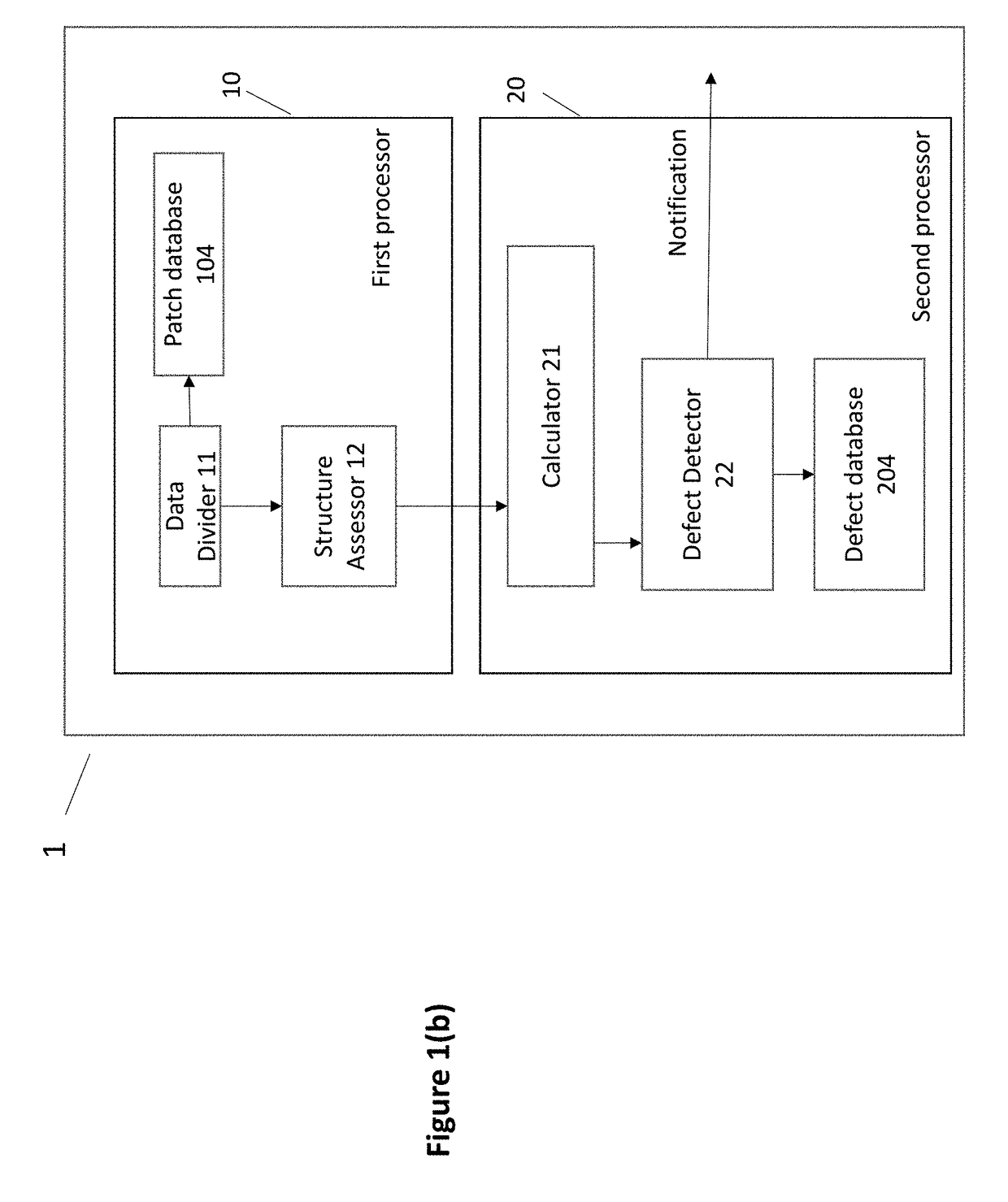
[0046]Reference will now be made in detail to the embodiments, examples of which are illustrated in the accompanying drawings, wherein like reference numerals refer to the like elements throughout. The embodiments are described below to explain the embodiments by referring to the figures.
[0047]As mentioned above, in embodiments the salient structure of the object under test, for example the back wall of the object, is assumed to be a continuous structure. Therefore, in a structure without defect, adjacent portions of the structure will be contiguous, i.e. as close to each other as it is possible to be. On the other hand, it is assumed that adjacent portions which are separated from each other by more than a threshold distance are indicative of a defective region of the structure. A defect detection method according to an embodiment may, for example, identify the presence of a defect based on heuristics relating only to the distance between centroids of adjacent portions of the struc...
PUM
 Login to View More
 Abstract
Description
Claims
Application Information
 Login to View More