

Self-driving building energy engine
a self-driving, building energy technology, applied in the direction of electric variable regulation, process and machine control, instruments, etc., can solve the problems of not producing accurate, difficult to verify, and not producing accura
- Summary
- Abstract
- Description
- Claims
- Application Information
AI Technical Summary
Benefits of technology
Problems solved by technology
Method used
Image

Examples
Embodiment Construction
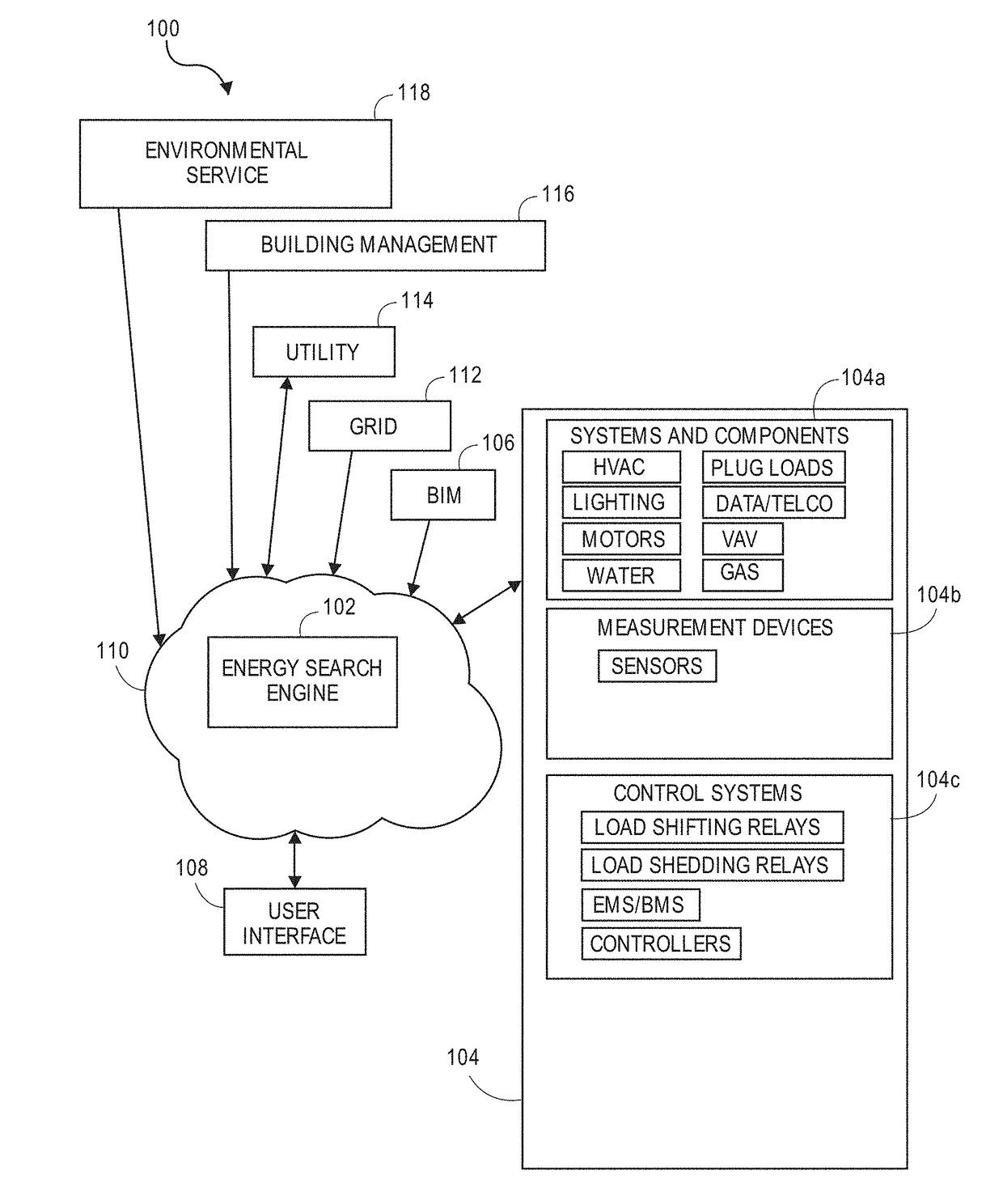
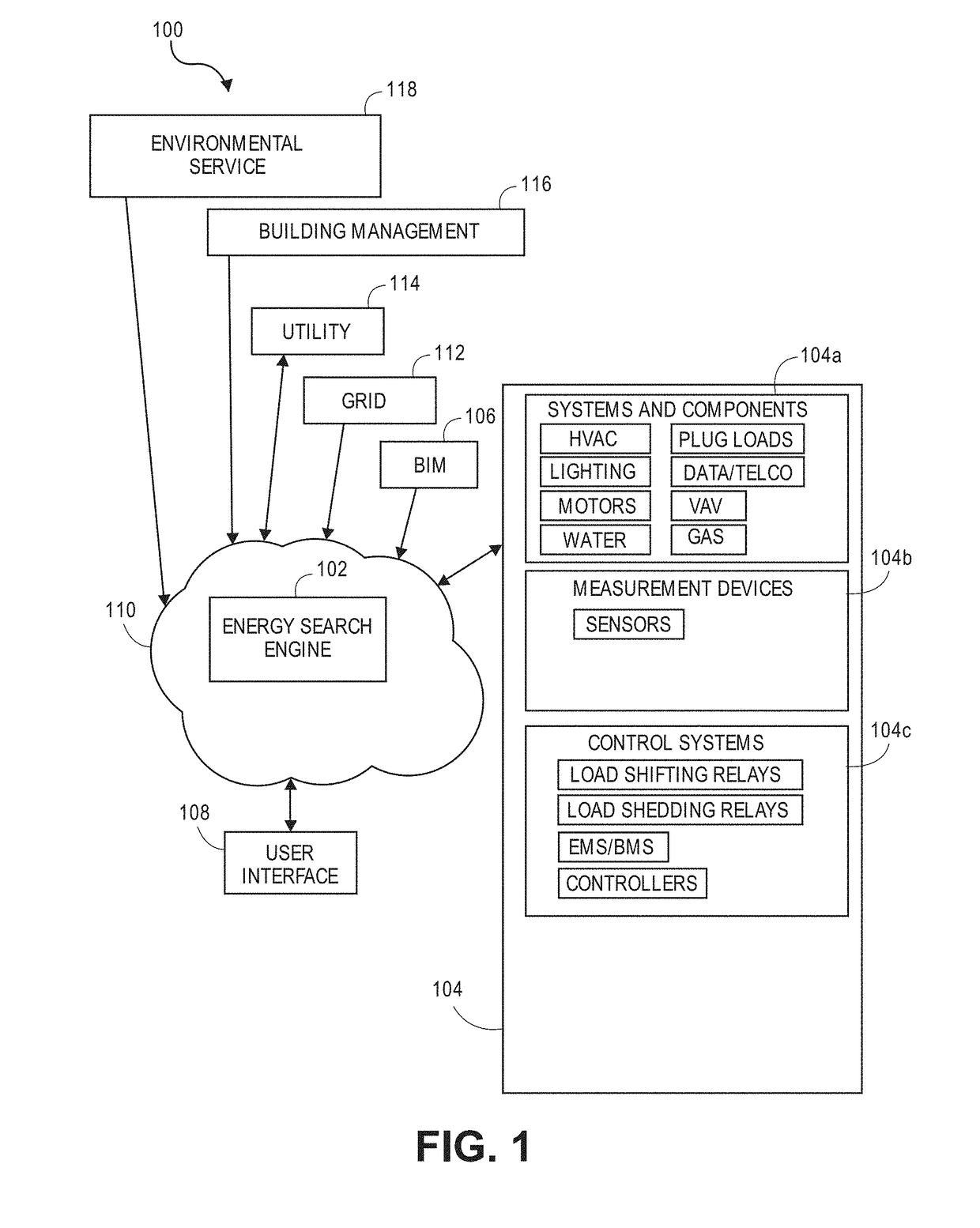
[0027]The features of the systems and methods will now be described with reference to the drawings summarized above. Throughout the drawings, reference numbers are re-used to indicate correspondence between referenced elements. The drawings, associated descriptions, and specific implementation are provided to illustrate embodiments of the inventions and not to limit the scope of the disclosure.
[0028]Embodiments of an energy search engine use dynamic energy related data to determine how well a facility is using energy and to identify wasted energy. Further embodiments dynamically guide building system adjustments to reduce energy waste, and verify the results of such actions. For example, contemporary heating, ventilation, and air conditioning (HVAC) systems use a combination of chilled coolant or chilled water, evaporative coils, forced air ducting, and hot water intermixed to provide comfort and fresh air to occupants of buildings. To provide this comfort, many building HVAC system...
PUM
 Login to View More
 Abstract
Description
Claims
Application Information
 Login to View More