
Dopamine d2 receptor ligands
- Summary
- Abstract
- Description
- Claims
- Application Information
AI Technical Summary
Benefits of technology
Problems solved by technology
Method used
Image

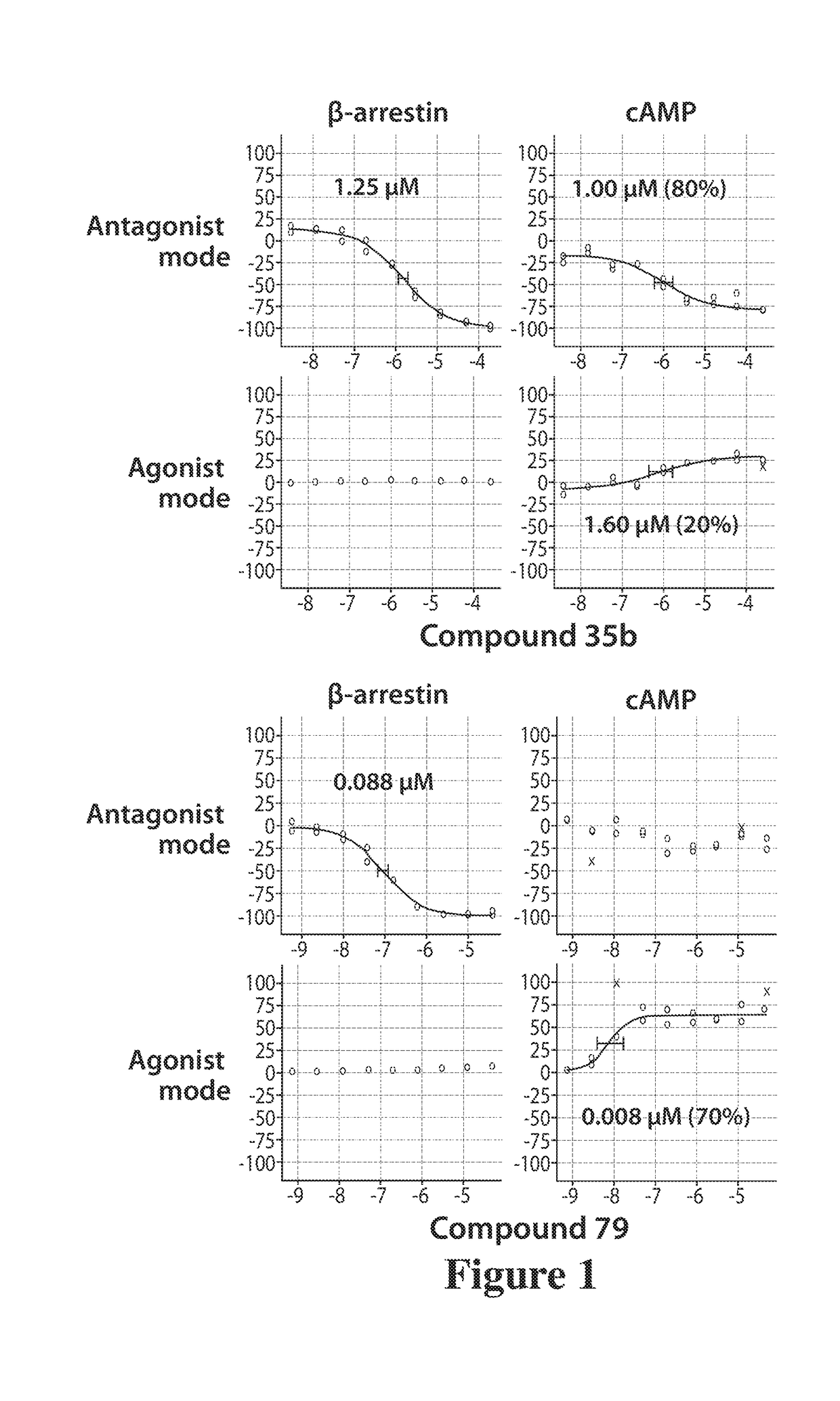
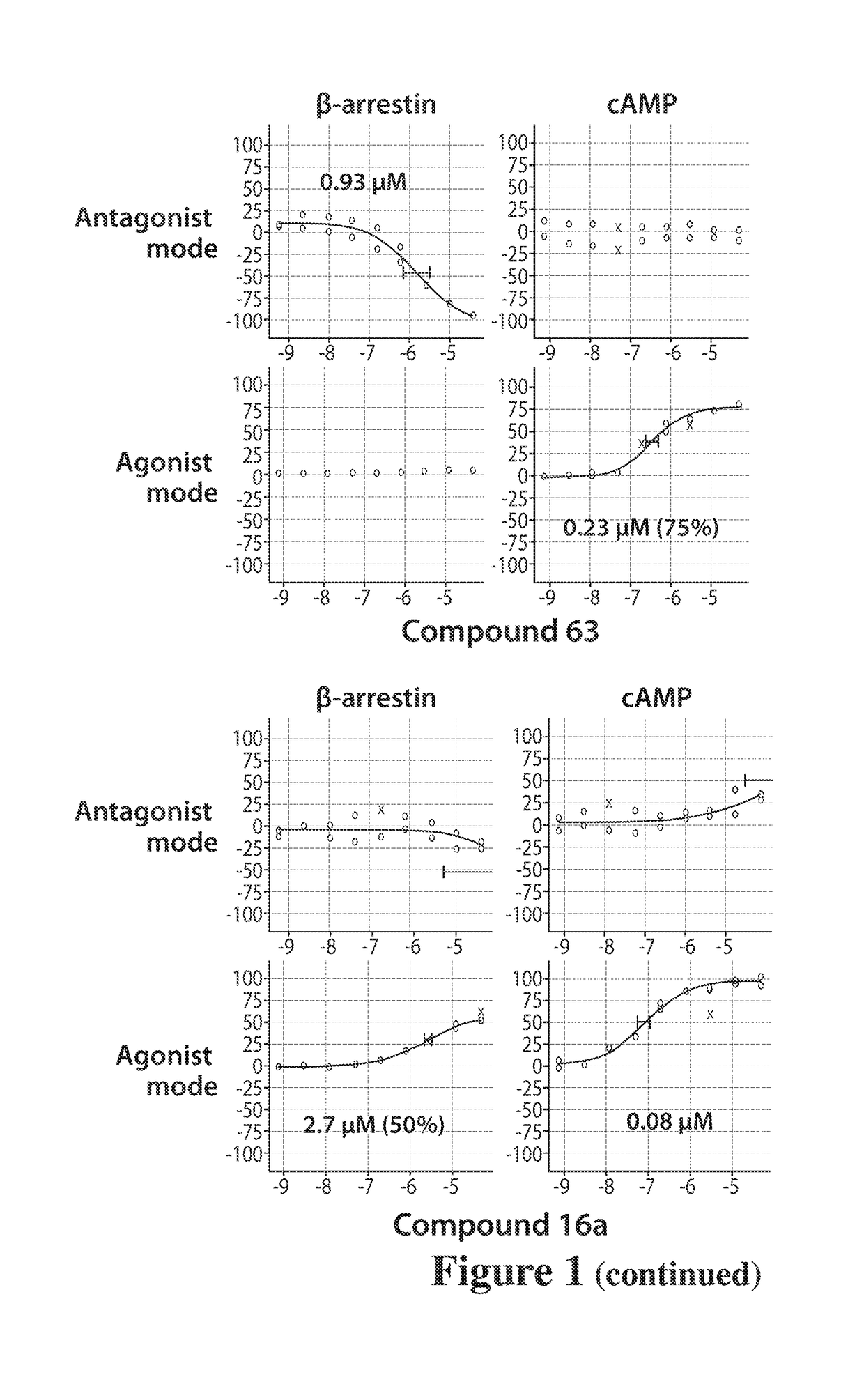
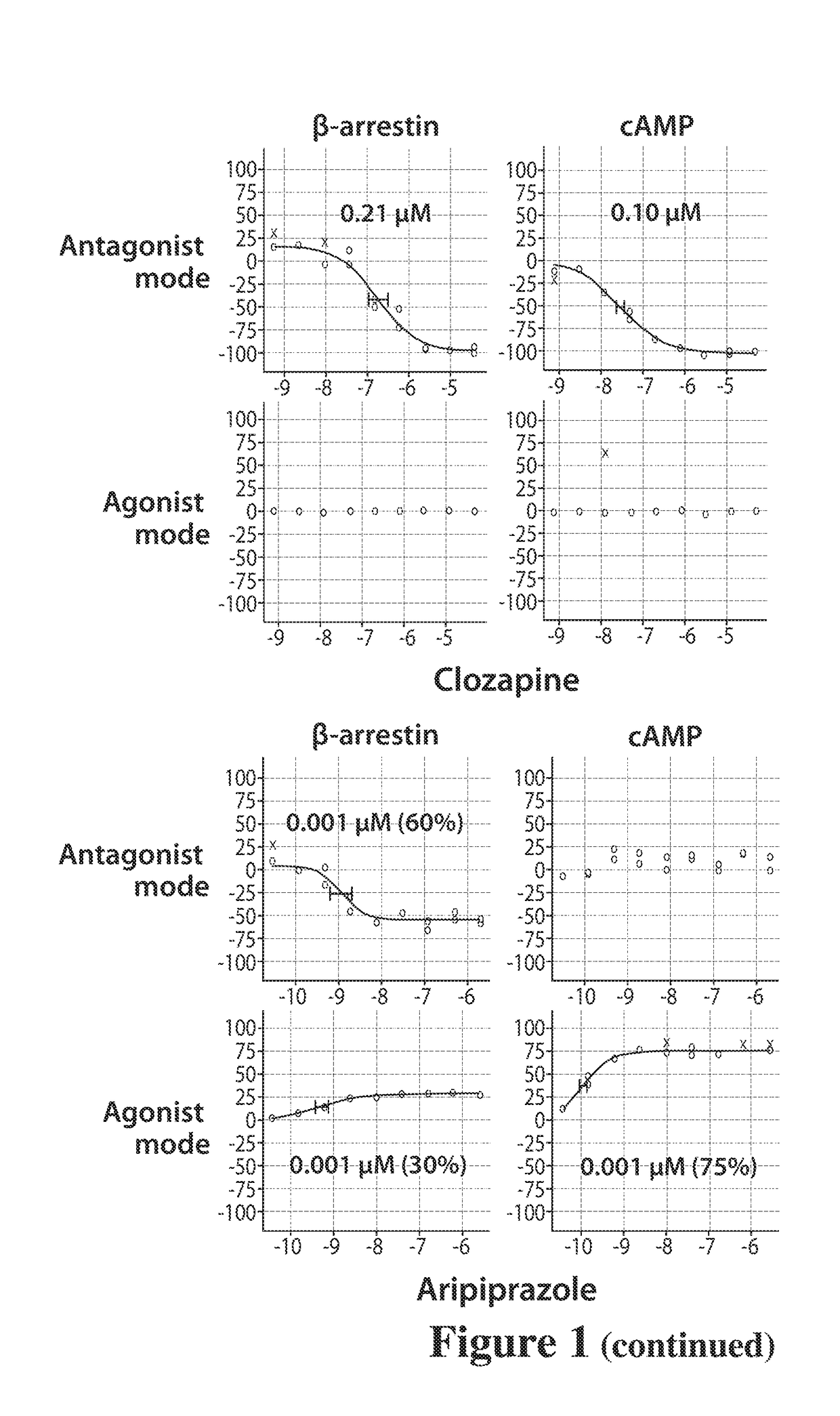
Examples
examples
Synthesis of Intermediate I
[0561]
Step 1: (4-Chlorophenyl)(pyridin-2-yl)methanol
[0562]
[0563]To a stirred suspension of magnesium (5.37 g, 223.75 mmol, 3 equiv) in dry THF (60 mL) under argon atmosphere was added iodine (2 crystals), 1,2-dibromo ethane (2 drops). 1-bromo-4-chlorobenzene (25.76 g, 134.39 mmol, 1.8 equiv) was then added dropwise for 1 h at room temperature. The reaction mixture was stirred at room temperature for 1 h. A solution of picolinaldehyde (8 g, 74.68 mmol) in dry THF (19 mL) was added drop wise at room temperature and stirred for 2 h. After completion of reaction, the reaction mixture was quenched with saturated ammonium chloride solution and extracted with EtOAc. The combined organic extract was washed with water, brine, dried over sodium sulfate, filtered and concentrated under reduced pressure. Purification using silica gel column chromatography (40% EtOAc / hexanes as eluent) afforded 12.26 g of (4-chlorophenyl) (pyridin-2-yl) methanol (yield=75%). ESI+MS: m / ...
example-1
1-(2-(3-chlorophenoxy)ethyl)-N-((4-chlorophenyl)(pyridin-2-yl)methyl)piperidine-4-carboxamide (I)
[0701]
[0702]To a stirred solution of N-((4-chlorophenyl)(pyridin-2-yl)methyl)piperidine-4-carboxamide (Int-I) (0.20 g, 0.60 mmol) in CH3CN (5 mL) were added potassium carbonate (0.251 g, 1.81 mmol, 3 equiv) and 1-(2-bromoethoxy)-3-chlorobenzene (0.143 g, 0.60 mmol, 1 equiv) at room temperature. The reaction mixture was heated at 80° C. and stirred for 6 h. After completion, the reaction mixture was diluted with water and extracted with CH2Cl2. The combined organic extract was dried over sodium sulfate, filtered and concentrated under reduced pressure. Purification using silica gel column chromatography (3% MeOH / CH2Cl2 as eluent) afforded 0.05 g of 1-(2-(3-chlorophenoxy) ethyl)-N-((4-chlorophenyl) (pyridin-2-yl) methyl) piperidine-4-carboxamide (Yield=17%).
[0703]1H NMR (400 MHz, DMSO-d6): δ 8.71(d, 1H, J=6.4 Hz), 8.51(d, 1H, J=4.0 Hz), 7.78-7.76 (m, 1H), 7.44 (d, 1H, J=8.0 Hz), 7.37-7.25 ...
example-2
1-(2-(4-chlorophenoxy)ethyl)-N-((4-chlorophenyl)(pyridine-2-yl)methyl) piperidine-4-carboxamide (2)
[0704]
[0705]Title compound was prepared from N-((4-chlorophenyl) (pyridin-2-yl) methyl) piperidine-4-carboxamide (Int-I) (0.20 g, 0.60 mmol) using the general methodology of Example-1. The product was washed with n-pentane and ether and afforded 0.1 g of 1-(2-(4-chlorophenoxy) ethyl)-N-((4-chlorophenyl) (pyridine-2-yl) methyl) piperidine-4-carboxamide (Yield=34%).
[0706]1H NMR (400 MHz, DMSO-d6): δ 8.70 (d, 1H, J=8.0 Hz), 8.51 (d, 1H, J=4.0 Hz), 7.80-7.75 (m, 1H), 7.44 (d, 1H, J=8.0 Hz), 7.37-7.35 (m, 7H), 6.96 (d, 2H, J=8.8 Hz), 6.13 (d, 1H, J=8.4 Hz), 4.05 (bs, 2H), 2.92 (bs, 2H), 2.65 (bs, 2H), 2.33-2.32 (m, 1H), 2.01 (bs, 2H), 1.66-1.55 (m, 4H); ESI+MS: m / z: 484.5 ([M+H]+).
PUM
 Login to View More
 Abstract
Description
Claims
Application Information
 Login to View More