Glass for chemical strengthening

US20210009462A1Pending Publication Date: 2021-01-14ASAHI GLASS CO LTD
0 Cites 0 Cited by

Patent Information

Authority / Receiving Office
US · United States
Current Assignee / Owner
Publication Date
2021-01-14

Smart Images

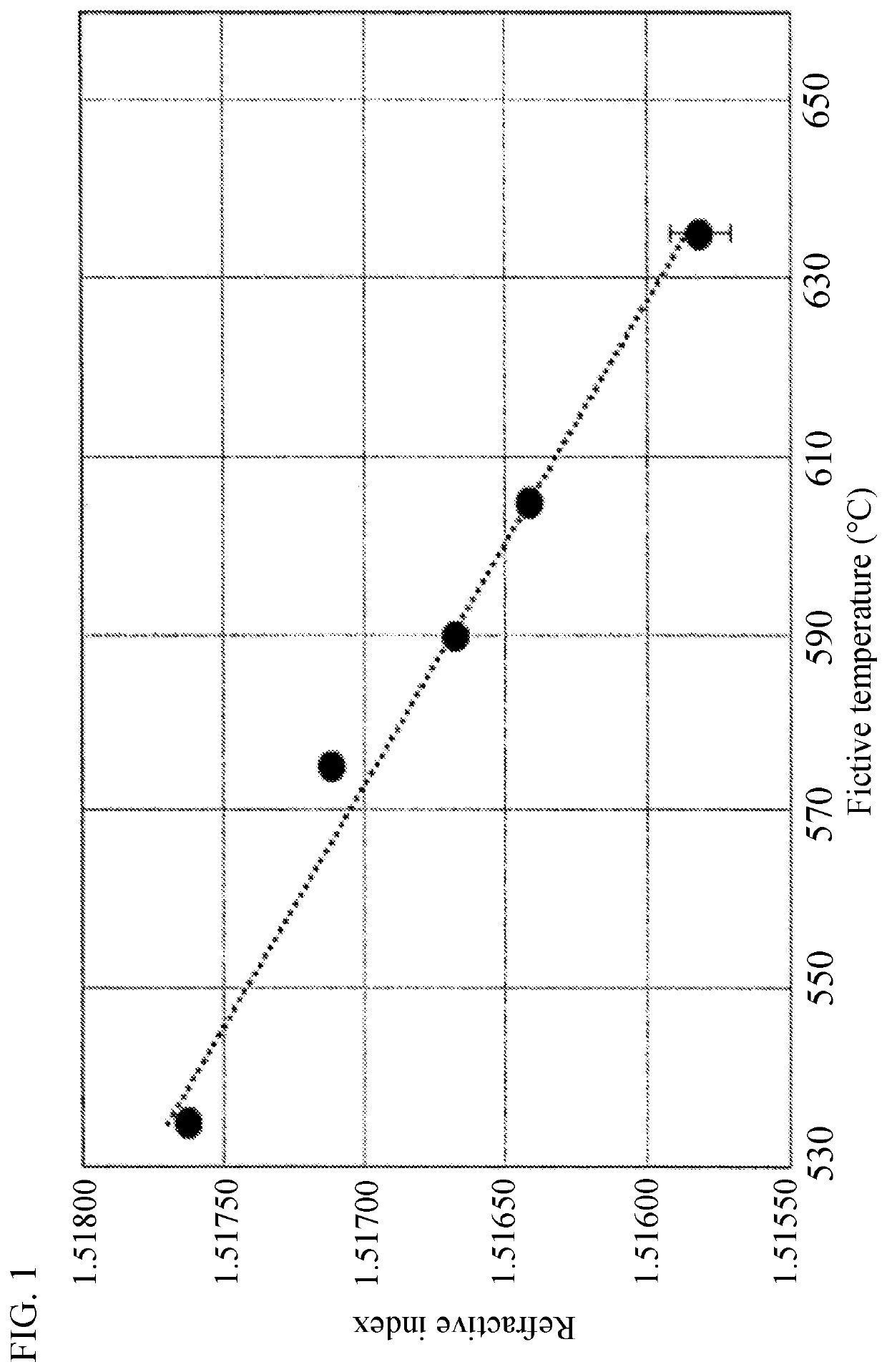
  • Figure 1
    Figure 1
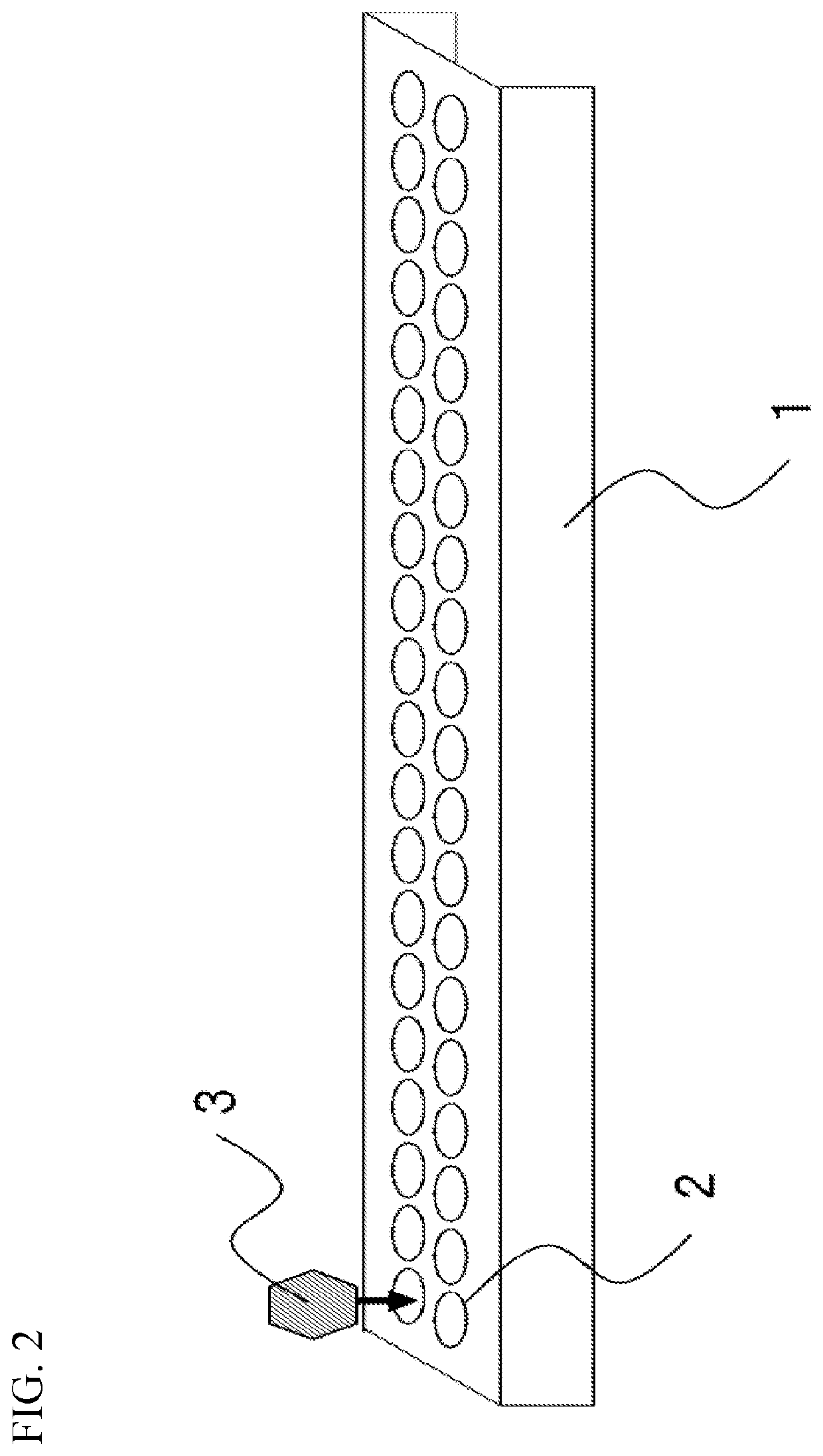
  • Figure 2
    Figure 2
Patent Text Reader

Abstract

The purpose of the present invention is to provide a glass for chemical strengthening that exhibits a high strength after chemical strengthening and is resistant to devitrification. The present invention relates to a glass for chemical strengthening that contains, expressed as mol% on an oxide basis, 55 to 70% SiO2, 10 to 25% Al2O3, 1 to 20% Li2O, 0 to 8% CaO, 0 to 8% SrO, and 0 to 5% ZrO2, in which the sum of the contents of CaO and SrO is 1.5 to 10%, the sum of the contents of Na2O and K2O is 3 to 11%, and the value X given by the formula ([Li2O]+[K2O]) / [Al2O3] is 0.1 to 1.1.
Need to check novelty before this filing date? Find Prior Art

Description

TECHNICAL FIELD

[0001] The present invention relates to a glass for chemical strengthening.BACKGROUND ART

[0002] Nowadays, cover glasses constituted of a chemically strengthened glass are used for both protecting the display devices of mobile appliances, such as cell phones, smartphones, personal digital assistants (PDA), and tablet terminals, and heightening the appearance attractiveness thereof.

[0003] In chemically strengthened glasses, there is a tendency that the larger the surface compressive stress (value) (CS) or depth of compressive-stress layer (DOC), the higher the strength. Meanwhile, internal tensile stress (CT) for balancing with the surface compressive stress is generated inside the glass, and hence the larger the CS or DOC, the larger the CT. In cases when a glass having a large CT breaks, the number of fragments is large and the fragments are easily scattered.

[0004] Patent Document 1 describes a feature that an increase in surface compressive stress can be attained while i...

Examples

examples

[0135]The present invention is explained below by reference to Examples, but the invention is not limited thereto. Examples 1 to 3 are comparative examples, and Examples 4 to 11 are working examples. With respect to the results of measurements shown in the tables, each blank indicates that no measurement was made.

Preparation of Glasses for Chemical Strengthening

[0136]Glass sheets were prepared through melting with a platinum crucible so as to result in the glass compositions shown in Tables 1 and 2 in terms of mole percentage on an oxide basis. Raw materials for glass were suitably selected from common raw materials including oxides, hydroxides, carbonates, and nitrates and weighed and mixed so as to result in a glass amount of 1,000 g. Subsequently, each raw-material mixture was put into the platinum crucible, and this crucible was introduced into a resistance-heating electric furnace of 1,500-1,700° C., where the mixture was melted, degassed, and homogenized for about 3 hours. The...