
Uniform remote control of mobile platforms
a mobile platform and remote control technology, applied in the field of data processing systems, can solve the problems of increasing personnel expenditure and/or labor costs, increasing the number of robots detected, and affecting the accuracy of the detection results, so as to achieve uniform control and simplify the effect of mobile platform control
- Summary
- Abstract
- Description
- Claims
- Application Information
AI Technical Summary
Benefits of technology
Problems solved by technology
Method used
Image

Examples
Embodiment Construction
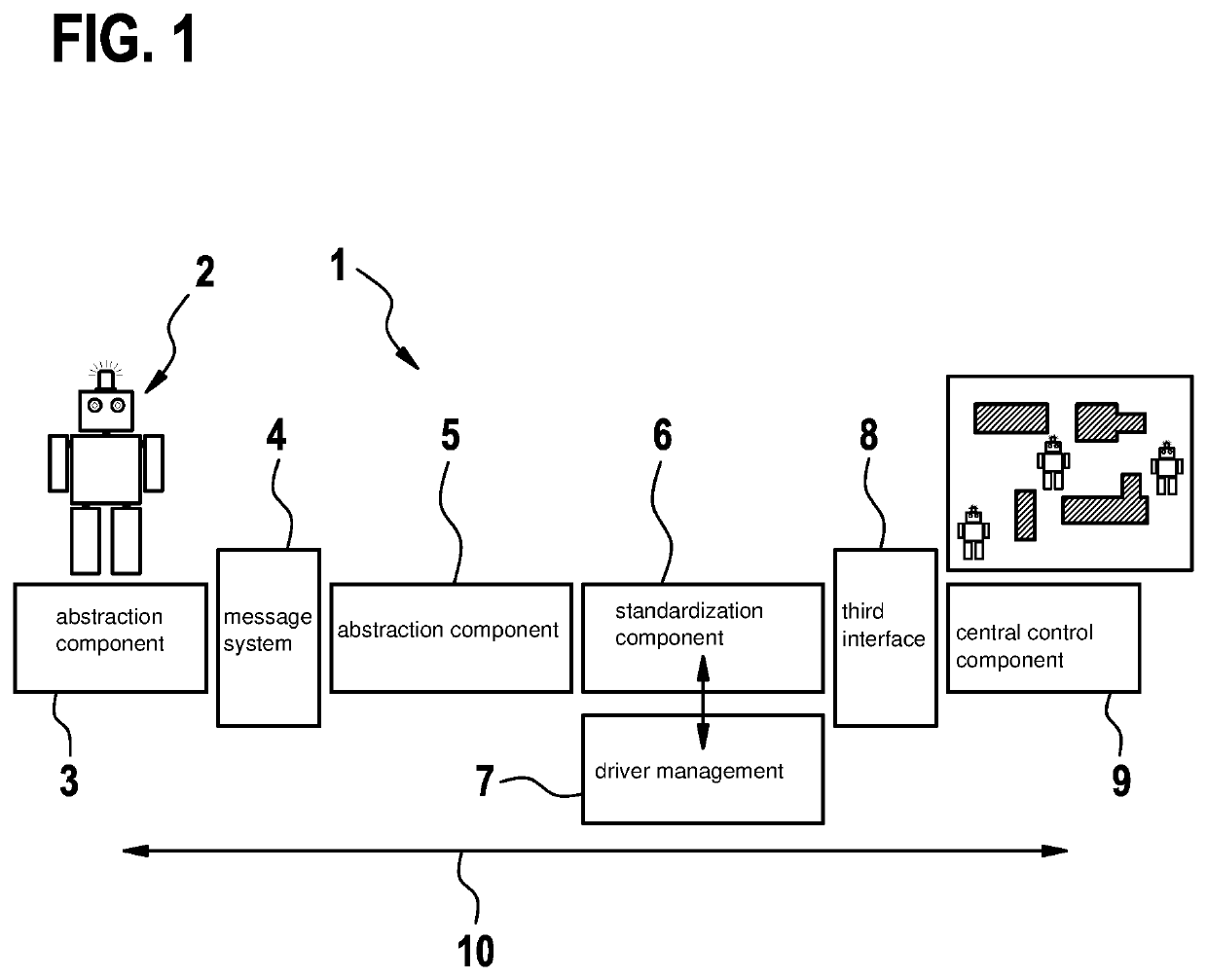
[0058]FIG. 1 illustrates by way of example a data processing system 1 for controlling a multitude of types of mobile platforms. Mobile platforms in the form of robots, for example, are illustrated in FIG. 1. The present invention is also applicable to other mobile platforms, however, in particular, to vehicles such as, for example, passenger cars or trucks.
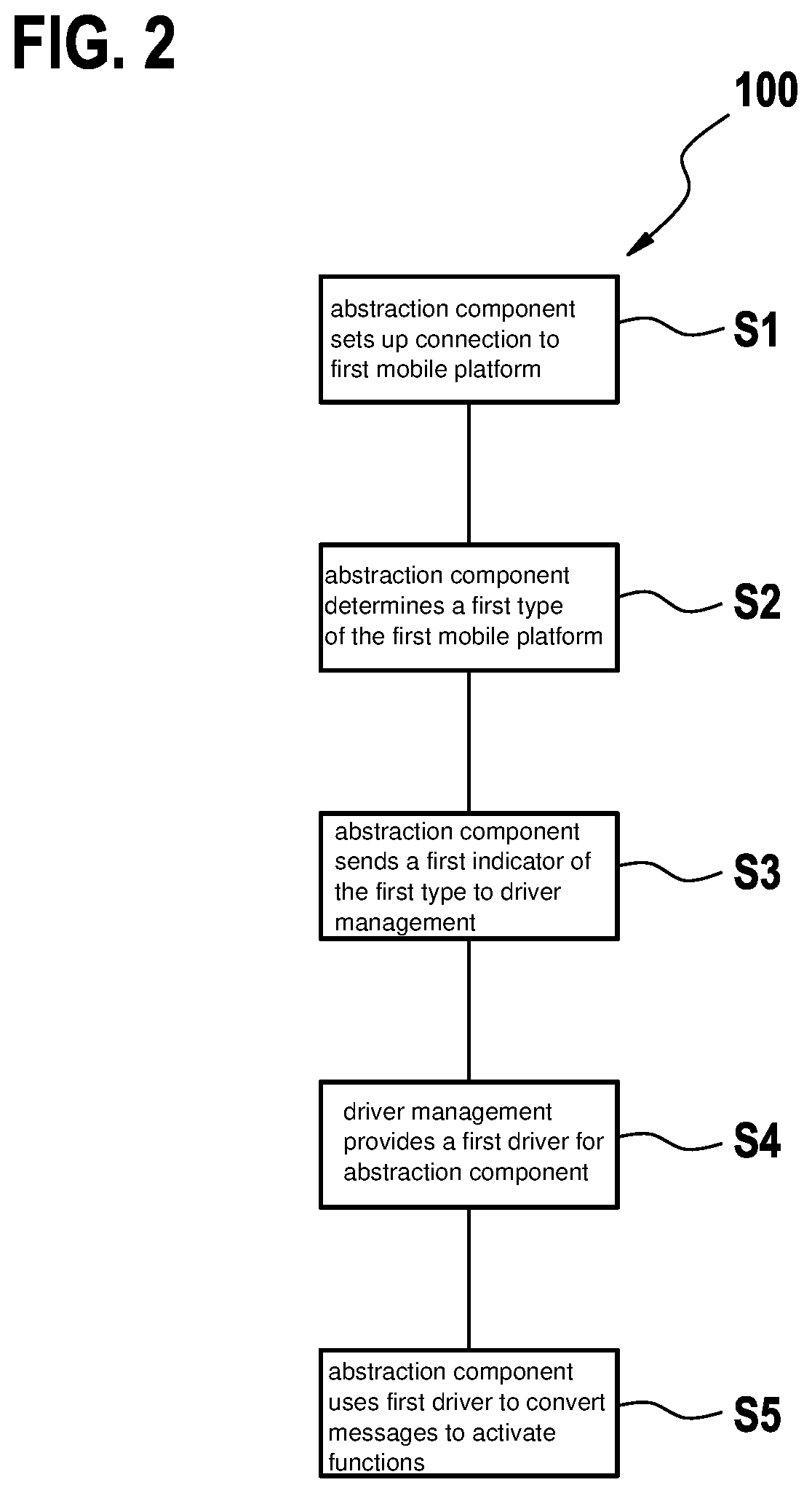
[0059]Data processing system 1 includes an abstraction component 3, 5, a standardization component 6 and a driver management 7. The abstraction component 3, 5 is designed to be connected to a first mobile platform 2, to determine a first type of first mobile platform 2 and to communicate with driver management 7 in order to indicate to the driver management the first type of the first mobile platform. Driver management 7 is designed to provide a first driver as a function of the indicated first type of abstraction component 3, 5. Abstraction component 3, 5 includes a first interface to first mobile platform 2 and a second interfac...
PUM
 Login to View More
 Abstract
Description
Claims
Application Information
 Login to View More