
Iron golf club head including weight members for adjusting center of gravity thereof
a golf club and head technology, applied in golf clubs, racket sports, sport apparatus, etc., can solve the problems of difficult swinging through long irons for ordinary amateur players, and the swinging style of other clubs is not applicable to other clubs
- Summary
- Abstract
- Description
- Claims
- Application Information
AI Technical Summary
Benefits of technology
Problems solved by technology
Method used
Image

Examples
Embodiment Construction
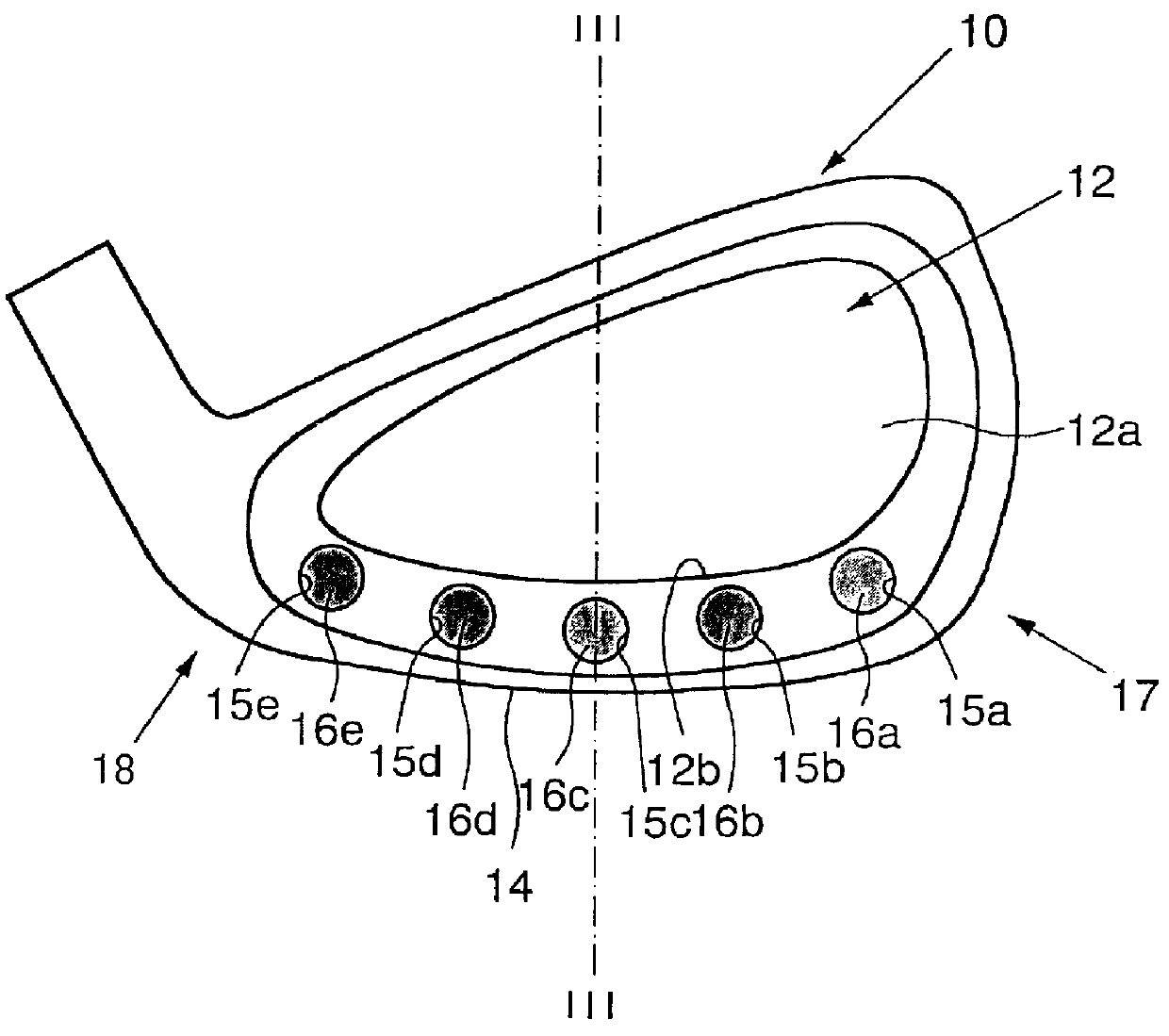
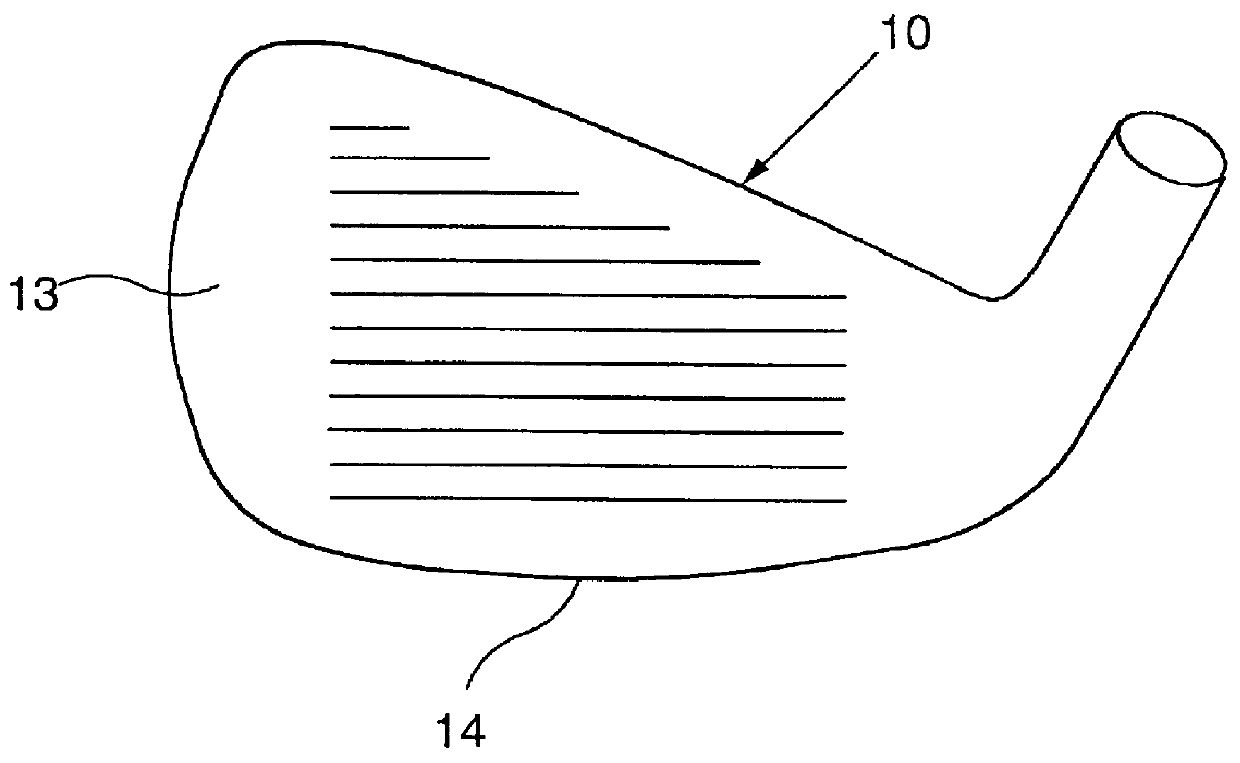
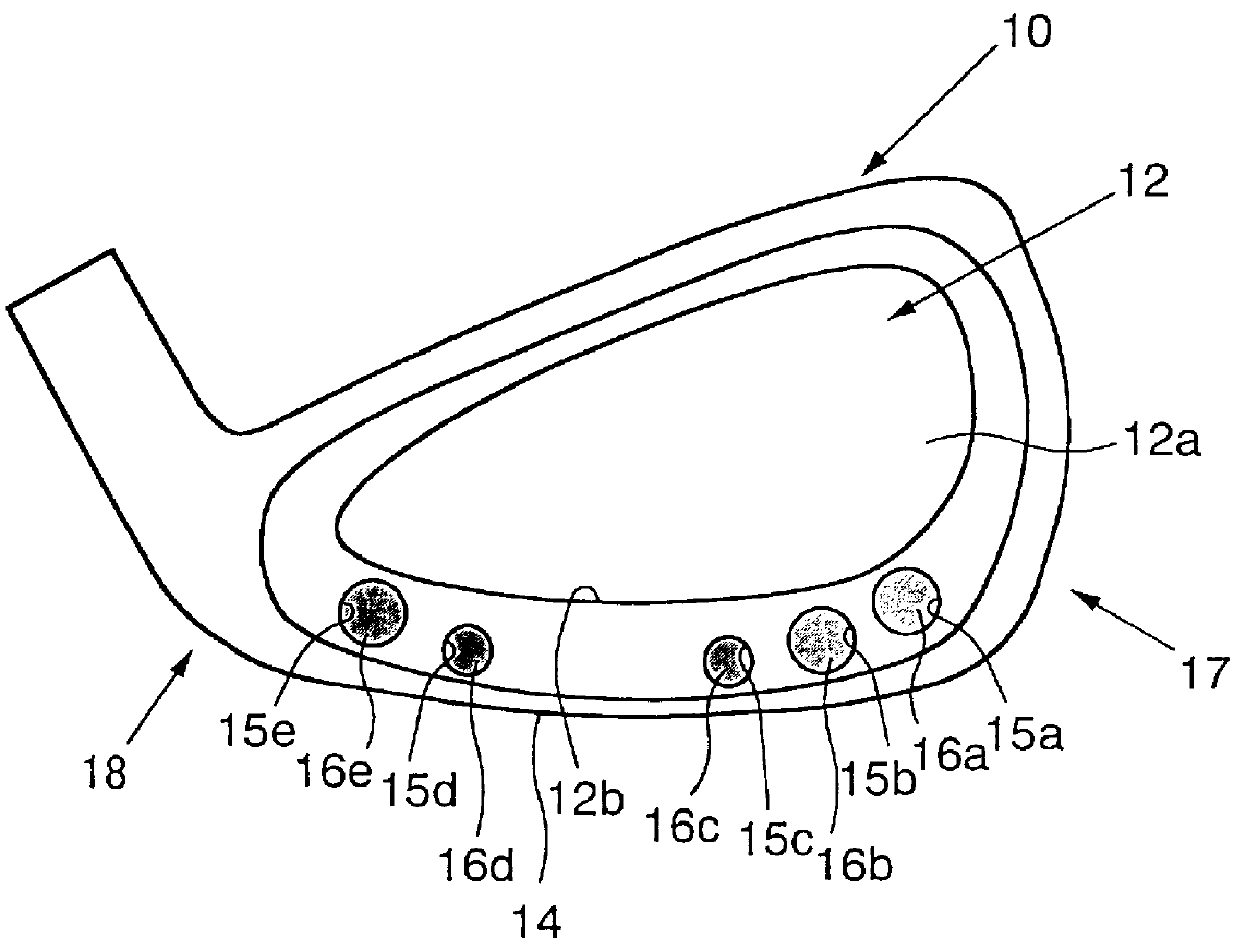
An iron golf club head according to one embodiment of the present invention is described herebelow with reference to the attached drawings, FIGS. 1 to 3.
A club head body 10 is made of titanium or titanium alloy. At a rear surface of the head body 10 is formed a cavity 12 with a perimeter substantially similar in shape to that of the rear surface. The depth of the cavity 12 is deeper at its lower portion than at the upper portion thereof. A bottom surface 12a of the cavity 12 is positioned substantially parallel to a front surface 13 of the head body 10. A striking area of the head body 10 is defined between the bottom surface 12a of the cavity 12 and the front surface 13. The head body 10 is typically formed by casting.
As shown in FIG. 2, five circular holes 15, more specifically circular holes 15a to 15e, are bored in the head body 10 between an inner lower wall 12b of the cavity 12 and a sole 14 of the head body 10. The holes 15a to 15e are positioned at substantially equal interv...
PUM
 Login to View More
 Abstract
Description
Claims
Application Information
 Login to View More