
Method and system of dynamic traffic control in a communication network
- Summary
- Abstract
- Description
- Claims
- Application Information
AI Technical Summary
Benefits of technology
Problems solved by technology
Method used
Image

Examples
Embodiment Construction
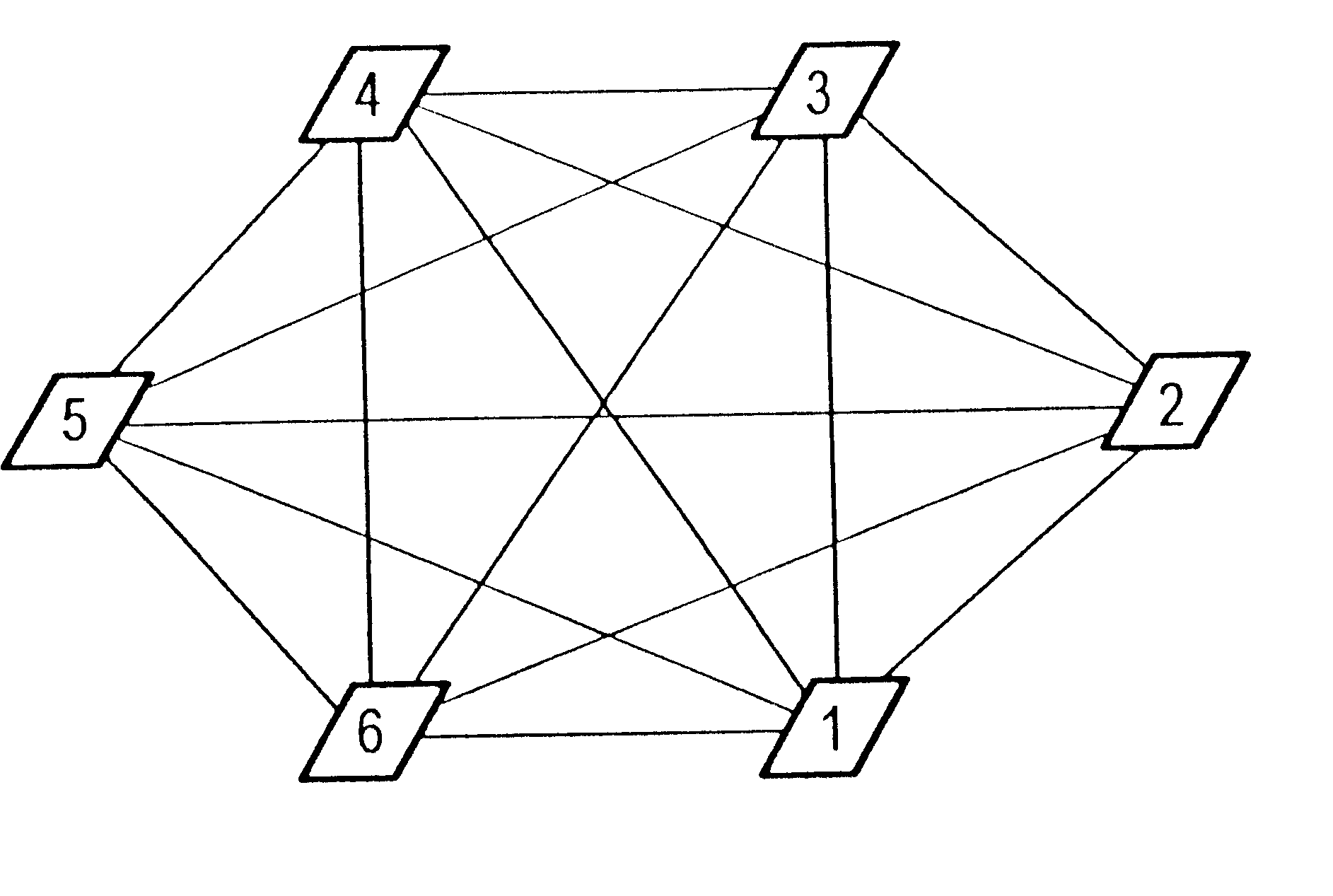
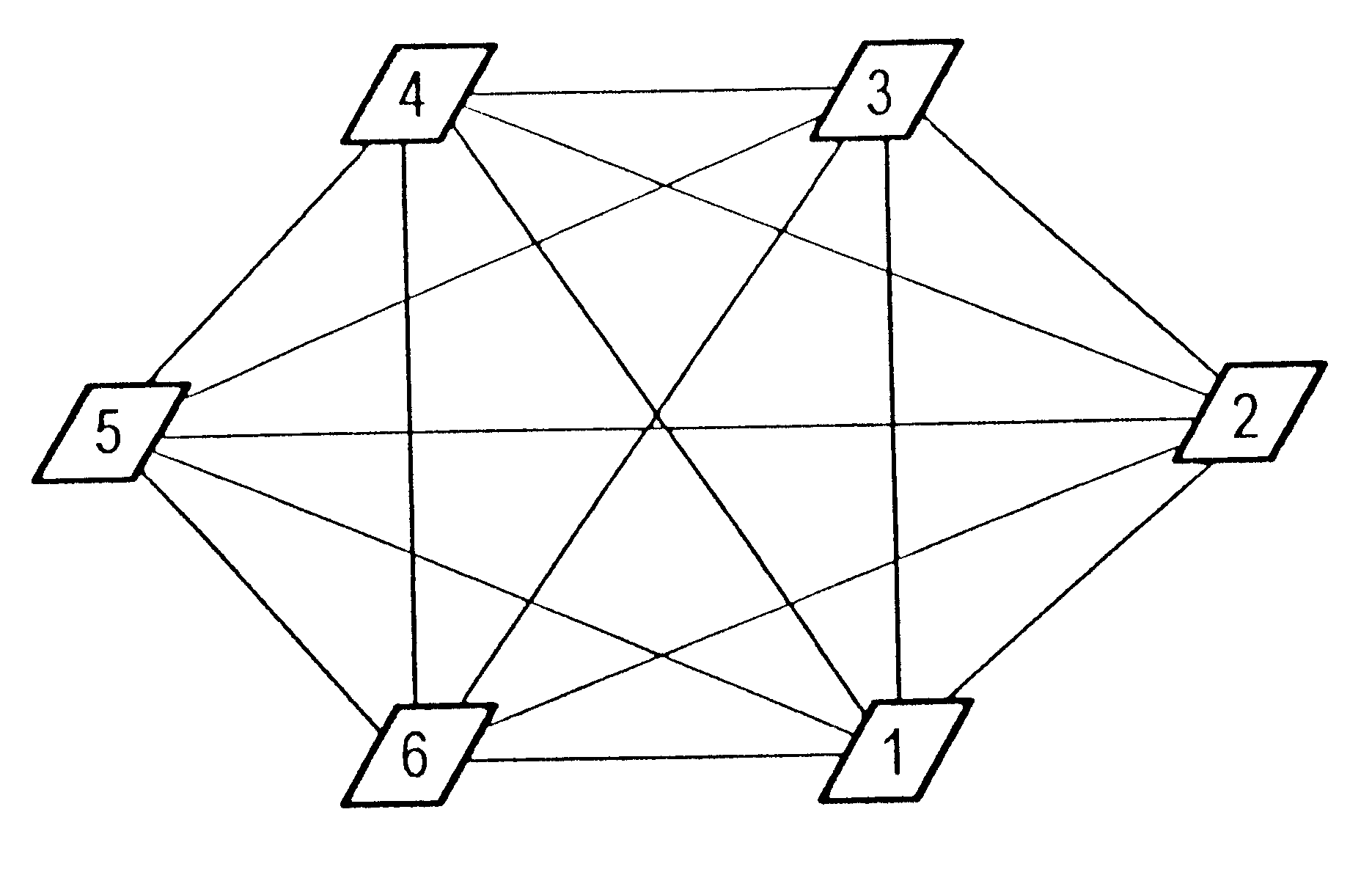
FIG. 1 shows a block diagram of a small, fully interworked network with six network switching nodes 1, 2, 3, 4, 5, and 6 and the corresponding capacities of the path sections or links A, B, C, D, E, F, G, H, I, J, K, L, M, N, and O between the network nodes 1, 2, 3, 4, 5, and 6, whereby a link A, B, C, D, E, F, G, H, I, J, K, L, M, N, and O comprises at least one trunk group.
Let it then be assumed that the switching node 1 has a call for switching node 2 but the direct route of link A between the two switching nodes is not available.
Let it also be assumed that the initial path fan, i.e. the fan of the active alternate paths, comprises three alternate paths after its most recent re-initialization, namely the two-link alternate paths B and F, C and G, D and H via the switching nodes, 3, 4 and 5.
Let it also be assumed that the overflowing traffic is uniformly cyclically distributed onto these active alternate paths B and F, C and G, D and H by the routing system, namely in the sequence...
PUM
 Login to View More
 Abstract
Description
Claims
Application Information
 Login to View More