
Chair for a drum
a chair and drum technology, applied in the field of chairs for drums, can solve the problems of increasing fatigue, affecting the performance, and affecting the performance, so as to reduce fatigue or ache, and improve the cushioning
- Summary
- Abstract
- Description
- Claims
- Application Information
AI Technical Summary
Benefits of technology
Problems solved by technology
Method used
Image

Examples
second embodiment
In FIG. 5, the concaves 12A and 13A for the hip bones in the chair 10A are oval in their peripheral shape, with their longer axis extending in the front and rear direction of the seat plate 11. The oval shape and orientation enable coping with variations in the posture of the performer, who might tend to sit more toward either the front or the rear than the chair designer might expect.
In the third embodiment 10B for the drum chair shown in FIG. 6, concaves 12B and 13B are also of an oval shape with the long axis forward and rearward. The concaves are provided in a seat plate 11B which is normally circular in shape as seen in the prior art.
The FIGS. 6 and 7 reference numbers corresponding to those in FIG. 1 are for the same structure.
fourth embodiment
In the chair 10C shown in FIG. 7, a single additional concave 16 for the region below the coccyx is placed below where the coccyx of the performer P (see coccyx 94 in FIG. 9) is situated, rearward of the concaves 12 and 13 toward the rear of the seat plate 11. A concave 16 below the coccyx enables mitigating fatigue and pain in the vicinity of the coccyx 94, helping the performer to maintain a satisfactory posture and concentrate on the performance.
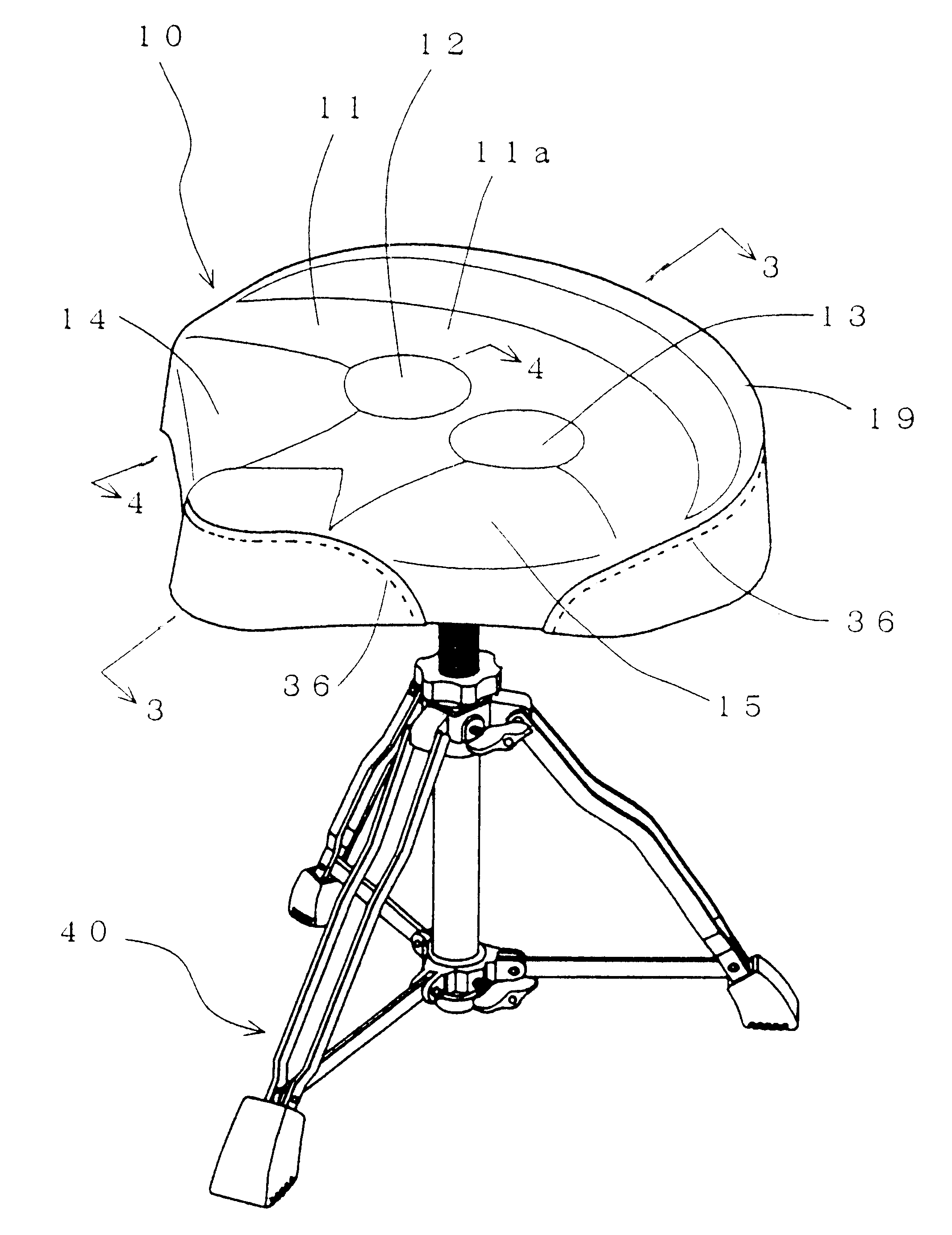
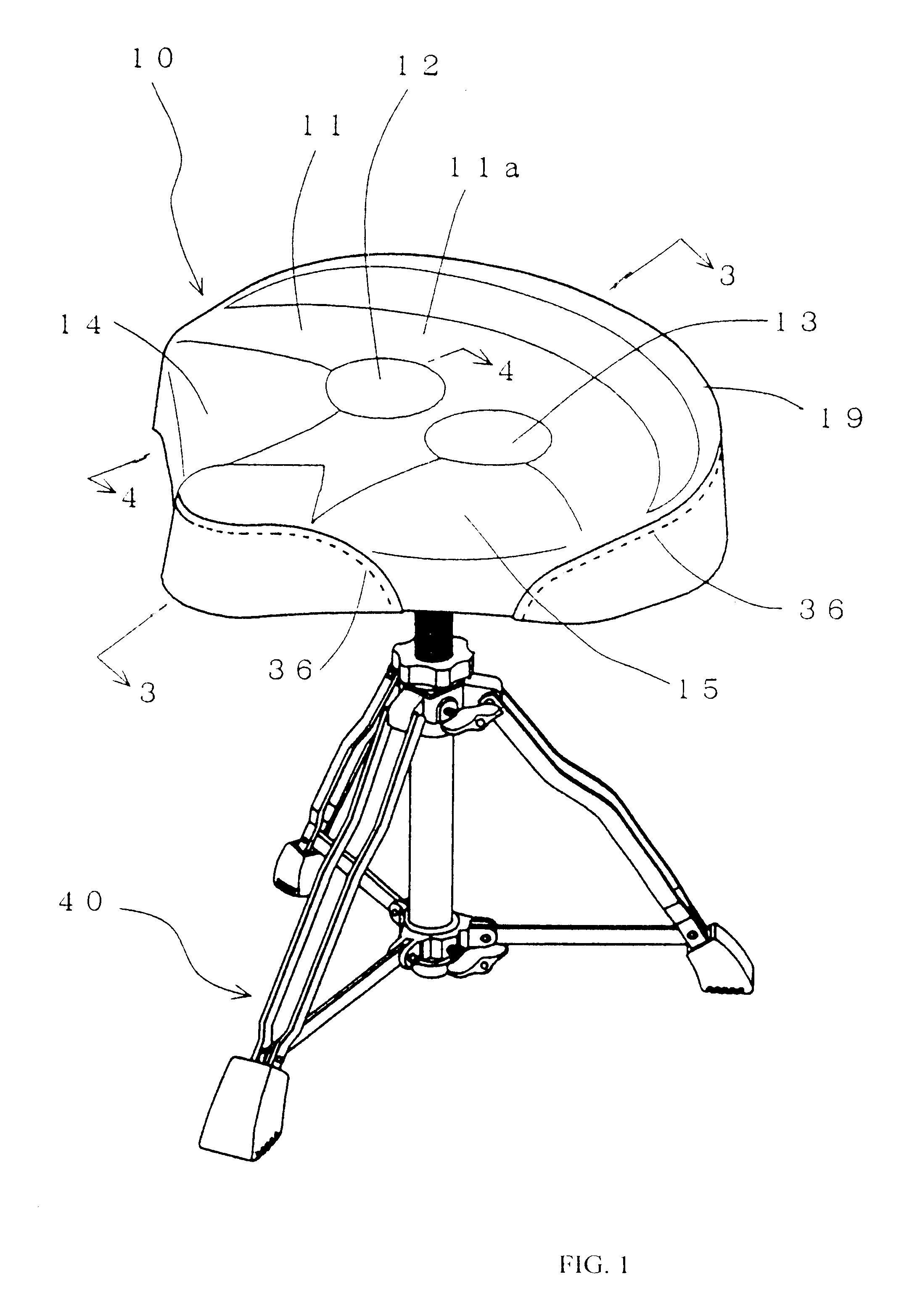
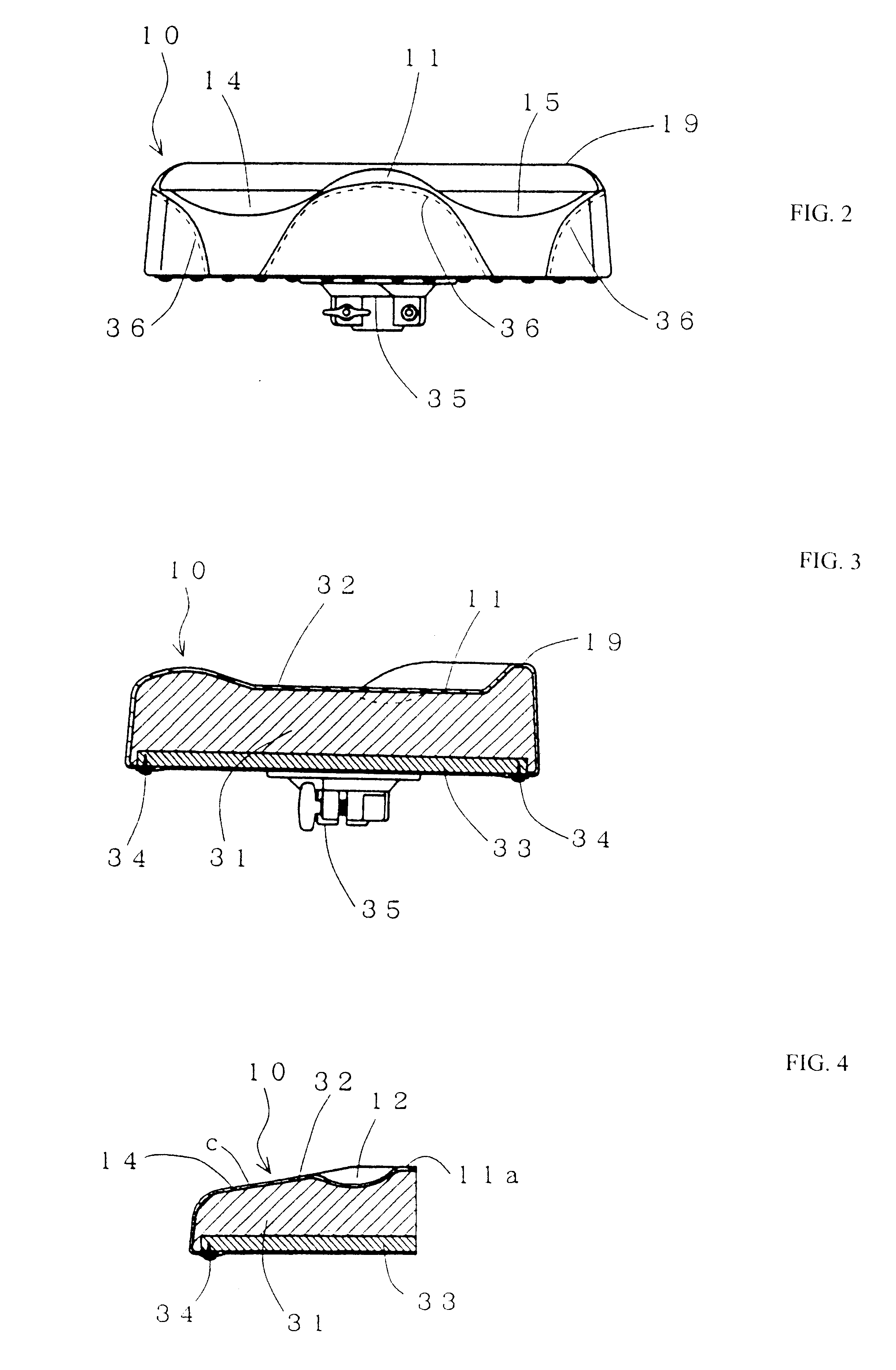
In the embodiments of the invention shown in FIGS. 1, 5 and 7, the right and left sides at the front of the seat plate 11 are each formed in the shape of curved concaves 14 and 15 which are capable of holding the femoral part 95 of both legs of the performer. It is preferable for each of the curved concaves 14 and 15 to be formed as a surface C which becomes gradually lower toward the edge of the seat plate, as in FIG. 4.
Stitching 36 is so placed along the edges of the seat plate 11 to avoid the stitching being felt around the femoral par...
PUM
 Login to View More
 Abstract
Description
Claims
Application Information
 Login to View More