
Electro-optical dimming system
a technology of optical dimming and optical dimming, which is applied in the field of projection display dimming, can solve the problems of significant effects on the viewability of the display, inability to provide the precise dimming control needed for many critical applications, and inability to easily read information from the display in high ambient light conditions, etc., to achieve the effect of improving reliability, facilitating precise dimming range, and dissipating the associated hea
- Summary
- Abstract
- Description
- Claims
- Application Information
AI Technical Summary
Benefits of technology
Problems solved by technology
Method used
Image

Examples
first embodiment
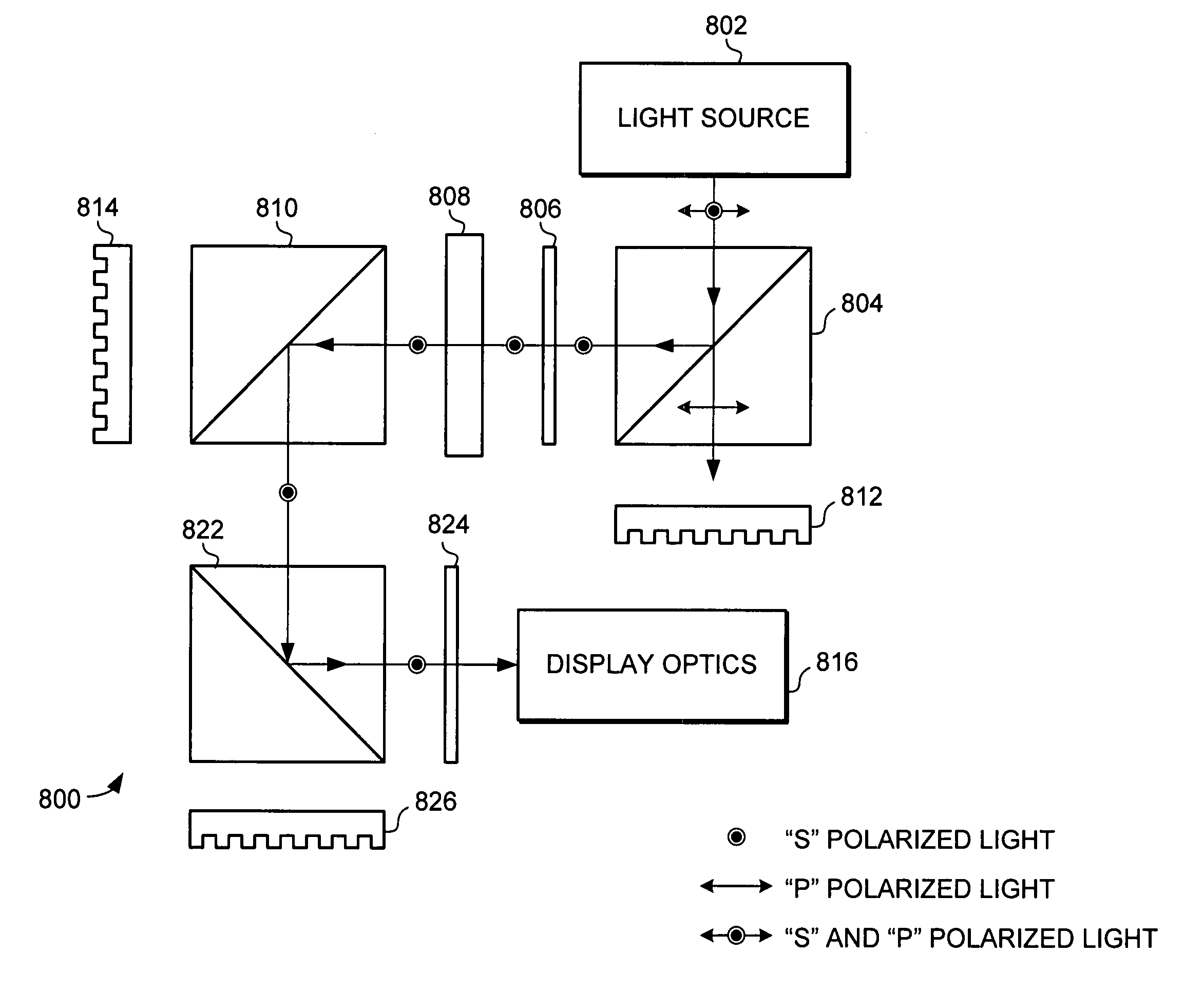
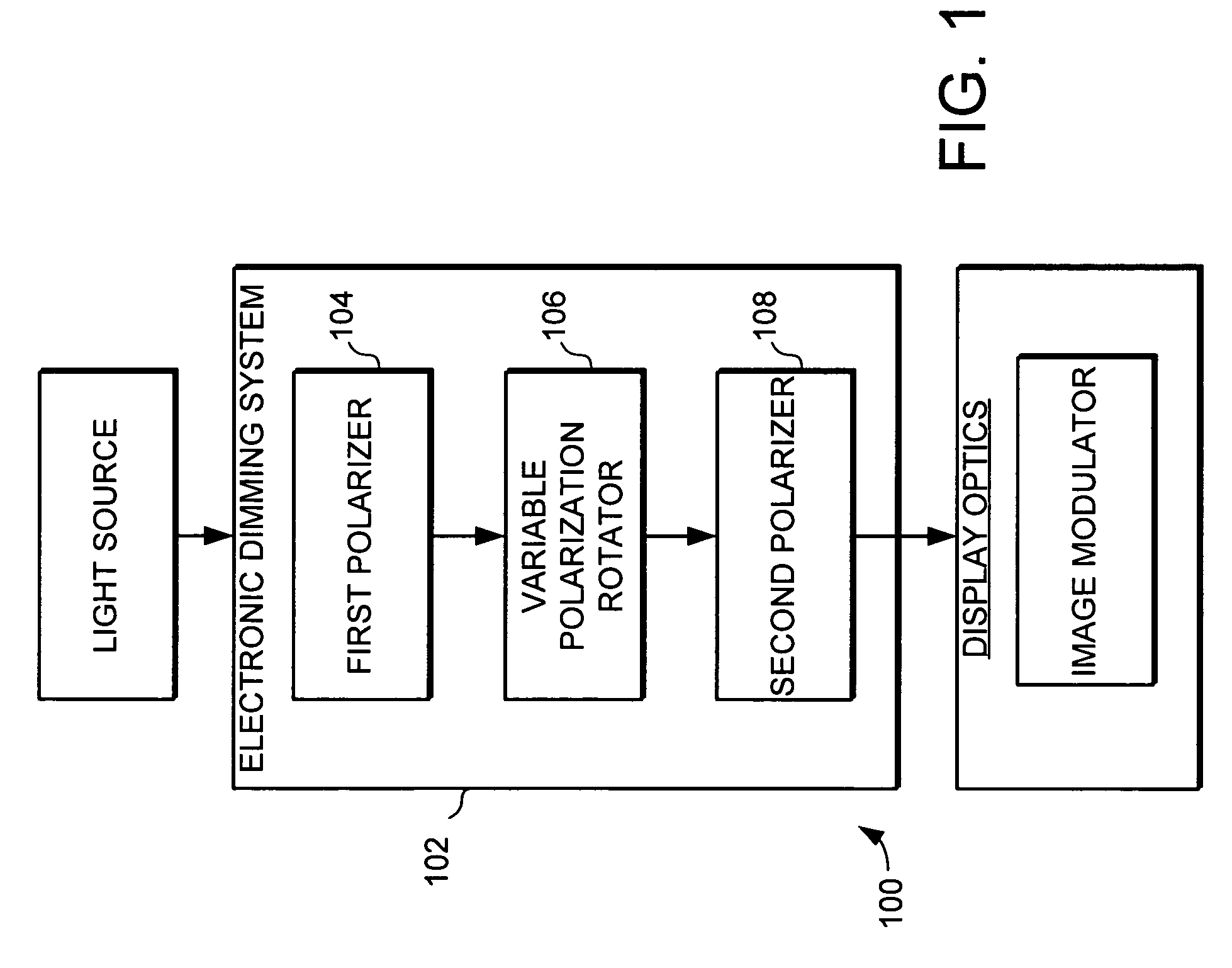
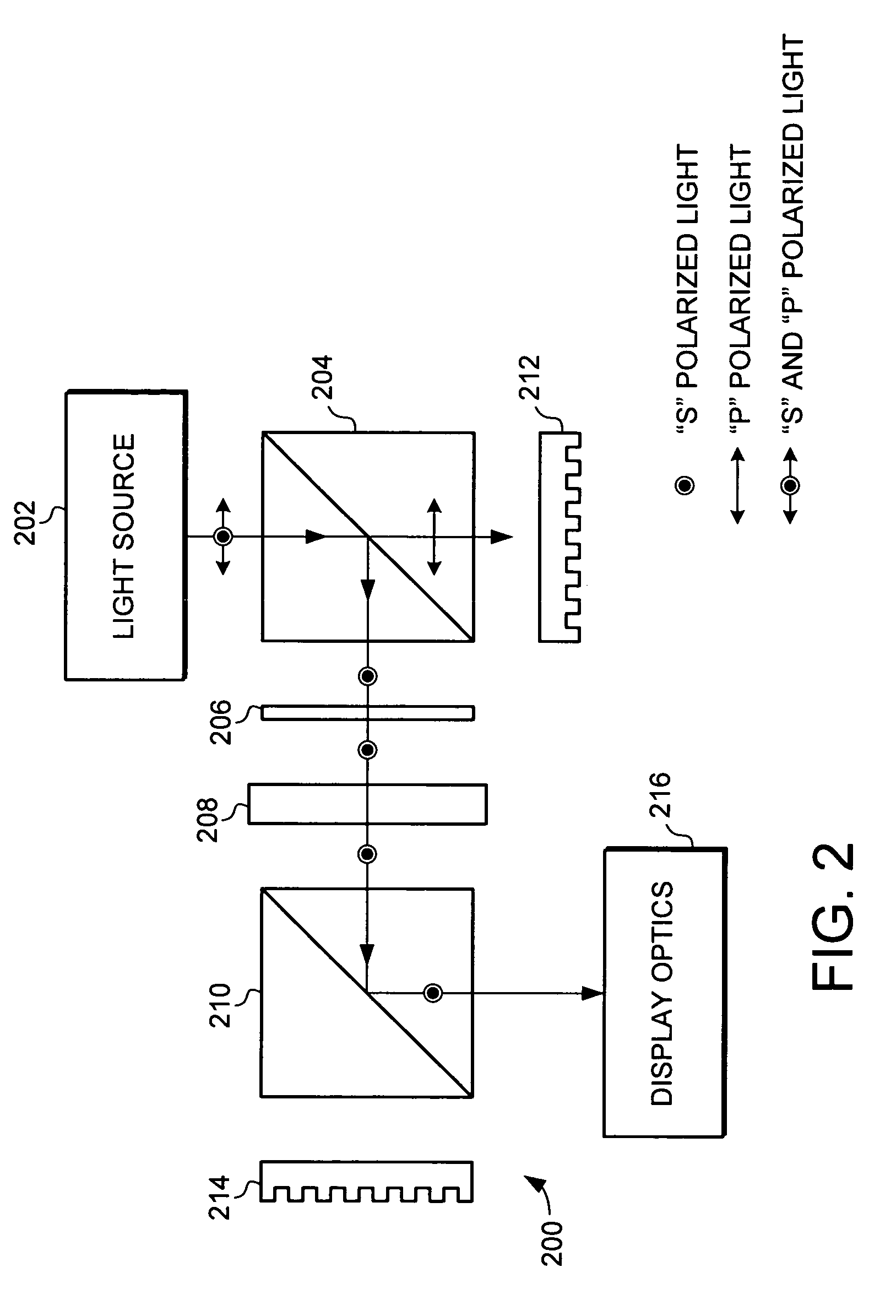
[0021]In a first embodiment, the first polarizer and the second polarizer comprise non-absorbing polarizers and the dimming system further includes a heat absorber. In this specification, a non-absorbing polarizer is defined as a polarizer that does not use absorption as its primary means of polarization. One type of non-absorbing polarizer is a reflective polarizer such as a polarizing beam splitter. Polarizing beam splitters are polarizers that separate the different polarizations of light spatially. Another type non-absorbing polarizer is a scattering polarizer. Another type non-absorbing polarizer is a birefringent refractive polarizer. Another example of non-absorbing polarizers are polarization converters that convert light to desired polarization. A polarization converter may include one or more of the other types of polarizers. Likewise, an absorbing polarizer is one that uses absorption as its primary means of polarization. Examples of absorbing polarizers include typical d...
third embodiment
[0024]In a third embodiment, the variable polarization rotator comprises a pair of variable polarization rotators selected and configured to have substantially opposite angular variation. Like the other embodiments, this embodiment provides the ability to control the amount of light passed to the display by selectively rotating the polarization of the light with the pair of variable polarization rotator. However, in this embodiment a pair of rotators are used that have substantially opposite angular variation. By using such a pair of rotators, angular variation caused by one rotator can be substantially cancelled by the angular variation in the other rotator. The image quality is improved by providing improved angular uniformity in the light output of the dimmer. Thus, this embodiment is able to precisely control the amount of light passed to the display while providing a light source with improved angular uniformity.
[0025]Turning now to FIGS. 2 and 3, a first exemplary embodiment o...
PUM
 Login to View More
 Abstract
Description
Claims
Application Information
 Login to View More