
Method for producing a polyarylene sulfide
a polyarylene sulfide and polyarylene technology, applied in the field of polyarylene sulfide production, can solve the problems of long time, enormous energy and long time, and achieve the effect of efficiently producing a polyarylene sulfide in a short tim
- Summary
- Abstract
- Description
- Claims
- Application Information
AI Technical Summary
Benefits of technology
Problems solved by technology
Method used
Image

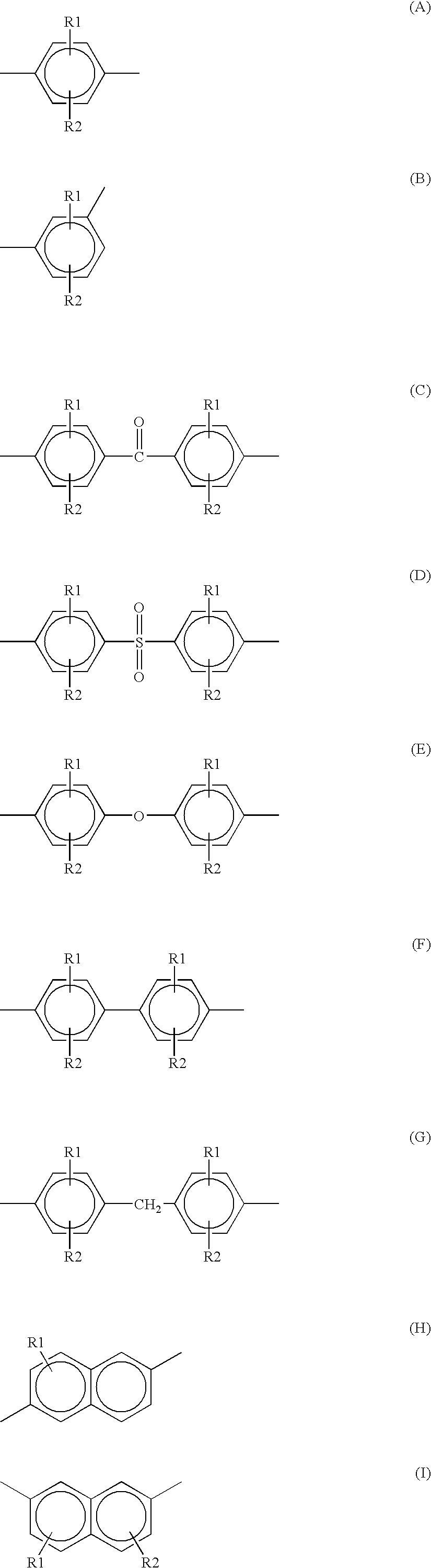
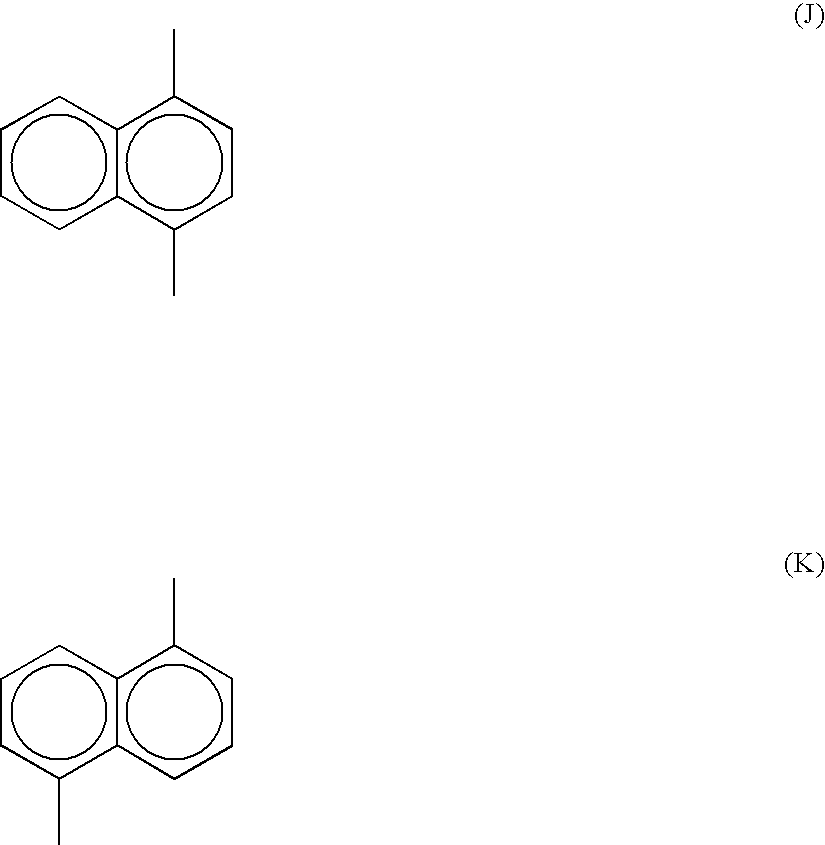
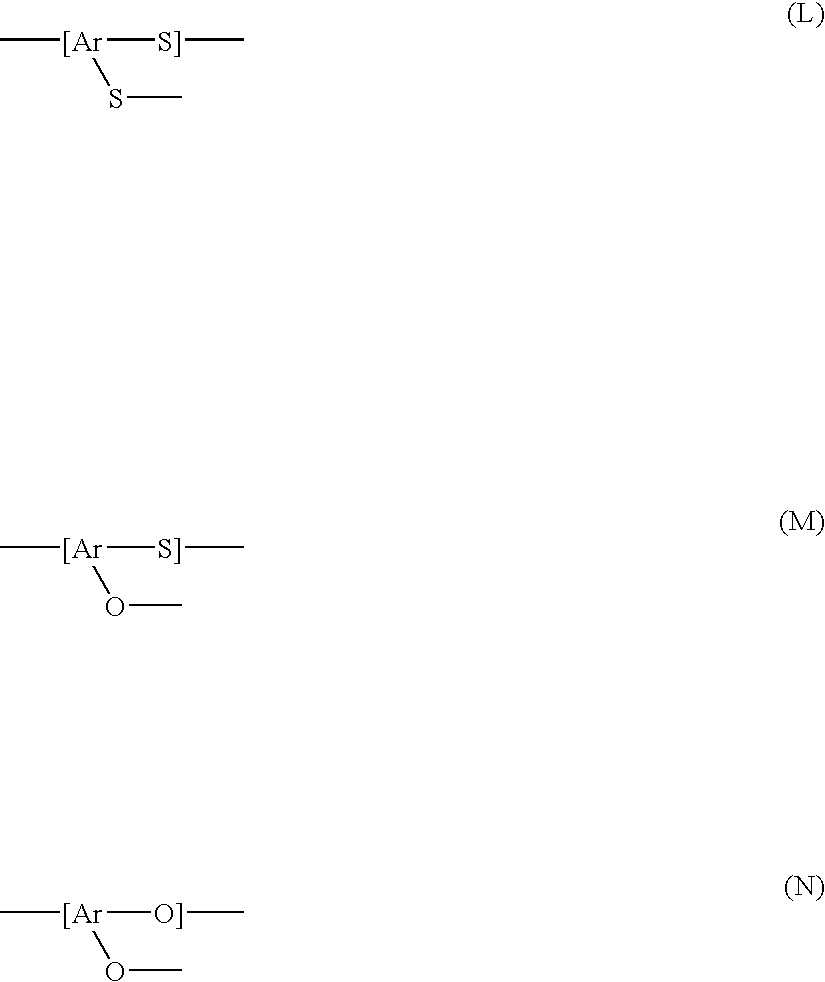
Examples
example 1
Step 1
[0112]A 1-liter autoclave made of SUS316 and having a stirrer was charged with 116.9 g of 48 wt % sodium hydrosulfide aqueous solution (1.0 mole as sodium hydrosulfide), 193.8 g of 21.7 wt % sodium hydroxide aqueous solution obtained by dissolving 96% pure sodium hydroxide into 150 g of water (1.05 moles as sodium hydroxide), 99.1 g (1.0 mole) of NMP and 21.3 g (0.26 mole) of anhydrous sodium acetate at room temperature. On the assumption that all the charged sodium hydrosulfide was converted into sodium sulfide, the amount of water per mole of the sulfur contained in sodium sulfide was 12.7 moles (228.8 g), and the amount of NMP was 1.0 mole.
[0113]A rectification tower containing a packing material was attached to the top of the autoclave through a valve, and nitrogen was fed at atmospheric pressure. With stirring, the reaction system was heated gradually up to the boiling point of NMP (205° C.), taking about 1.5 hours, for liquid elimination, to obtain 205 g of a distillate....
example 2
[0141]The low-hydrated sodium sulfide obtained by the same operation as described for step 2 of Example 1 was used to synthesize a PPS. This example shows the results obtained by using polymerization conditions different from those of Example 1.
Polymerization for Synthesis of PPS
[0142]The operation up to the step 2 was performed as described for Example 1, and the valve at the top of the autoclave was closed. Then, the obtained reaction system was cooled to about 200° C., and a 100 ml pressure vessel communicating with the interior of the autoclave was attached to the top of the autoclave through a pressure valve. The interior of the autoclave was sealed in nitrogen gas. The 100 ml pressure vessel was used to pressure-inject 149.5 g (1.02 moles) of liquid p-dichlorobenzene (p-DCB) and 170.1 g (1.72 moles) of NMP into the autoclave using pressure nitrogen. At this stage, the amount of water per mole of the sulfur contained in the reaction system was 0.28 mole, and the amount of NMP w...
example 3
[0144]An operation was performed as described for Example 2, except that water was pressure-injected into the reaction system in the cooling stage from 270° C. to 250° C. after keeping the temperature at 270° C. for 90 minutes in “Polymerization for synthesis of PPS” in Example 2, instead of pressure-injecting water into the reaction system in the heating stage after keeping the temperature at 238° C. for 90 minutes.
[0145]The form of the content and the state of the reactor after taking out the content were almost similar to those of Example 1. The yield of the polymer obtained after recovery work was 86%, and the melt viscosity of the polymer was 108 Pa·s. The whiteness (L value) was 60.
PUM
| Property | Measurement | Unit |
|---|---|---|
| molar concentration | aaaaa | aaaaa |
| temperature | aaaaa | aaaaa |
| molar ratio | aaaaa | aaaaa |
Abstract
Description
Claims
Application Information
 Login to View More