
Accommodating intraocular lens system and method
a technology of intraocular lens and lens body, applied in the field of intraocular lens, can solve the problems of preventing widespread commercialization of such devices, unable to accommodate, and typically already lost ability
- Summary
- Abstract
- Description
- Claims
- Application Information
AI Technical Summary
Benefits of technology
Problems solved by technology
Method used
Image

Examples
Embodiment Construction
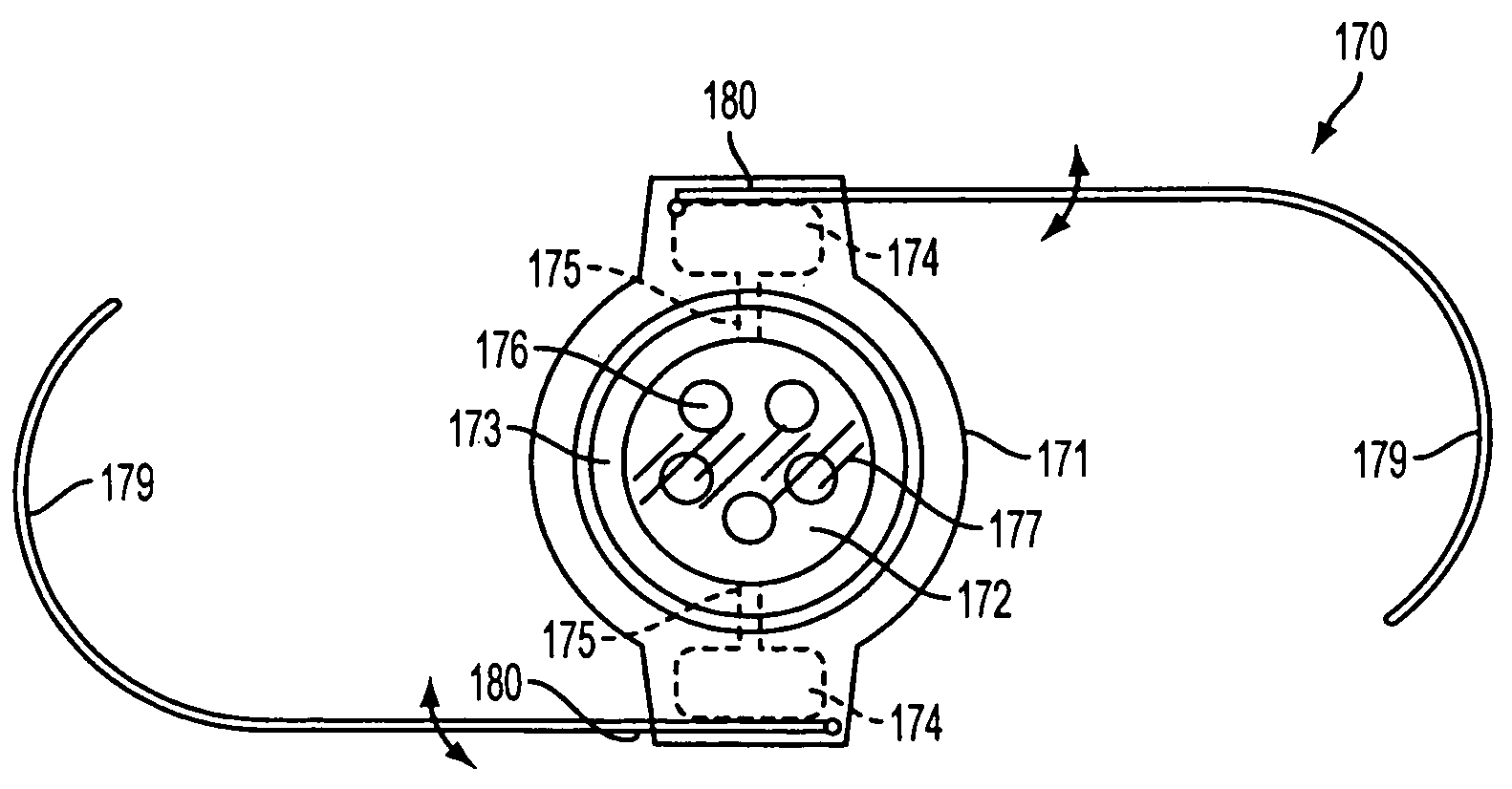
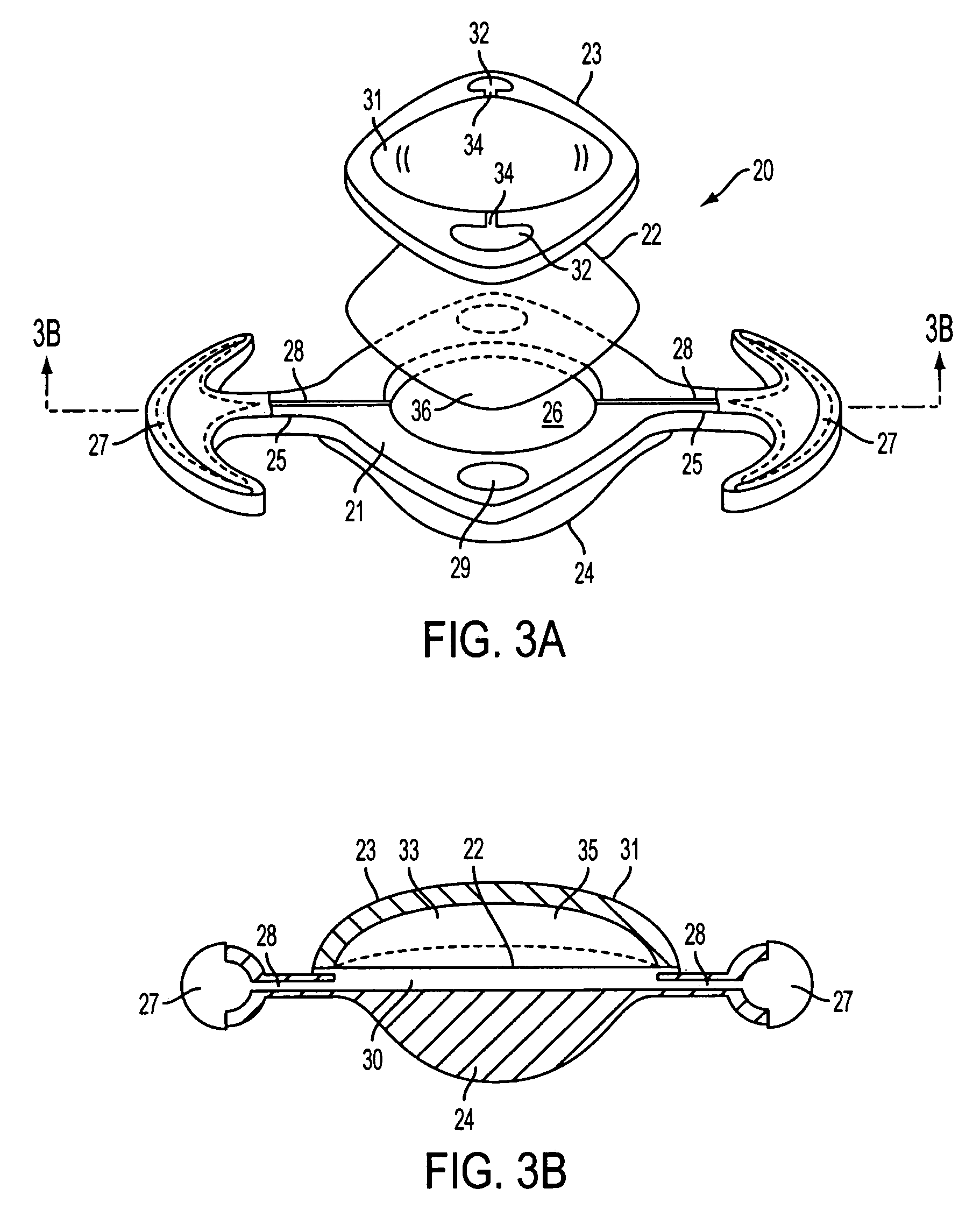
[0038]The present invention is directed to an in-situ accommodating intraocular lens system. In accordance with the principles of the present invention, methods and apparatus are provided wherein a lens has an optic element comprising a substrate and an actuator that divides the interior of the housing into two or more fluid-filled chambers. The fluids filling the chambers may have the same or different indices of refraction. The optical power of the lens is altered by changing the relative amounts of fluids in the chambers, thereby changing the curvature of one of the chambers and the refractive path of light passing through the optic element.
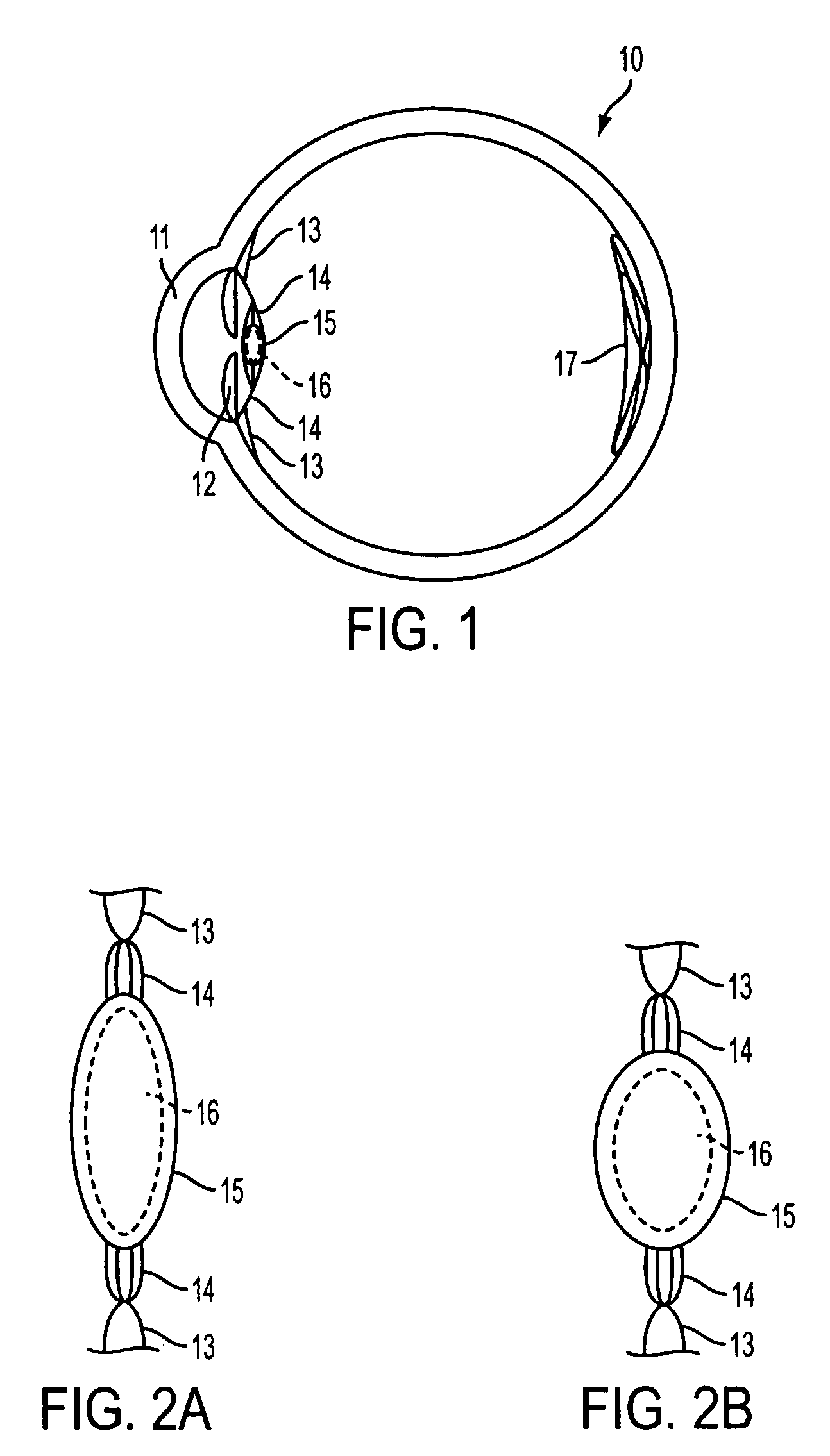
[0039]Referring to FIGS. 1 and 2, the structure and operation of a human eye are first described as context for the present invention. Eye 10 includes cornea 11 pupil 12, ciliary muscles 13, ligament fibers 14, capsule 15, lens 16 and retina 17. Natural lens 16 is composed of viscous, gelatinous transparent fibers, arranged in an “onion-like” ...
PUM
 Login to View More
 Abstract
Description
Claims
Application Information
 Login to View More