
Multiprime RSA public key cryptosystem
Patent Information
- Authority / Receiving Office
- US · United States
- Current Assignee / Owner
- Publication Date
- 2007-06-12
- Estimated Expiration
- Not applicable · inactive patent
Smart Images
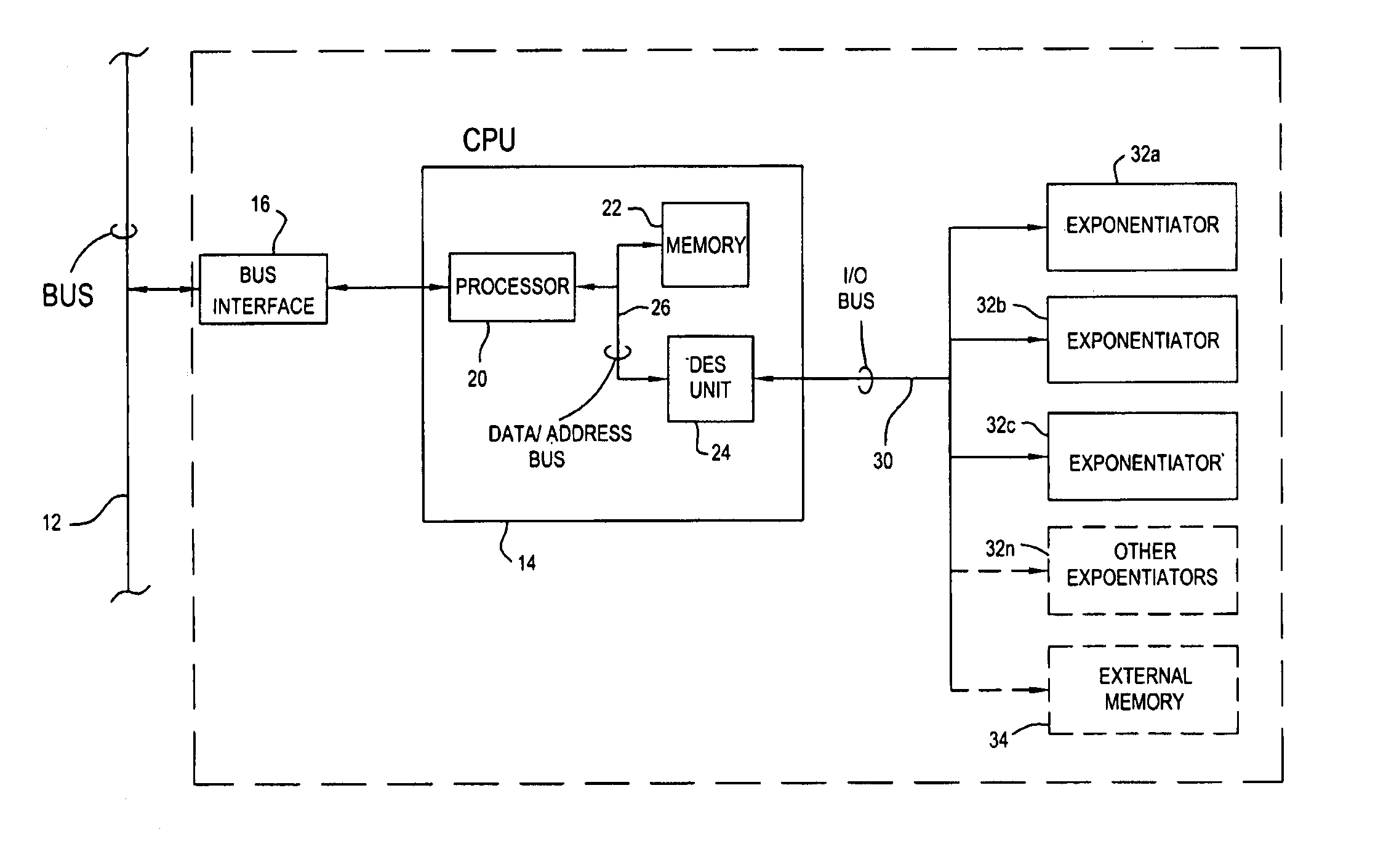
Figure 1 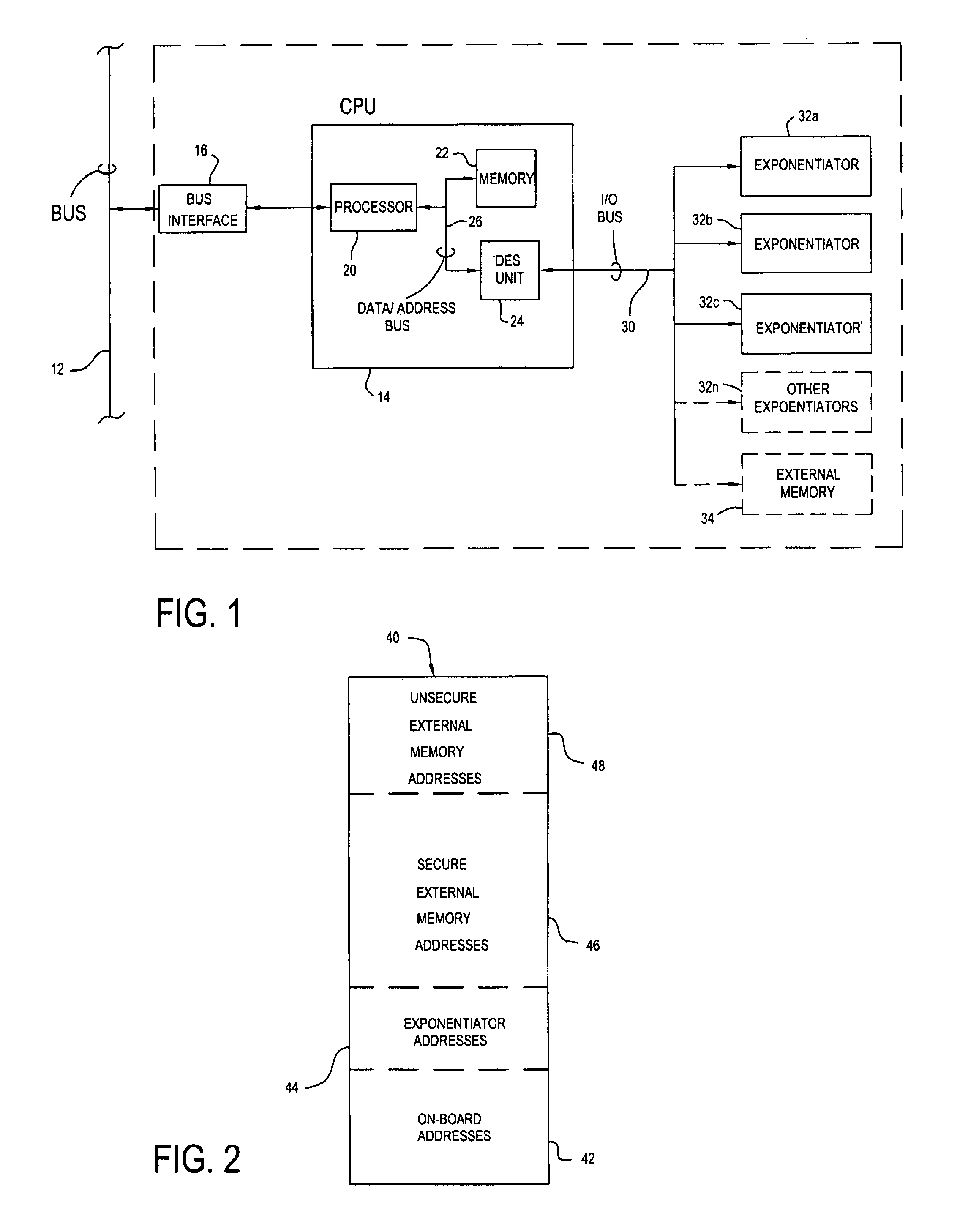
Figure 2 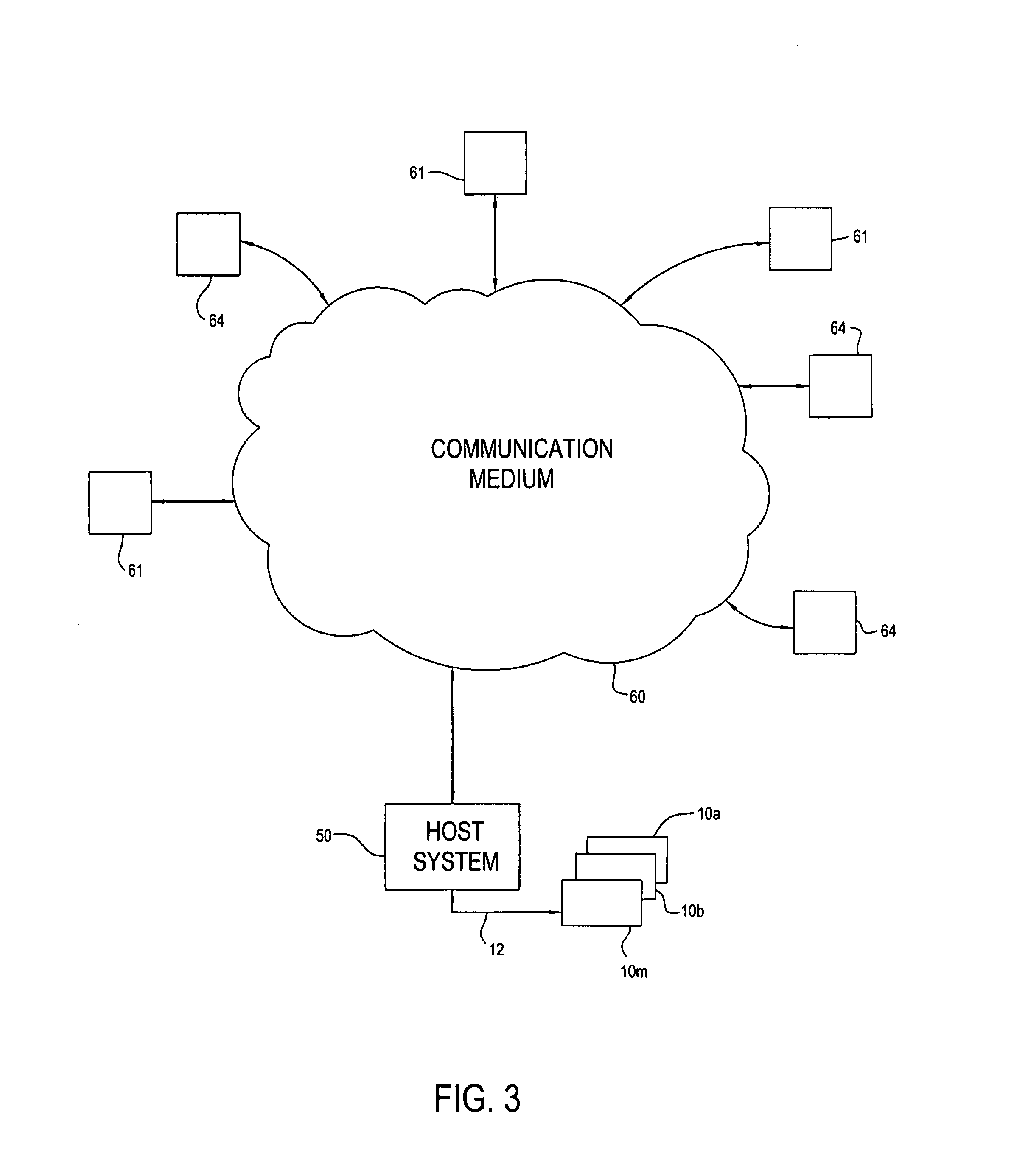
Figure 3
Abstract
Description
CLAIM OF PRIORITY
[0001] This is a Continuation of application Ser. No. 08 / 784,453, filed Jan. 16, 1997 and incorporated herein by reference. This application also claims the benefit of U.S. Provisional Application No. 60 / 033,271 for PUBLIC KEY CRYPTOGRAPHIC APPARATUS AND METHOD, filed Dec. 9, 1996, naming as inventors, Thomas Collins, Dale Hopkins, Susan Langford and Michael Sabin, the disclosure of which is incorporated by reference.BACKGROUND OF THE INVENTION
[0002] This invention relates generally to communicating data in a secure fashion, and more particularly to a cryptographic system and methods using public key cryptography.
[0003] Computer systems are found today in virtually every walk of life for storing, maintaining, and transferring various types of data. The integrity of large portions of this data, especially that portion relating to financial transactions, is vital to the health and survival of numerous commercial enterprises. Indeed, as open and unsecured data communicati...
Examples
Embodiment Construction
[0031]As indicated above, the present invention is employed in the context of the RSA public key encryption / decryption scheme. As also indicated, the RSA scheme obtains its security from the difficulty of factoring large numbers, and the fact that the public and private keys are functions of a pair of large (100–200 digits or even larger) prime numbers. Recovering the plaintext from the public key and the ciphertext is conjectured to be equivalent to factoring the product of two primes.
[0032]According to the present invention, the public key portion e is picked. Then, three or more random large, distinct prime numbers, p1, p2, . . . , pk are developed and checked to ensure that each of (p1−1), (p2−1), . . . , (pk−1) is relatively prime to e. Preferably, the prime numbers are of equal length. Then, the product n=p1·p2· . . . ·pk is computed.
[0033]Finally, the decryption exponent, d, is established by the relationship:
d≡e−1 mod ((p1−1) (p2−1) . . . (pk−1)).
[0034]The message data, M is...