
Zero insertion force connector assembly for circuit boards/cards
a technology of circuit boards and connectors, applied in the direction of coupling contact members, coupling device connections, coupling/disassembly parts, etc., can solve the problems of unwieldy and impractical movement of a first board in a normal direction to the surface of a second board, and the conventional mechanism requires a large number of complicated components to achieve the intended manner of operation
- Summary
- Abstract
- Description
- Claims
- Application Information
AI Technical Summary
Benefits of technology
Problems solved by technology
Method used
Image

Examples
Embodiment Construction
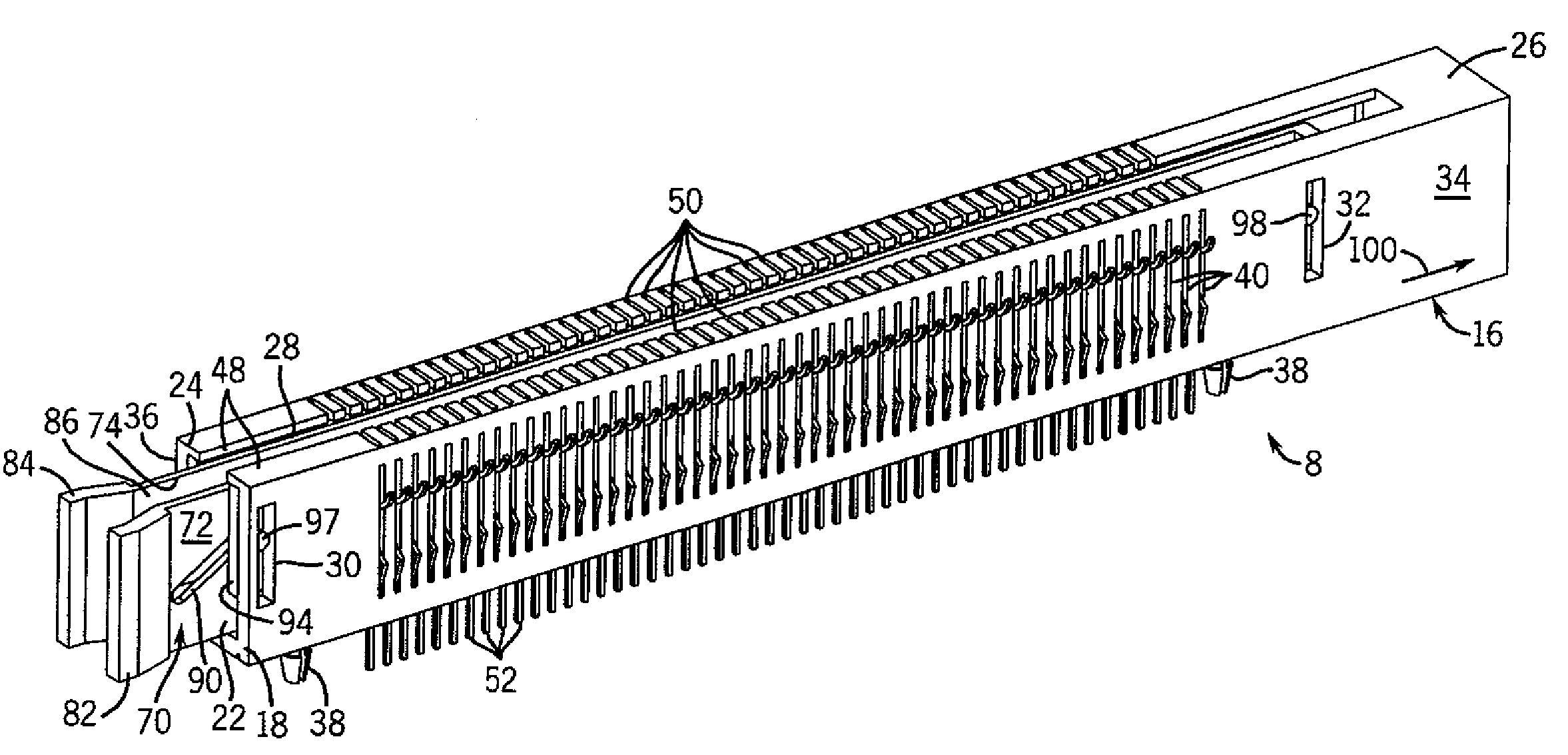
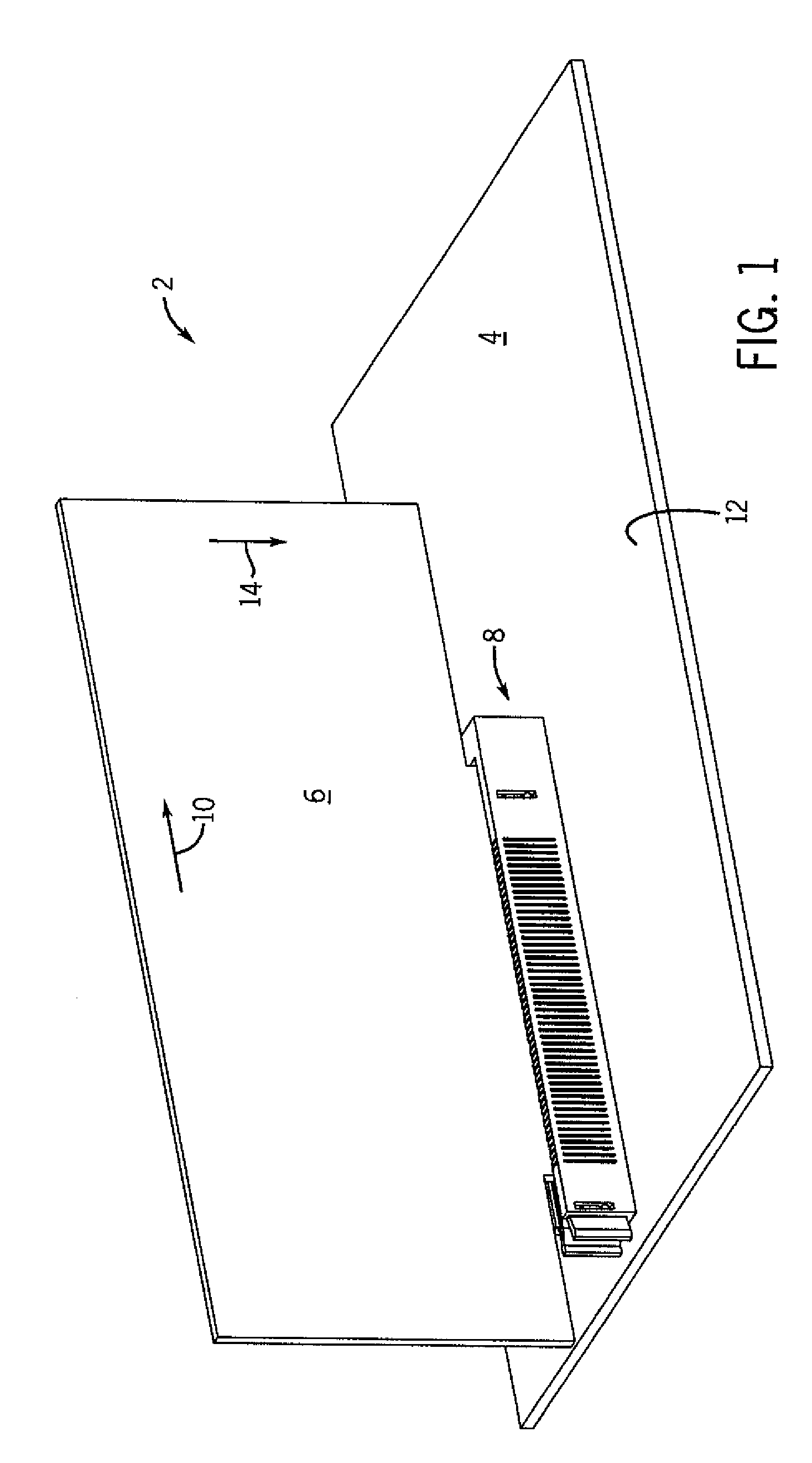
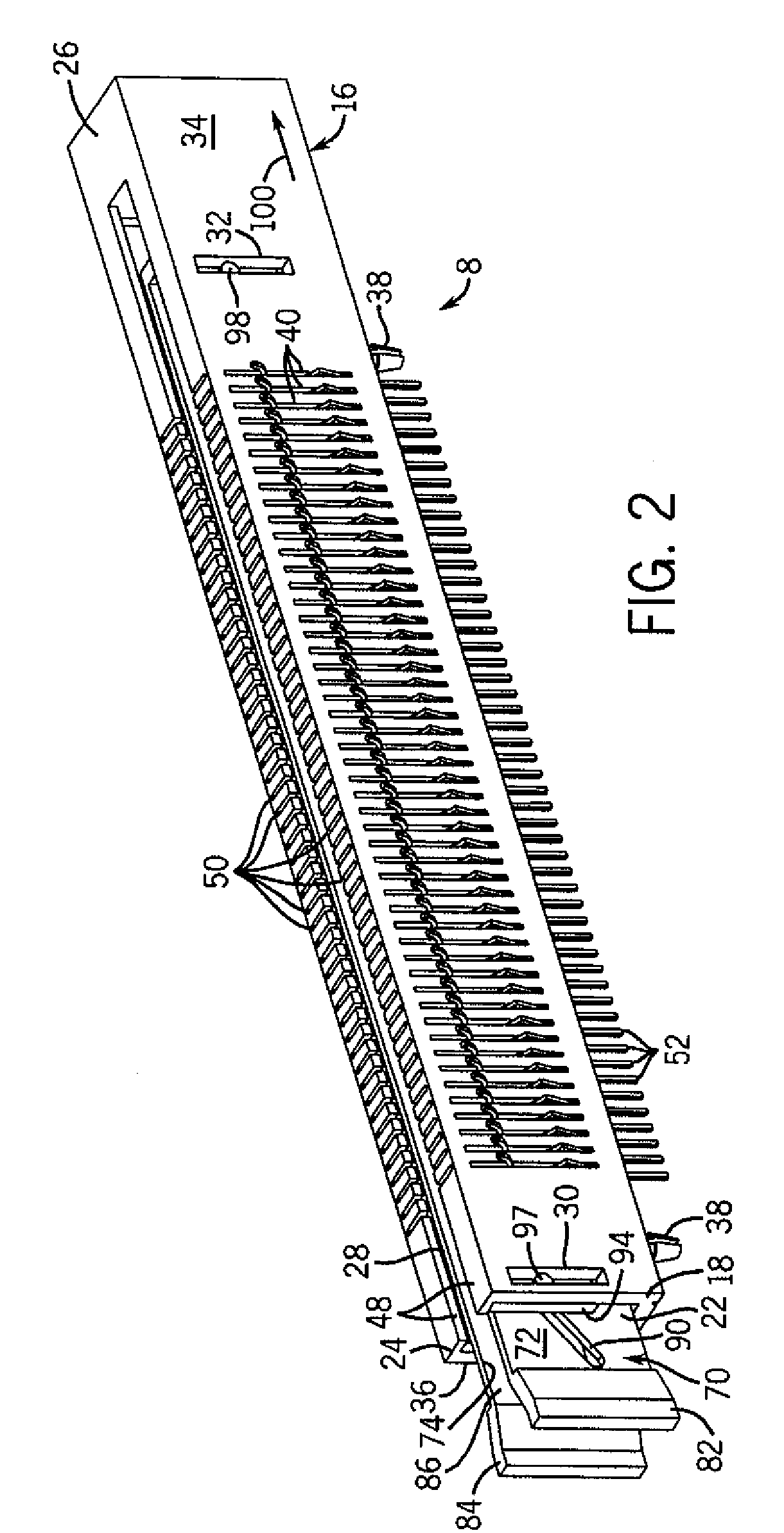
[0023]Referring to FIG. 1, an exemplary assembly 2 that can be implemented in a computer or other computerized device (not shown) includes a motherboard 4 and a daughtercard 6 connected together by way of a connector assembly 8. As will be described in further detail below, the connector assembly 8 facilitates the connecting or installation of the daughtercard 6 with respect to the motherboard 4 in an improved manner that involves merely the sliding of the daughtercard in the direction indicated by an arrow 10 that is generally parallel to a surface 12 of the motherboard 4, without requiring significant sliding movement along a direction indicated by an arrow 14 that is normal to the surface 12. Inversely, removal of the daughtercard 6 with respect to the motherboard 4 occurs by moving the daughtercard in a direction opposite to that indicated by the arrow 10, and does not require significant movement along a direction opposite to that indicated by the arrow 14. When the daughtercar...
PUM
 Login to View More
 Abstract
Description
Claims
Application Information
 Login to View More