Piezo-resonance igniter and ignition method for propellant liquid rocket engine

a technology of igniter and propellant liquid, which is applied in the direction of machines/engines, marine propulsion, vessel construction, etc., can solve the problems of spark production stoppage, reduce the pressure drop across the resonance system, and simplify the control and operation of the rocket engine.

US7565795B1Active Publication Date: 2009-07-28AEROJET ROCKETDYNE OF DE
83 Cites 14 Cited by

Patent Information

Authority / Receiving Office
US · United States
Patent Type
Patents(United States)
Current Assignee / Owner
Publication Date
2009-07-28

Smart Images

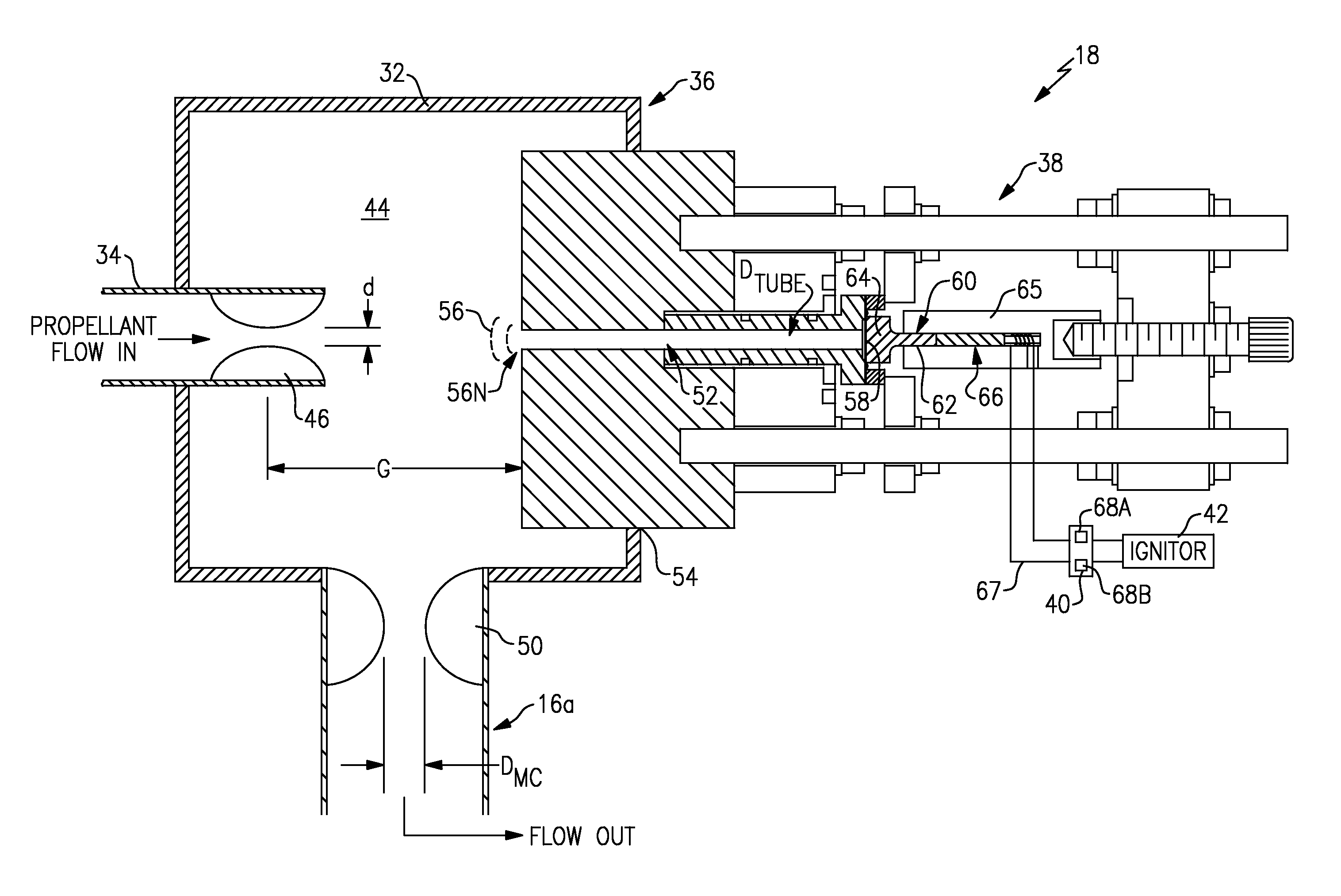
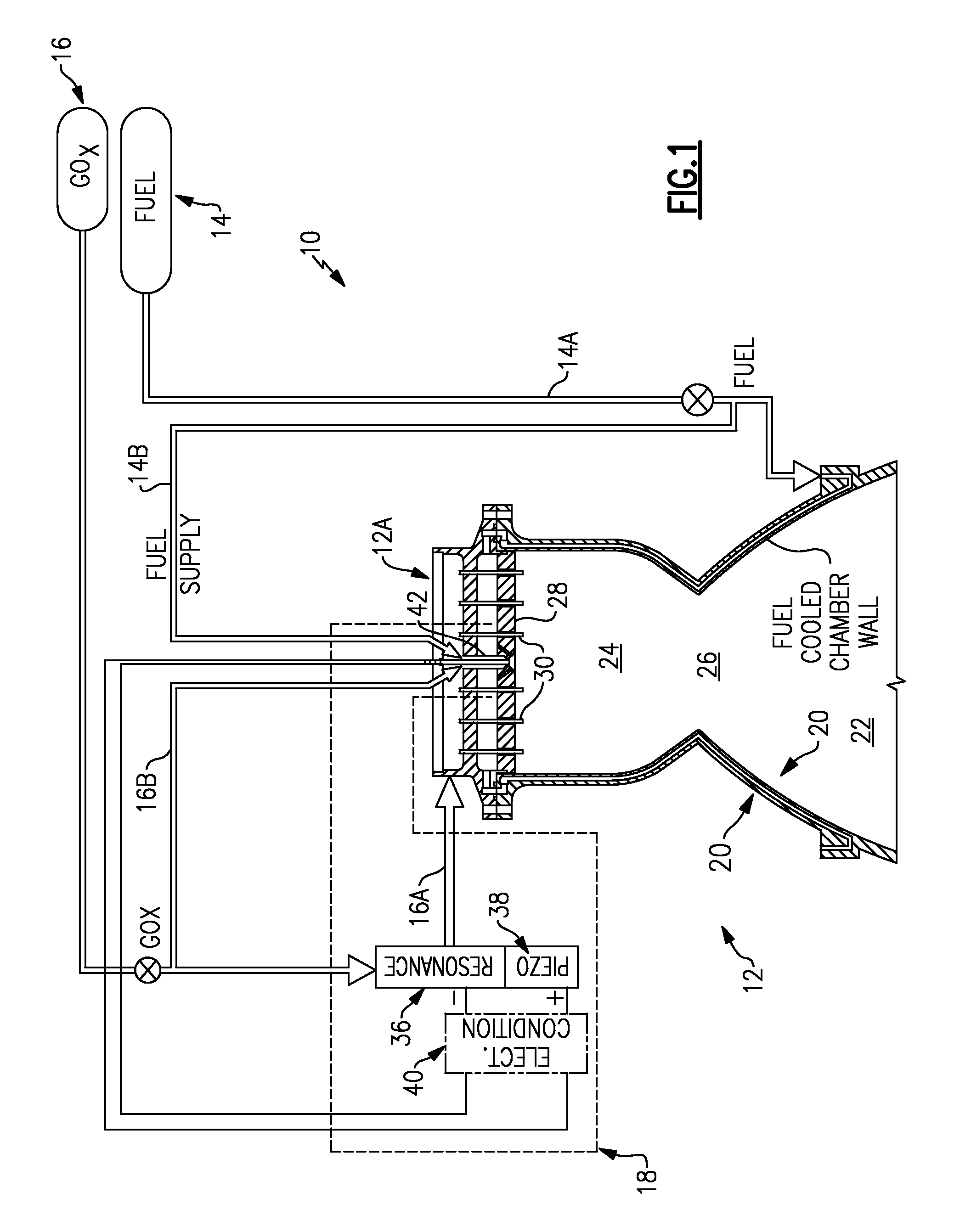
  • Figure 1
    Figure 1
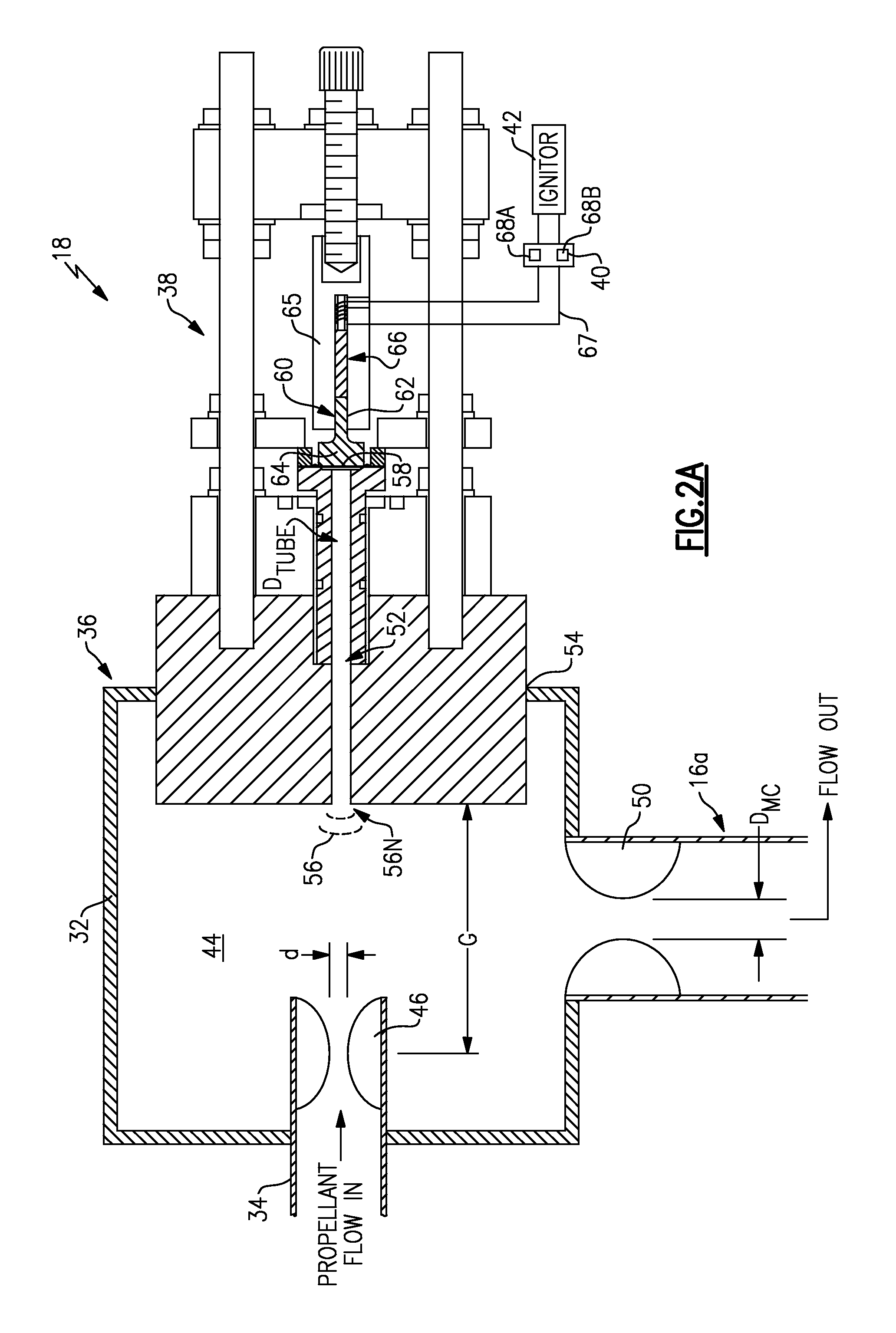
  • Figure 2
    Figure 2
  • Figure 3
    Figure 3
Patent Text Reader

Abstract

An ignition system for a rocket engine utilizes the pressure energy in a propellant flow. The propellant flow generates an oscillating pressure force in a resonance system which is then transmitted to a piezoelectric system. The electrical pulses are utilized to generate a spark in an igniter system spark gap, resulting in ignition. Since the spark energy production is driven by the resonance of the propellant flow, a fully passive auto-ignition system is provided. Once ignition occurs, the resultant backpressure in the combustion chamber “detunes” the resonance phenomena and spark production stops. Furthermore, should the engine flame out, spark production would automatically resume as the propellant valves remain open thereby providing relight capability.
Need to check novelty before this filing date? Find Prior Art

Description

BACKGROUND OF THE INVENTION

[0001] The present invention relates to a piezo-resonance igniter system for passive auto ignition of a rocket engine, and more particularly to a method which utilizes the pressure energy in the propellants themselves to excite piezoelectric crystals such that high voltage electrical pulses are created to generate a spark in an igniter system.

[0002] Various conventional ignition systems have been used for ignition of a propellant mixture in a combustion chamber of a rocket engine. These ignition systems generally employed a spark induced by an electrical current from a source of electricity and a control for sensing when to supply and discontinue the spark. These conventional systems, although effective, tend to be relatively complex, heavy, and may not provide restart capability.

[0003] With the increasing need for safe storable propellant systems such as Gaseous Oxygen (GOx) and Methane combinations, an uncomplicated fully passive auto ignition system is des...

Examples

Embodiment Construction

[0016]FIG. 1 illustrates a general schematic view of a rocket engine 10. The engine 10 generally includes a thrust chamber assembly 12, a fuel system 14, an oxidizer system 16 and an ignition system 18. The fuel system 14 and the oxidizer system 16 preferably provide a gaseous propellant system of the rocket engine 10, however, other propellant systems such as liquid will also be usable with the present invention.

[0017]A combustion chamber wall 20 about a thrust axis A defines the nozzle assembly 12. The combustion chamber wall 20 defines a thrust chamber 22, a combustion chamber 24 upstream of the thrust chamber 22, and a combustion chamber throat 26 therebetween. The thrust chamber assembly 12 includes an injector 12A with an injector face 28 which contains a multitude of fuel / oxidizer injector elements 30 (shown somewhat schematically) which receive fuel which passes first through the fuel cooled combustion chamber wall 20 fed via fuel supply line 14a of the fuel system 14 and an...