
Solid electrolytic capacitor with first and second anode wires
a solid electrolytic capacitor and anode wire technology, applied in the direction of liquid electrolytic capacitors, fixed capacitors, fixed capacitor details, etc., can solve the problem of insufficient enhancement of high frequency characteristics, and achieve the effect of enhancing high frequency characteristics by reducing esr and esl
- Summary
- Abstract
- Description
- Claims
- Application Information
AI Technical Summary
Benefits of technology
Problems solved by technology
Method used
Image

Examples
Embodiment Construction
[0060]Preferred embodiments of the present invention will be described below in detail with reference to the accompanying drawings.
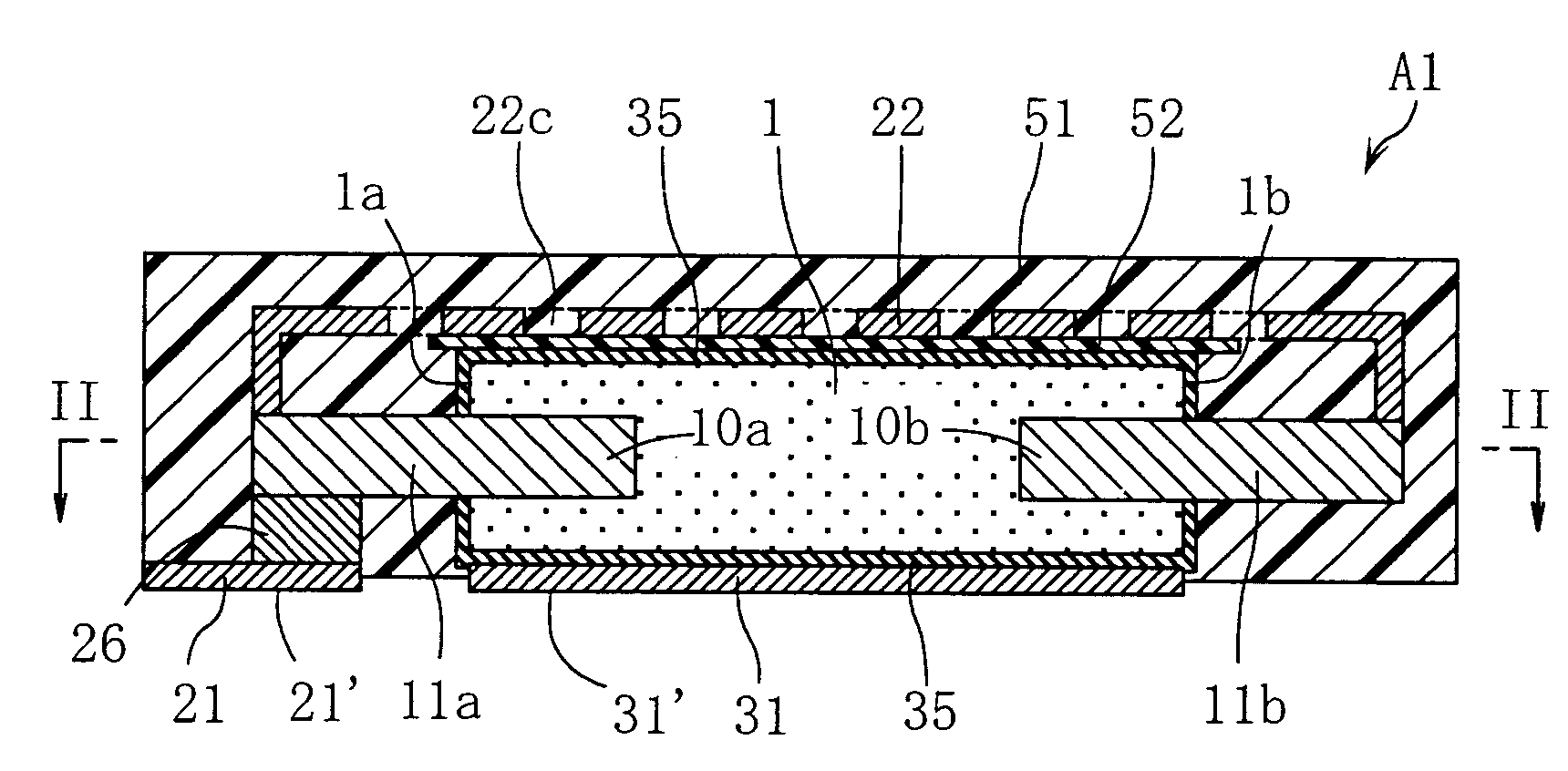
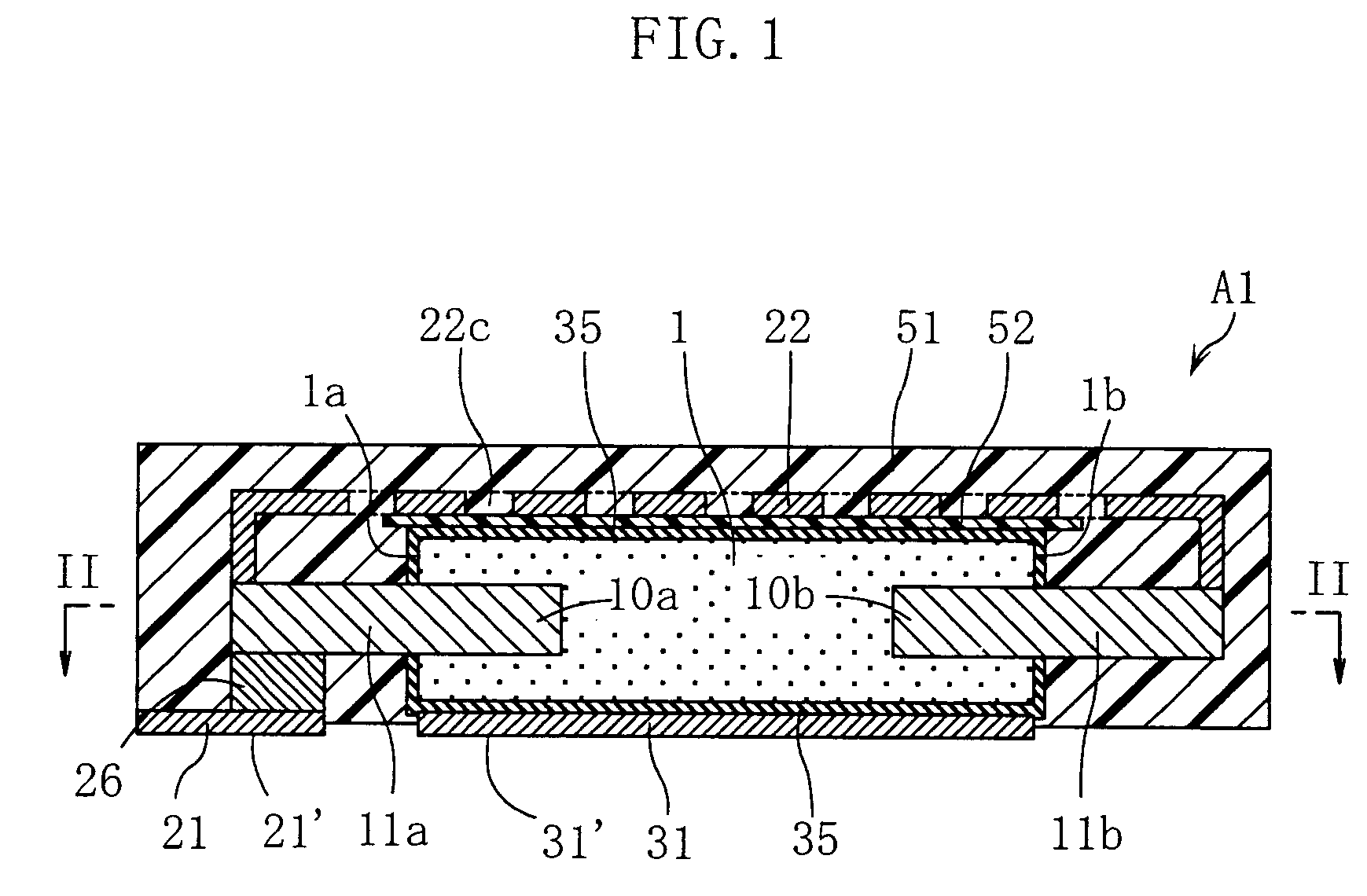
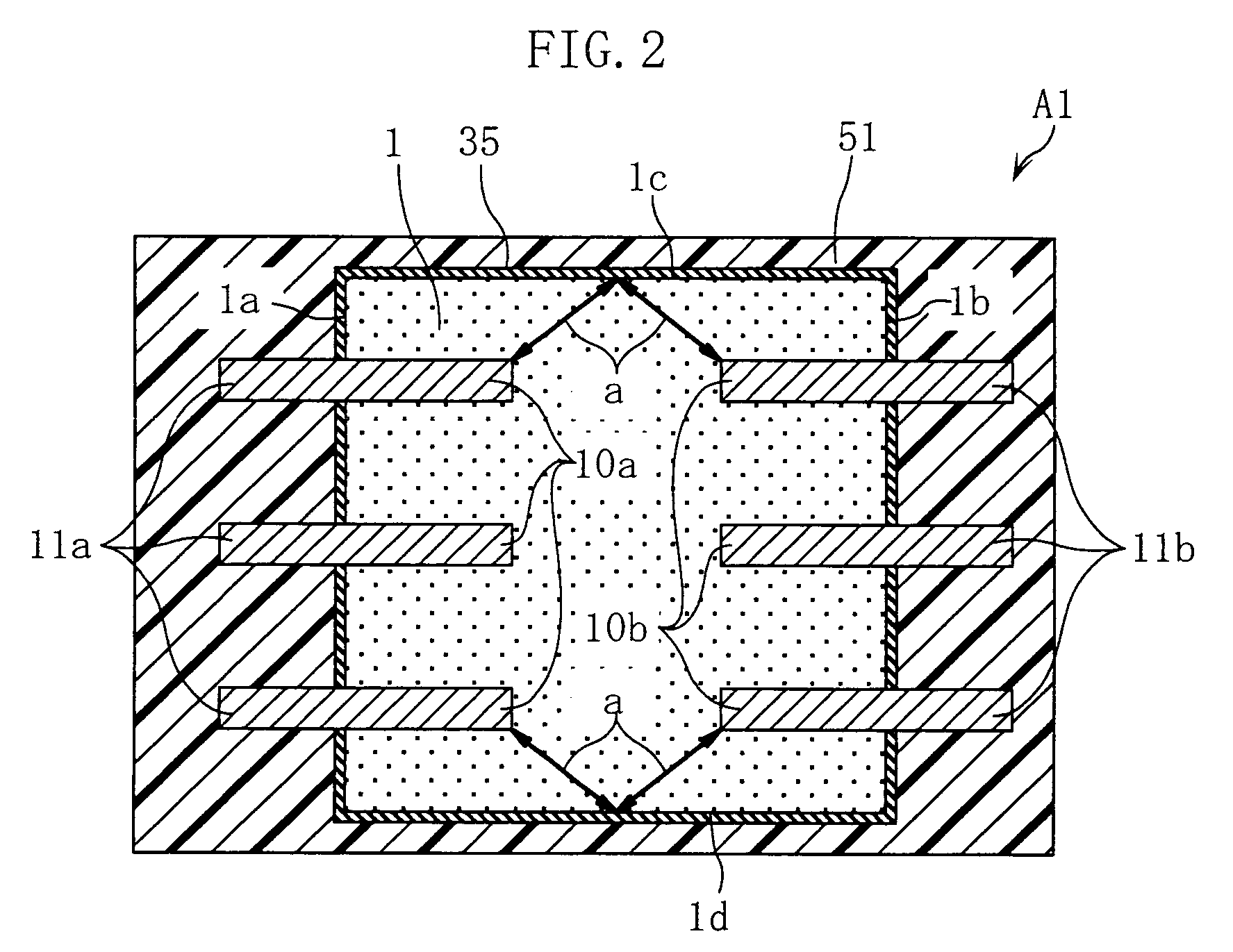
[0061]FIGS. 1-3 show an example of solid electrolytic capacitor according to the present invention. The solid electrolytic capacitor A1 in this embodiment includes a porous sintered body 1, three first anode wires 10a, three second anode wires 10b, a metal cover 22, and sealing resin 51 covering the porous sintered body 1. In FIG. 3, the sealing resin 51 is omitted.
[0062]The porous sintered body 1 is in the form of a rectangular plate and formed by compacting niobium powder which is valve metal powder and then sintering the compacted body. The porous sintered body 1 may be made of any valve metal. For instance, tantalum may be used instead of niobium. Niobium is superior in flame retardancy to tantalum. Since the porous sintered body 1 produces heat in using the solid electrolytic capacitor A1, niobium is preferable as the material of the porous sintered...
PUM
| Property | Measurement | Unit |
|---|---|---|
| thickness | aaaaa | aaaaa |
| circuit current | aaaaa | aaaaa |
| resistance | aaaaa | aaaaa |
Abstract
Description
Claims
Application Information
 Login to View More