

Power distribution systems for powered rail vehicles
a technology for power distribution systems and rail vehicles, applied in emergency power supply arrangements, electric devices, locomotives, etc., can solve problems such as substantial and undesirable acoustic noise of engines, substantial weight of rail vehicles, and relatively heavy current transfer between tractive and auxiliary circuits
- Summary
- Abstract
- Description
- Claims
- Application Information
AI Technical Summary
Problems solved by technology
Method used
Image

Examples
Embodiment Construction
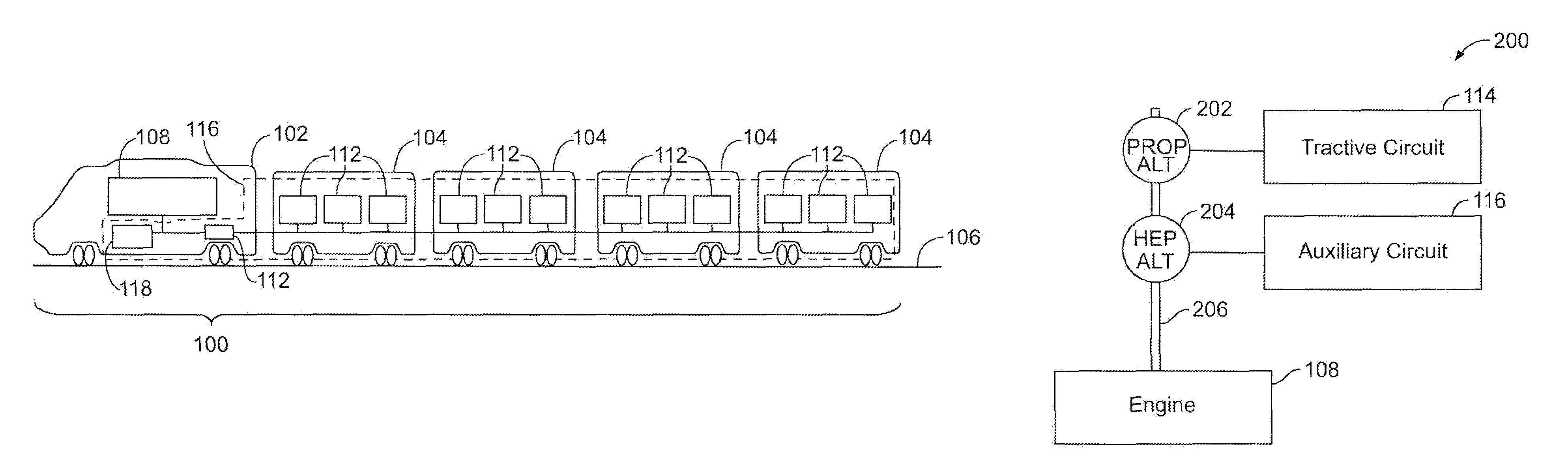
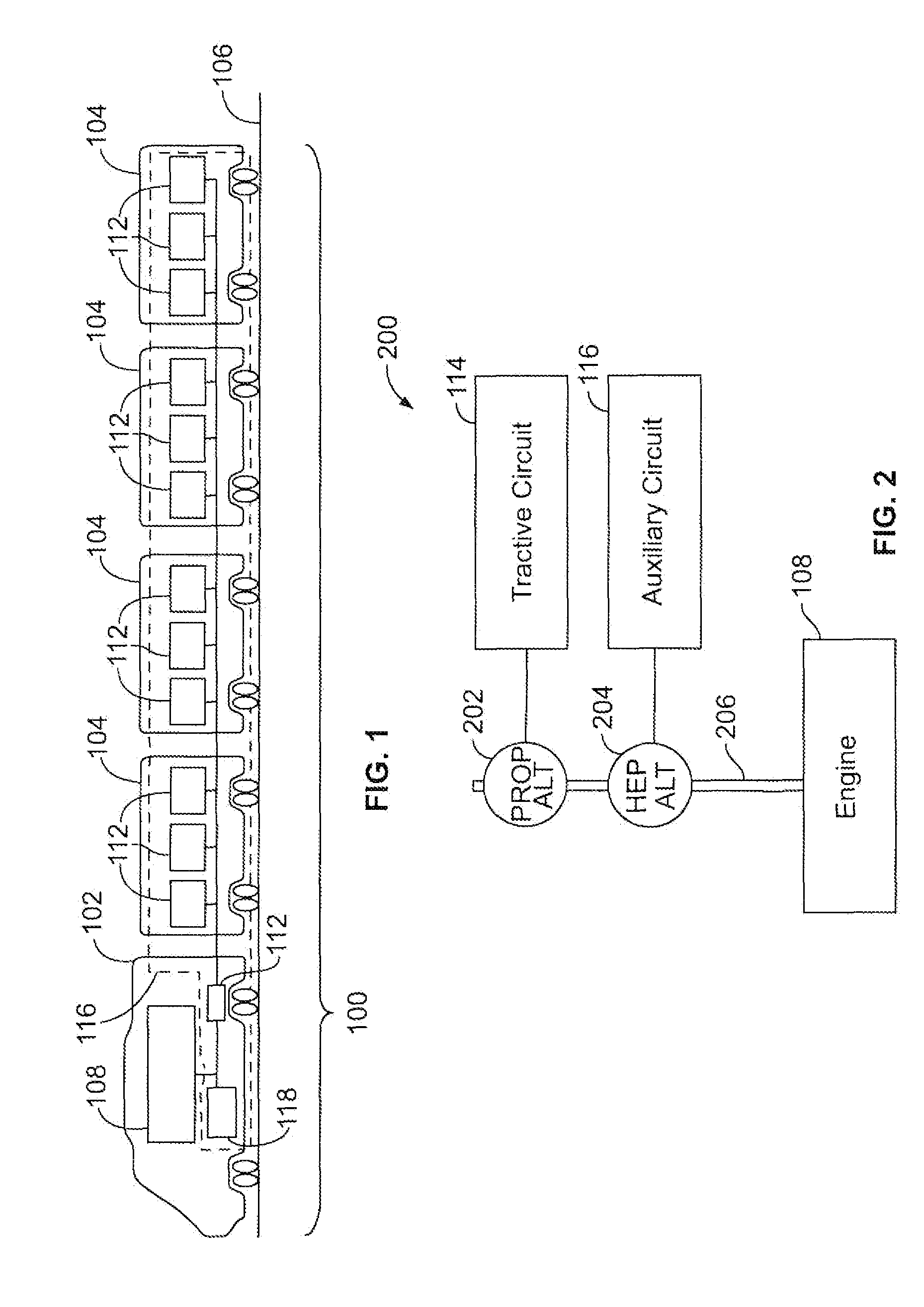
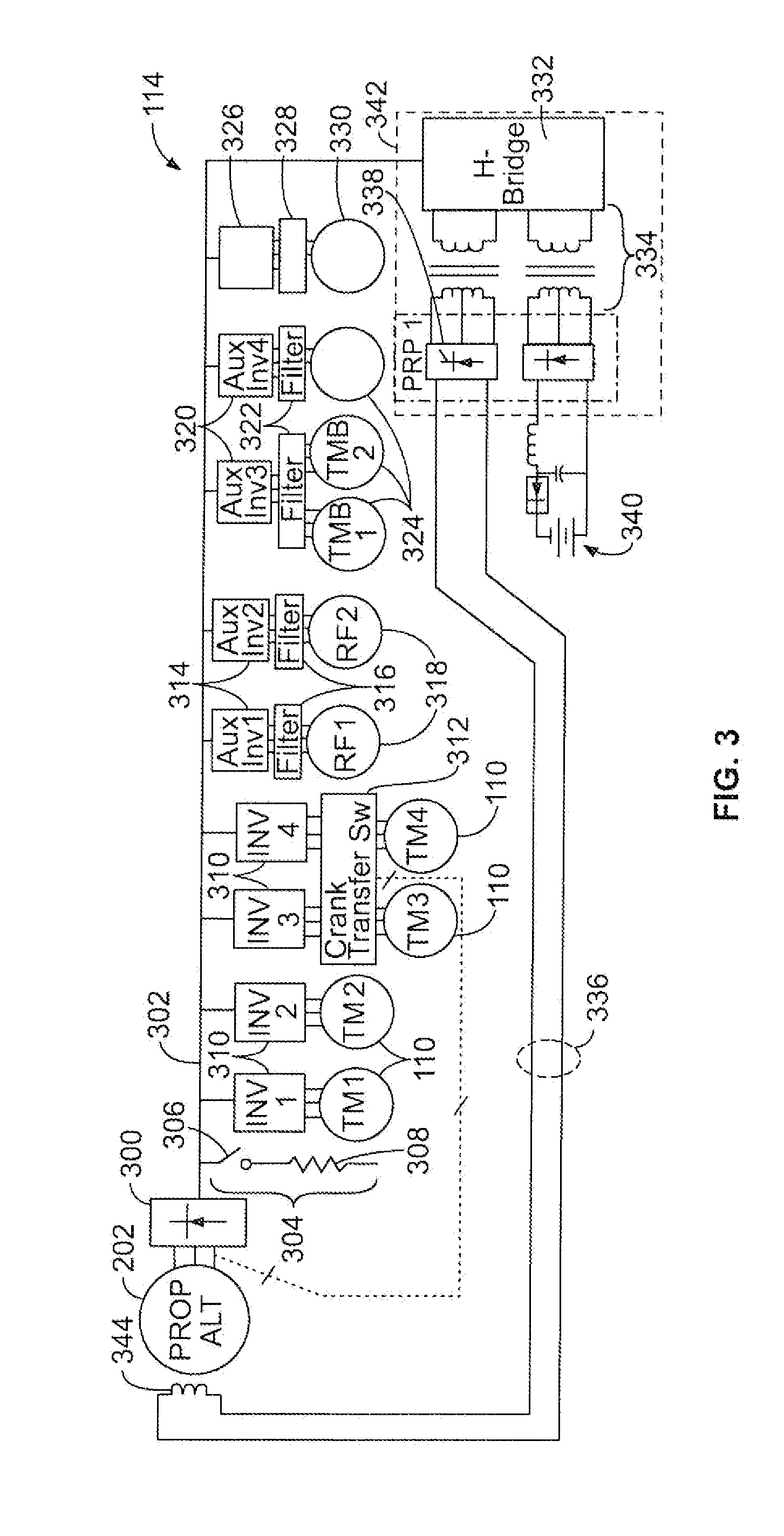
[0017]The foregoing summary, as well as the following detailed description of certain embodiments of the present invention, will be better understood when read in conjunction with the appended drawings. To the extent that the figures illustrate diagrams of the functional blocks of various embodiments, the functional blocks are not necessarily indicative of the division between hardware circuitry. Thus, for example, one or more of the functional blocks (for example, processors or memories) may be implemented in a single piece of hardware (for example, a general purpose signal processor, microcontroller, random access memory, hard disk, and the like). Similarly, the programs may be stand alone programs, may be incorporated as subroutines in an operating system, may be functions in an installed software package, and the like. The various embodiments are not limited to the arrangements and instrumentality shown in the drawings.
[0018]As used herein, an element or step recited in the sing...
PUM
 Login to View More
 Abstract
Description
Claims
Application Information
 Login to View More