
Digital tuning fork for sensation testing device
a technology of sensation testing and tuning forks, which is applied in the field of digital tuning forks for sensation testing devices, can solve the problems of loss of protective sensation, increased risk of foot ulcers, and fatigue of monofilaments, and achieve the effect of accurately and ever diminishing vibratory sensations
- Summary
- Abstract
- Description
- Claims
- Application Information
AI Technical Summary
Benefits of technology
Problems solved by technology
Method used
Image

Examples
Embodiment Construction
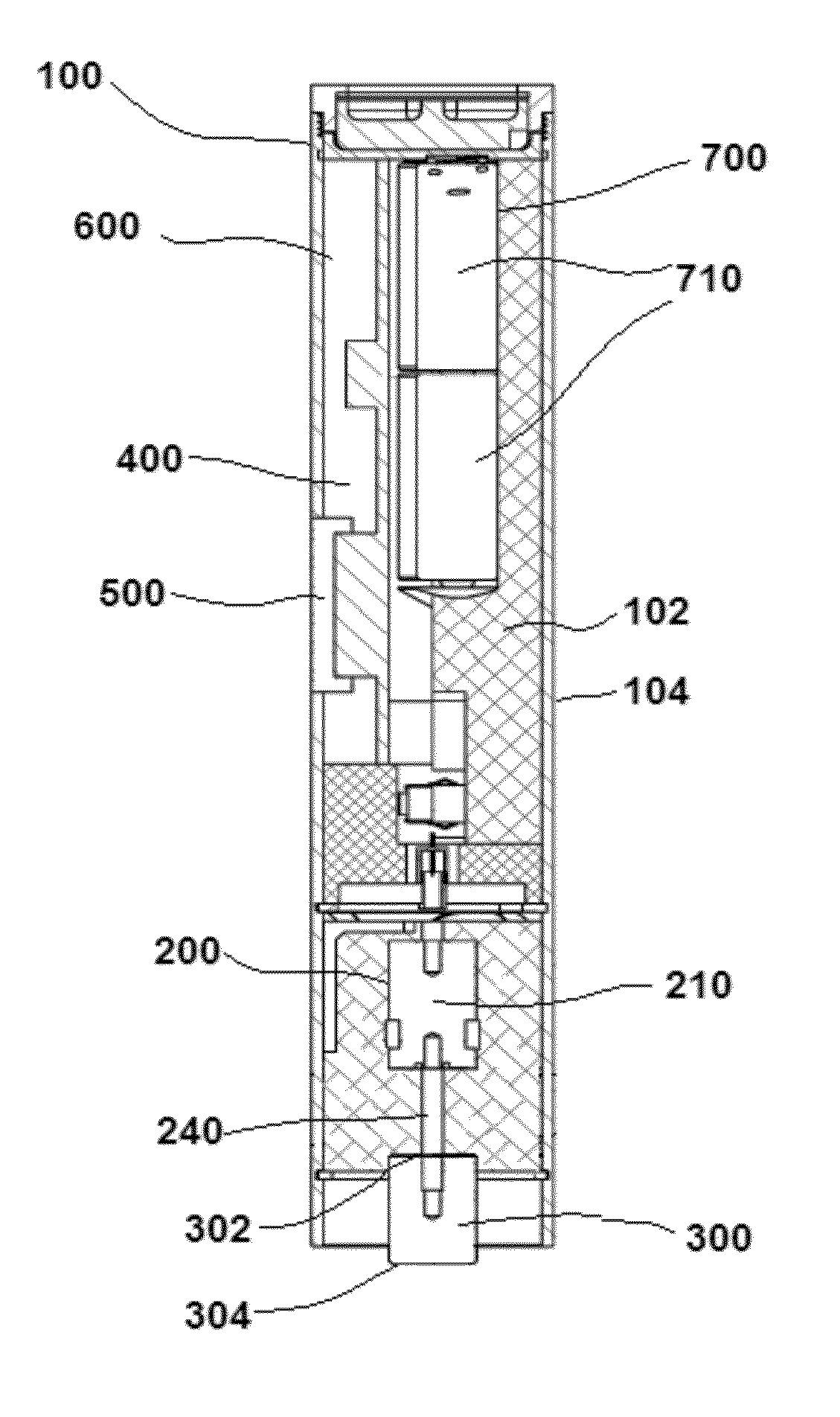
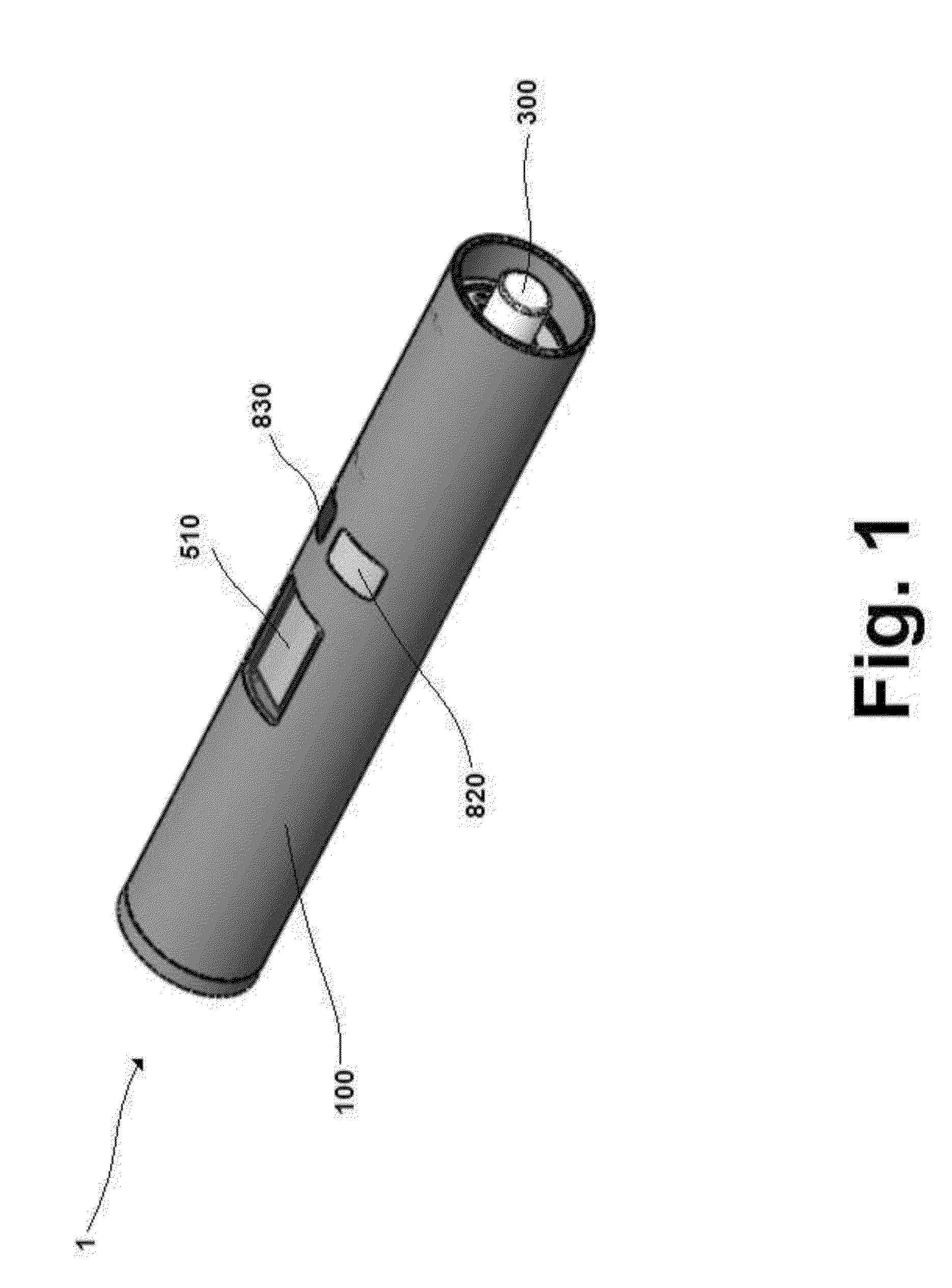
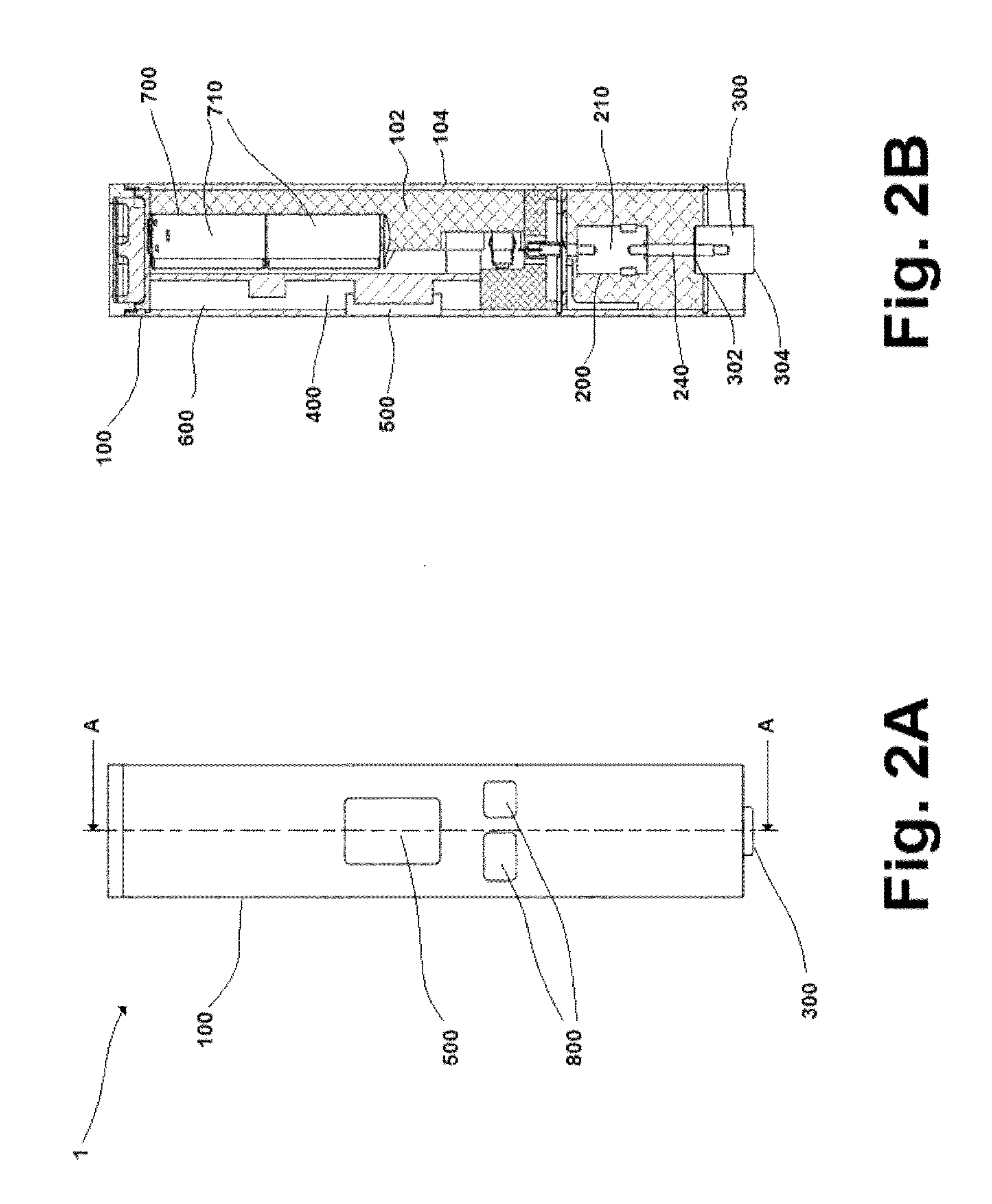
[0029]The housing 100 of the present invention 1 is small enough to be easily held by a human hand. It is substantially hollow, having an interior 102 and an exterior 104. The housing 100 may be constructed of any substantially rigid, durable material, such as plastic, metal, composites, or the like. It may have any suitable shape, such as substantially cubic, spherical, cylindrical, or it may be of an irregular shape. The housing 100 must have a means of communication between its exterior 104 and interior 102. In one embodiment the communications means is one or more apertures. In another embodiment the means may be an electronic circuit. The housing 100 should also have a means of accessing its interior 102, for ease of assembly and for maintenance purposes, such as changing a battery 710. This means may be a removable panel, or the housing 100 itself may separate into components which may then be reattached to each other, by tabs or threads or other means known in the art. Integr...
PUM
 Login to View More
 Abstract
Description
Claims
Application Information
 Login to View More