Method of depositing silicon on carbon materials and forming an anode for use in lithium ion batteries

a lithium ion battery and carbon material technology, applied in the direction of non-aqueous electrolyte cells, cell components, electrochemical generators, etc., can solve the problems of rapid loss of capacity upon cycling, degrade the performance of the battery cell, and limit the use of carbon-silicon alloys for lithium batteries

a lithium ion battery and carbon material technology, applied in the direction of non-aqueous electrolyte cells, cell components, electrochemical generators, etc., can solve the problems of rapid loss of capacity upon cycling, degrade the performance of the battery cell, and limit the use of carbon-silicon alloys for lithium batteries

US8828481B2Active Publication Date: 2014-09-09APPLIED SCI

Image

Smart Image Click on the blue labels to locate them in the text.
Viewing Examples
Smart Image
  • Method of depositing silicon on carbon materials and forming an anode for use in lithium ion batteries
  • Method of depositing silicon on carbon materials and forming an anode for use in lithium ion batteries
  • Method of depositing silicon on carbon materials and forming an anode for use in lithium ion batteries

Examples

Experimental program
Comparison scheme
Effect test

Embodiment Construction

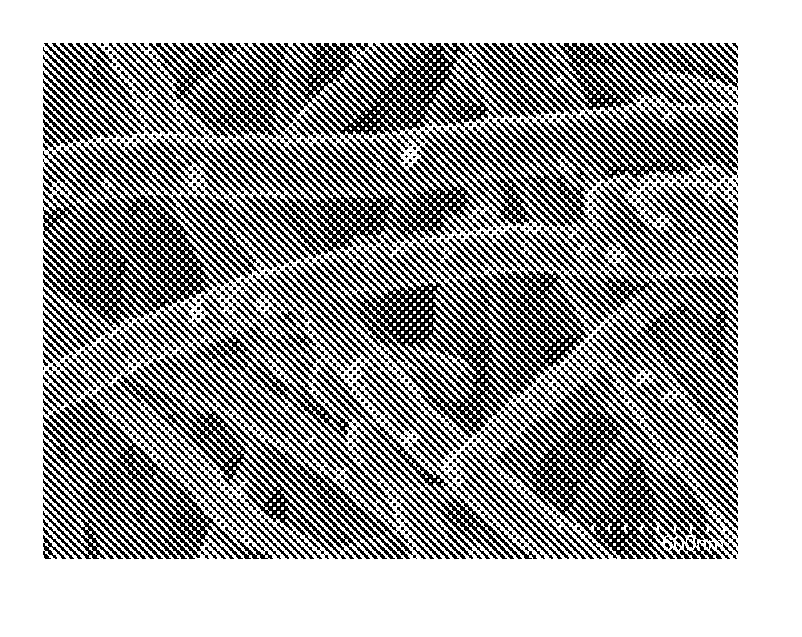
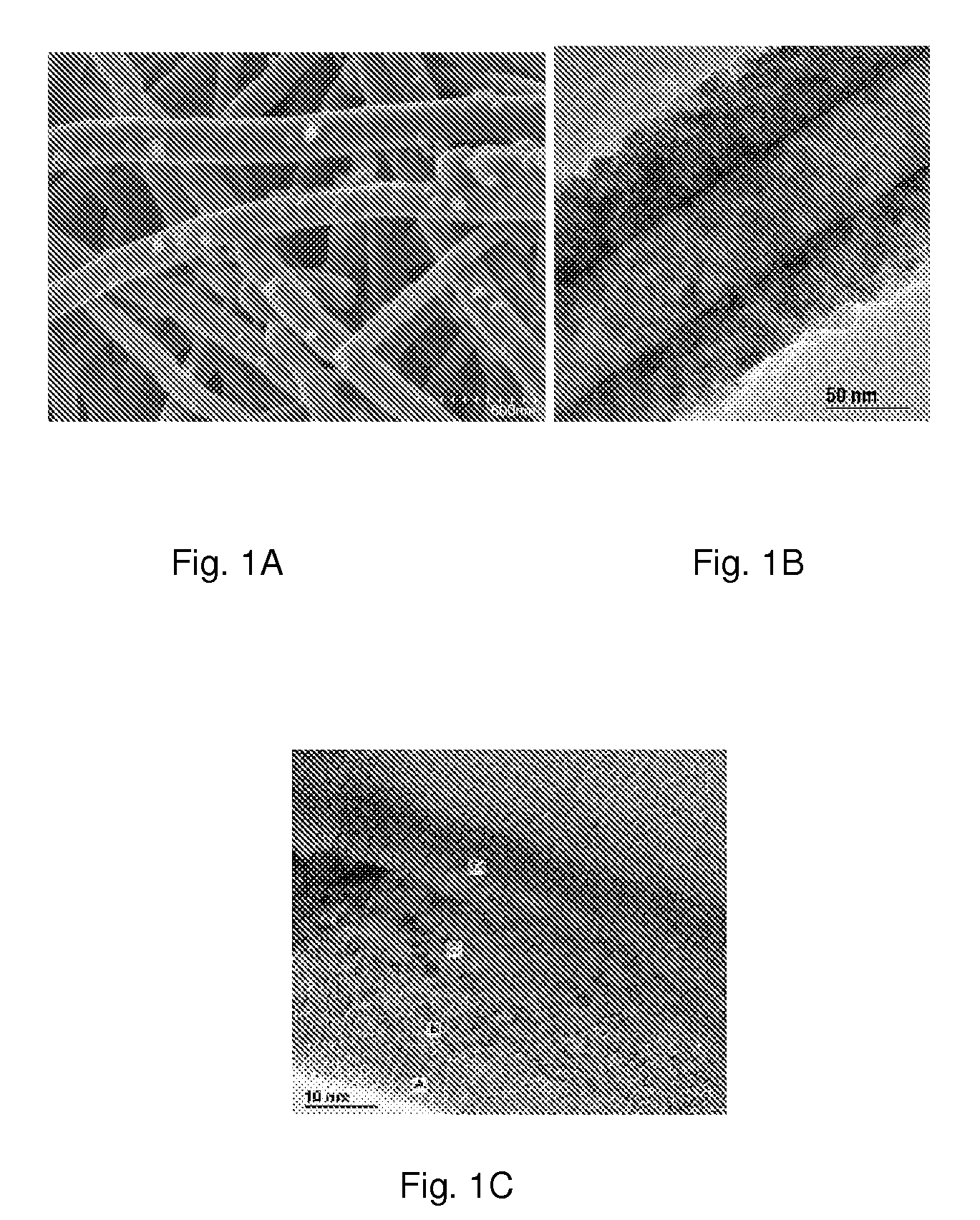
[0029]We have found that deposition of silicon onto carbon materials such as vapor grown carbon nanofibers allows the carbon nanofibers to function as an insertion host as well as a high surface area support for the silicon, connecting the carbon and silicon electrically and accommodating volume changes resulting from a lithiation-delithiation process when the resulting alloy is used as an anode.

[0030]The silicon alloy material is bonded to the carbon nanomaterial through an interphase region comprised of the alloy material and carbon. By “interphase,” it is meant the transition region between pure carbon and pure silicon, which enhances the adherence between these two phases. In one embodiment, the interphase comprises silicon-carbon compounds such as silicon carbide.

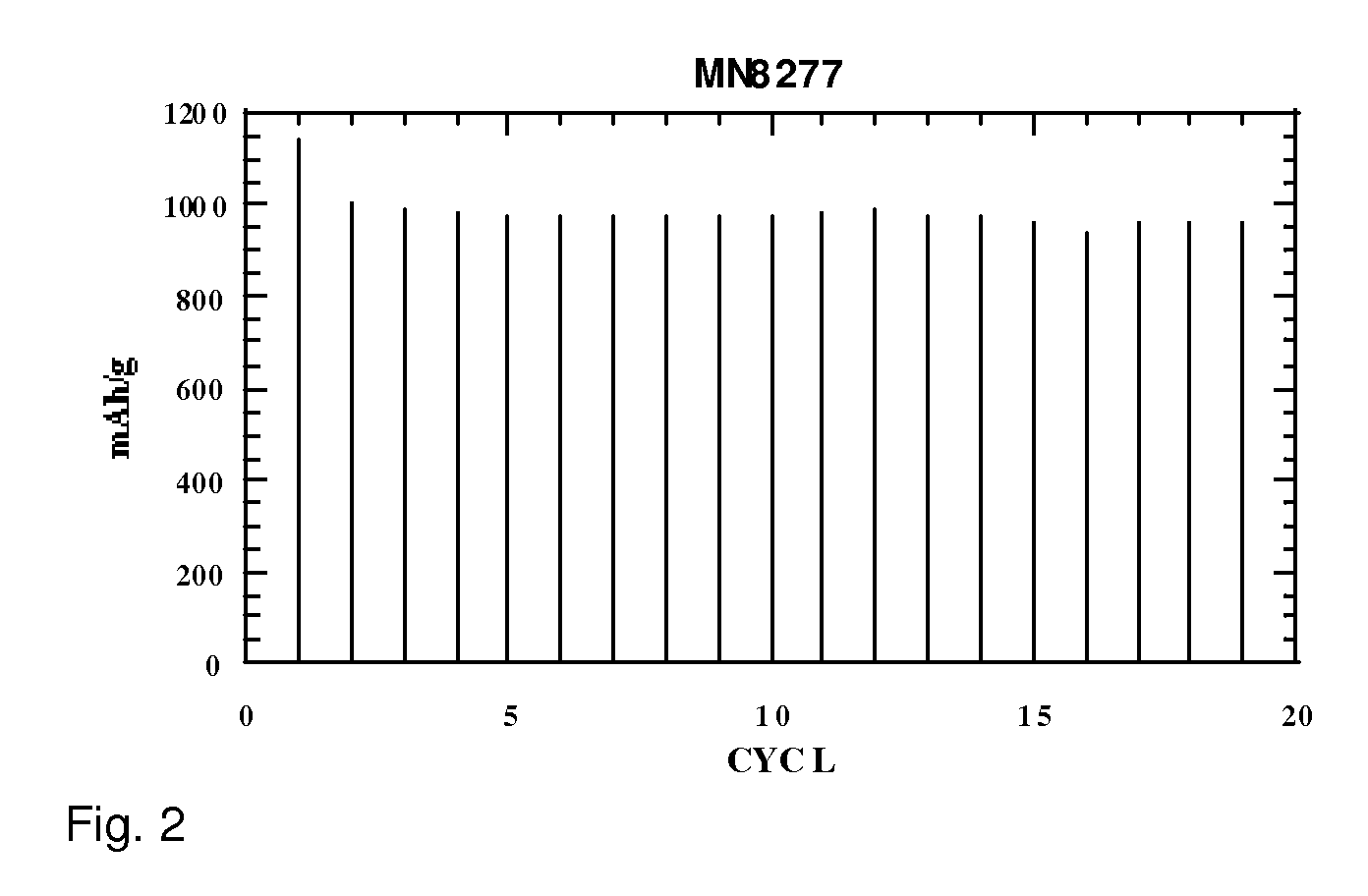
[0031]The resulting silicon-carbon alloy exhibits high energy capacity and high power capability when used as an anode in a lithium ion battery cell. The resulting anode provides a significant increase in energy capaci...

the structure of the environmentally friendly knitted fabric provided by the present invention; figure 2 Flow chart of the yarn wrapping machine for environmentally friendly knitted fabrics and storage devices; image 3 Is the parameter map of the yarn covering machine
Login to View More

PUM

PropertyMeasurementUnit
temperatureaaaaaaaaaa
diameteraaaaaaaaaa
Login to View More

Abstract

A method of modifying the surface of carbon materials such as vapor grown carbon nanofibers is provided in which silicon is deposited on vapor grown carbon nanofibers using a chemical vapor deposition process. The resulting silicon-carbon alloy may be used as an anode in a rechargeable lithium ion battery.

Description

CROSS-REFERENCE TO RELATED APPLICATIONS[0001]This application claims the benefit of U.S. Provisional Application No. 60 / 913,321, filed Apr. 23, 2007, entitled LITHIUM RESERVOIR NANOCARBONS FOR LITHIUM ION BATTERIES. The entire contents of said application are hereby incorporated by reference.BACKGROUND OF THE INVENTION[0002]The present invention relates to a method of depositing silicon onto a carbon material such as carbon nanofibers or composites formed from carbon nanofibers to form an alloy which can undergo lithiation / delithiation and which may be used as an anode in lithium ion batteries.[0003]The use of lithium ion batteries as rechargeable power sources represent a promising technology for use in the development of consumer electronics and electric-based vehicles as they can replace traditional aqueous batteries such as lead-acid, nickel metal hydride, nickel-cadmium, and nickel hydride batteries.[0004]Current lithium ion batteries typically use lithium cobalt oxide as the c...

Claims

the structure of the environmentally friendly knitted fabric provided by the present invention; figure 2 Flow chart of the yarn wrapping machine for environmentally friendly knitted fabrics and storage devices; image 3 Is the parameter map of the yarn covering machine
Login to View More

Application Information

Patent Timeline
09 Sep 2014
Publication
US8828481B2
IPC
H01M4/58; B82Y10/00; B82Y30/00; C23C16/24; H01M4/04; H01M4/13; H01M4/139; H01M4/38; H01M4/587; H01M10/052; H01M10/36
CPC
H01M4/38; H01M4/0421; B82Y10/00; H01M4/139; H01M4/13; C23C16/24; B82Y30/00; H01M4/587
Inventors
BURTON, DAVID J.; LAKE, MAX L.