Pin for guiding a gear wheel, and planetary transmission containing the same
a technology of planetary transmission and gear wheel, which is applied in the direction of mechanical equipment, sliding contact bearings, and gear details, can solve the problems of system too much clearance, increased costs, and accumulation of function-critical tolerances, and achieves simple assembly or production of corresponding pins, the effect of reducing the number of pins
- Summary
- Abstract
- Description
- Claims
- Application Information
AI Technical Summary
Benefits of technology
Problems solved by technology
Method used
Image

Examples
Embodiment Construction
[0029]In the following description of the accompanying illustrations, like reference numerals refer to like or comparable components. Furthermore, summarizing reference numerals are used for components and objects that appear multiple times in an exemplary embodiment or in an illustration, but that are described together in terms of one or more common features. Components or objects that are described with the same or summarizing reference numerals can be embodied identically, but also optionally differently, in terms of individual, multiple, or all features, their dimensions, for example, as long as the description does not explicitly or implicitly indicate otherwise.
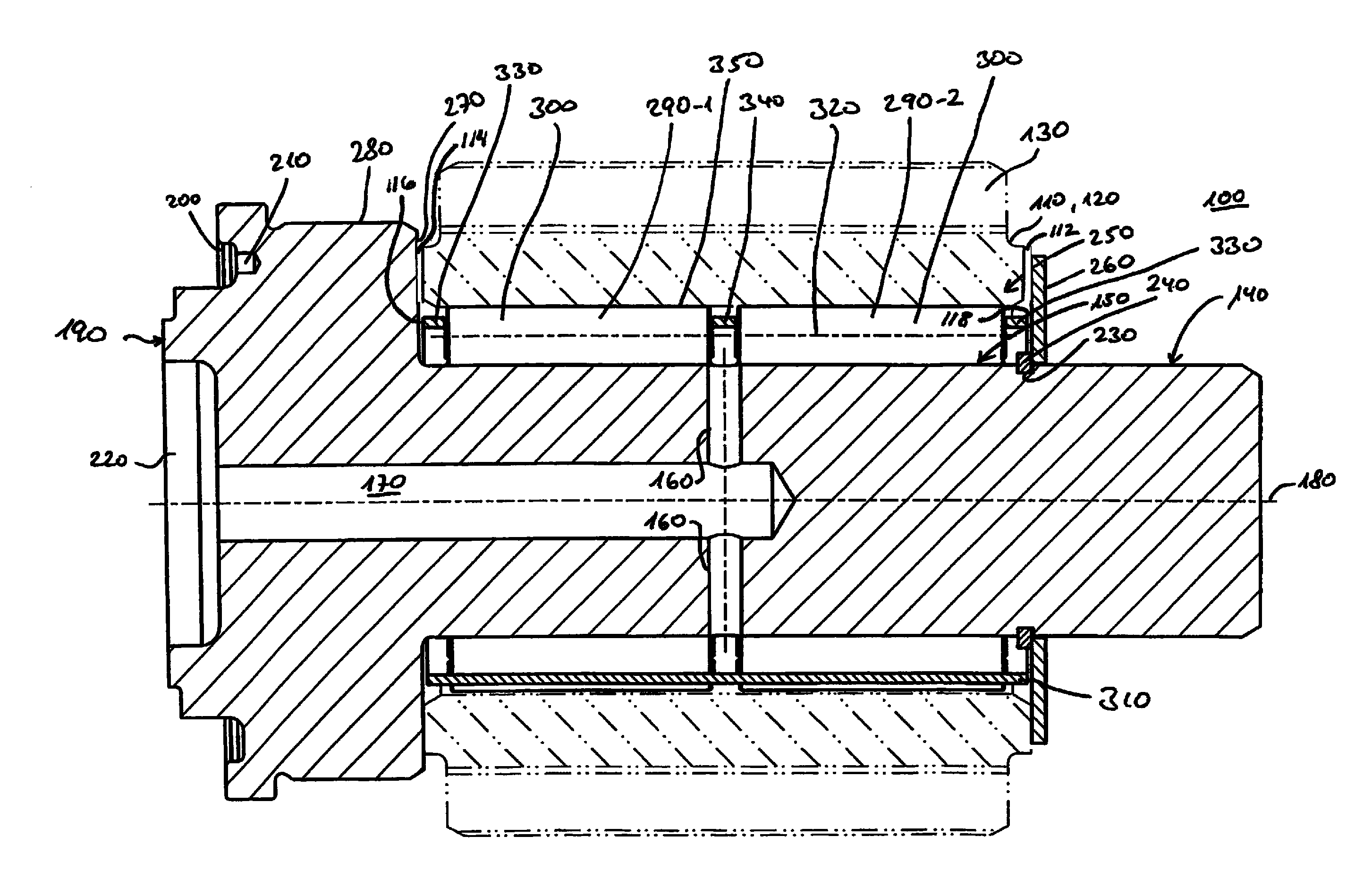
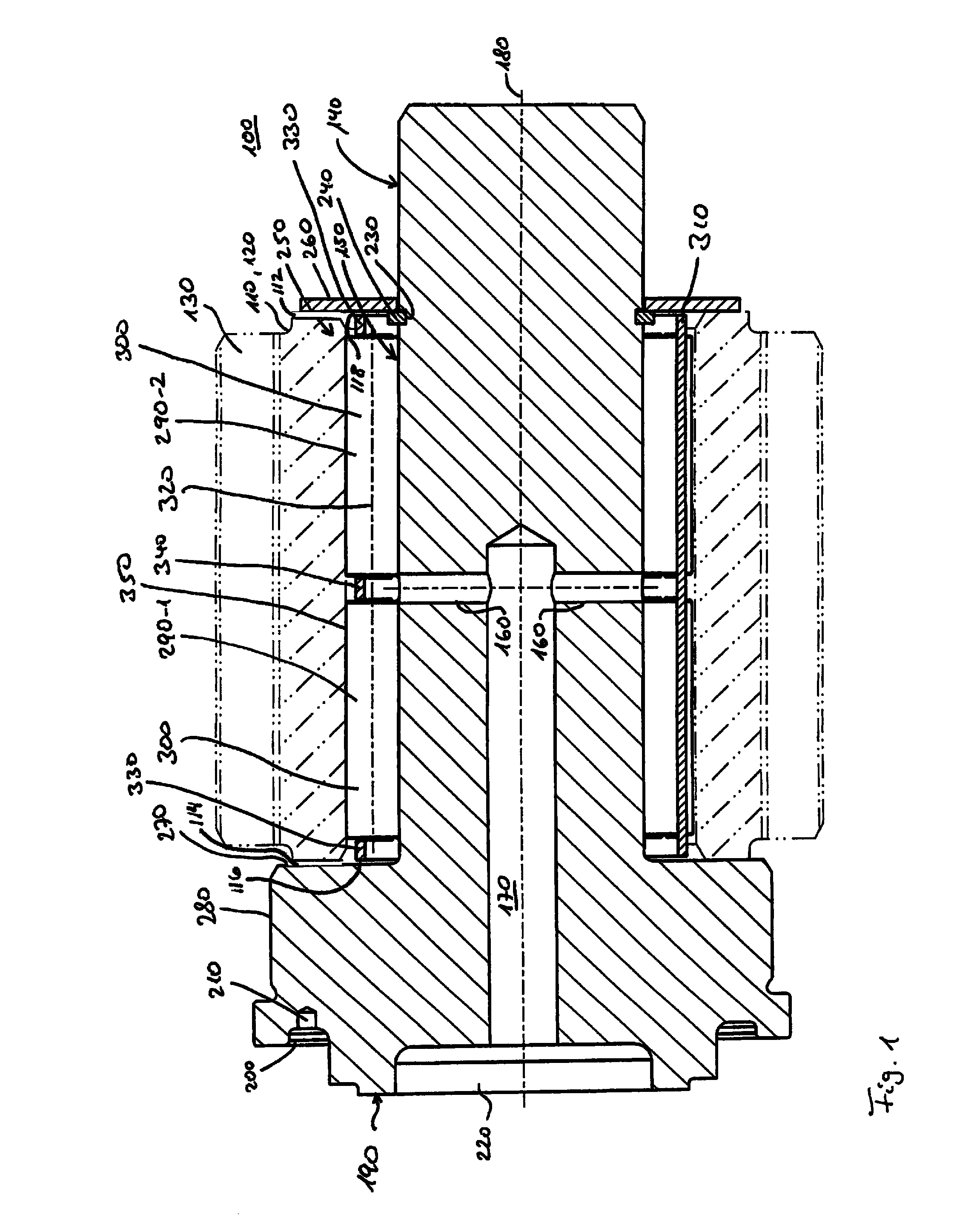
[0030]FIG. 1 shows a cross-sectional view through a pin 100, according to an exemplary embodiment, for guiding a gear wheel 110, wherein it is more specifically a planetary gear 120 of a planetary transmission. Accordingly, the gear wheel 110 has a plurality of gear flanks 130, which can be in engagement with complemen...
PUM
 Login to View More
 Abstract
Description
Claims
Application Information
 Login to View More
 - R&D
- Intellectual Property
- Life Sciences
- Materials
- Tech Scout
- Unparalleled Data Quality
- Higher Quality Content
- 60% Fewer Hallucinations
Browse by: Latest US Patents, China's latest patents, Technical Efficacy Thesaurus, Application Domain, Technology Topic, Popular Technical Reports.
© 2025 PatSnap. All rights reserved.Legal|Privacy policy|Modern Slavery Act Transparency Statement|Sitemap|About US| Contact US: help@patsnap.com