
Polysaccharide with immunologic adjuvant effect, preparation method and application thereof
An immune adjuvant, polysaccharide technology, applied in biochemical equipment and methods, medical preparations containing active ingredients, vaccines, etc., can solve problems such as toxic side effects and safety hazards
Patent Information
- Authority / Receiving Office
- CN · China
- Patent Type
- Applications(China)
- Current Assignee / Owner
- Publication Date
- 2021-03-26
Smart Images
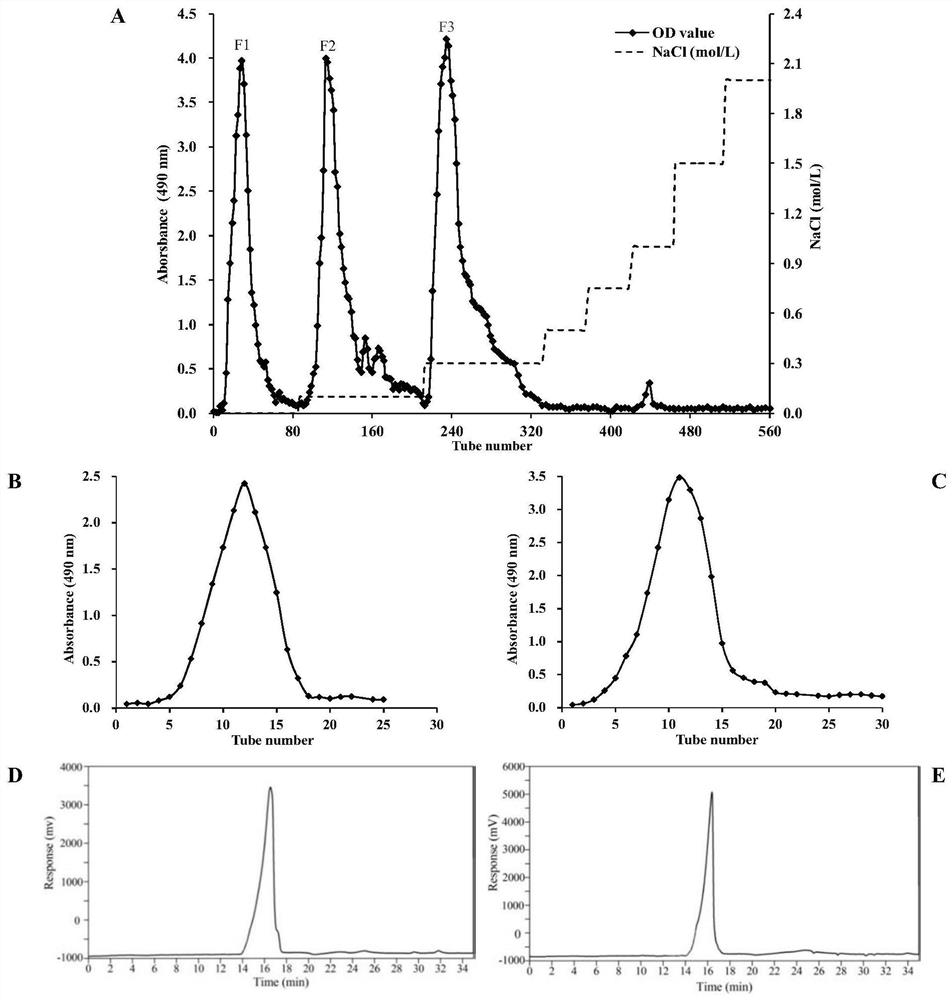
Figure 1 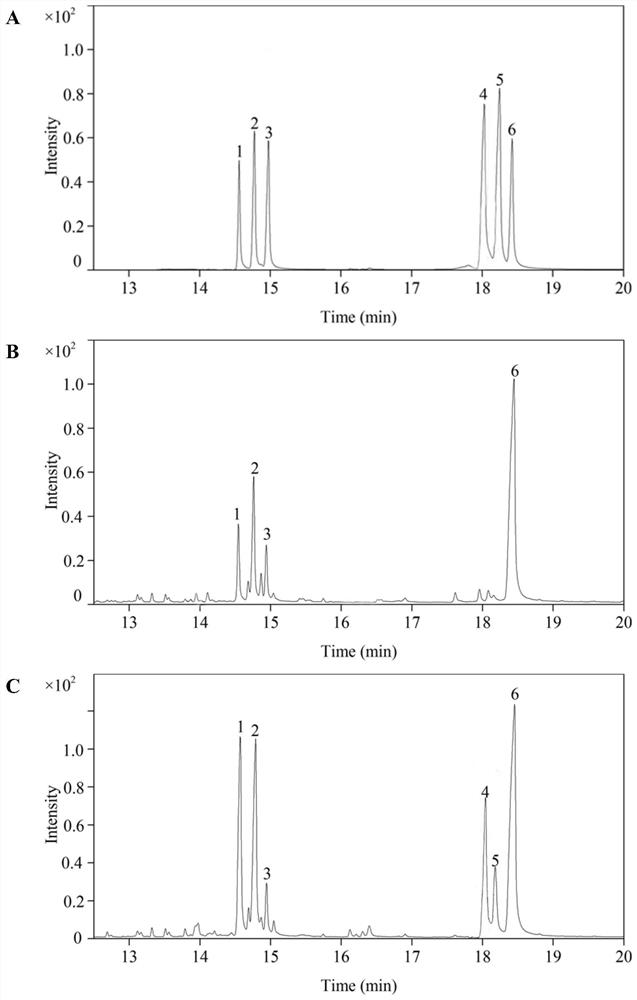
Figure 2 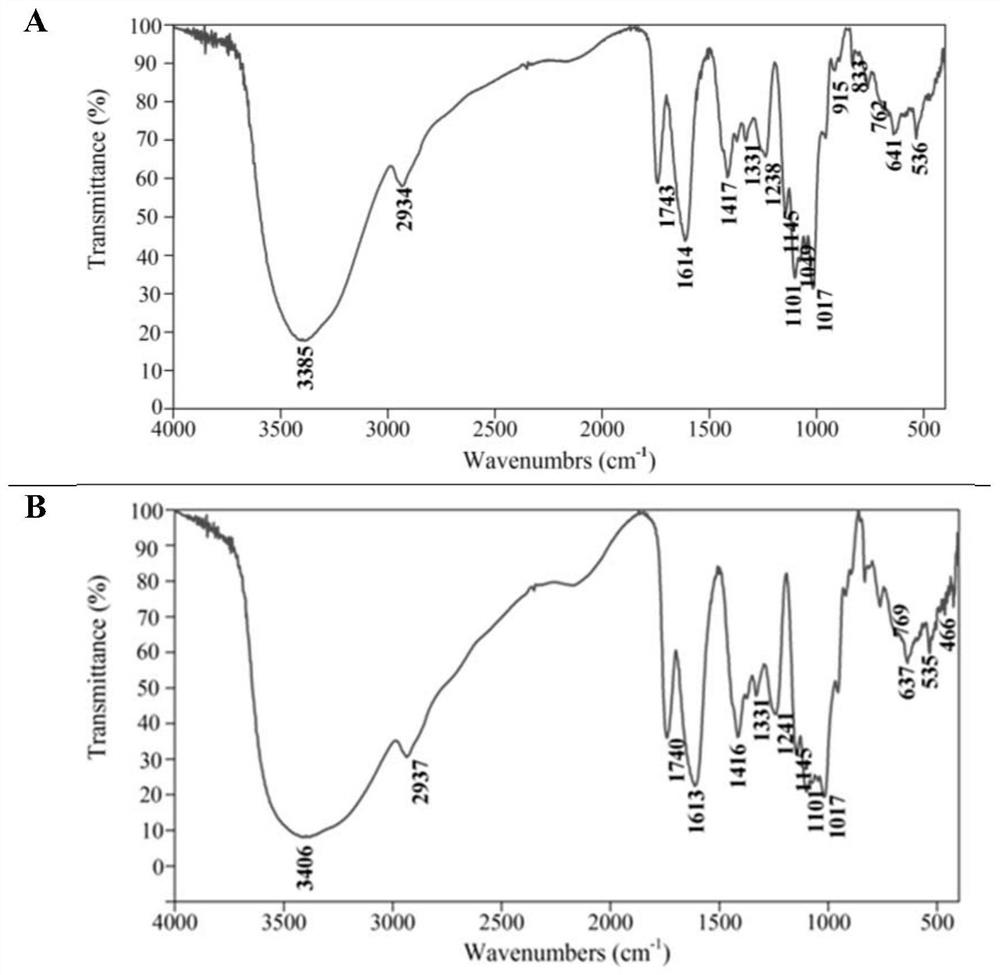
Figure 3
Abstract
Description
technical field
[0001] The present invention relates to extracting, separating and purifying the petals of Crocus sativus L., the original plant of the traditional Chinese medicine saffron, to obtain saffron petal polysaccharide A (PCSPA) and saffron petal polysaccharide B ( PCSPB) and the mixture containing these two kinds of homogeneous polysaccharides—saffron petal total polysaccharide (PCSP), its preparation method, a pharmaceutical composition with the polysaccharide as an active ingredient, and their application as a vaccine adjuvant. Background technique
[0002] Vaccination is the most economical and effective measure to prevent and control infectious diseases [Rappuoli R, Hanon E. Sustainable vaccine development: a vaccine manufacturer's perspective. Current opinion in immunology. 2018,53:111–118]. In recent years, new vaccines such as recombinant proteins, synthetic peptides, and DNA have gradually been used in clinical applications due to their advantages of safet...
Examples
Embodiment 1
[0046] Embodiment 1: Preparation of crocus petal polysaccharide
[0047] 1. Preparation of total polysaccharides from crocus petals
[0048] Add 400 g of saffron petals, add 40 times of water, heat and reflux for extraction for 2 hours, filter, and continue extracting the dregs twice with water and reflux. Combine the filtrates, recover them under reduced pressure to 600 mL, place them at room temperature, add 4 times the volume of 95% ethanol with a mass concentration, mix well, and let stand at 4°C for 24 hours to precipitate. Fast filter paper was filtered under reduced pressure, and the precipitate was collected, washed three times with ethanol, acetone and petroleum ether successively. The precipitate was dissolved with distilled water and the volume was adjusted to 300mL, 120mL of papain solution with a concentration of 10mg / mL was added, mixed evenly, and enzymatically hydrolyzed at a constant temperature of 60°C for 1h. Then add 105 mL of Sevage reagent, stir at room...
Embodiment 2
[0053] Embodiment 2: Molecular weight and uniformity determination of saffron petal polysaccharide A and saffron petal polysaccharide B
[0054] Saffron petal polysaccharide A (11 mg) and saffron petal polysaccharide B (10 mg) were weighed respectively, dissolved in water to make a solution with a concentration of 1 mg / mL, and filtered through a 0.45 μm filter membrane to obtain the sample solution. Another standard polysaccharide with different molecular weight (Mw) was taken to prepare a series of standard polysaccharide solutions. Using Angilent 1260 liquid chromatography system, Shodex ks805 chromatographic column (8.0 × 300mm), H 2 O is the mobile phase, the flow rate is 1mL / min; the column temperature is 35°C, the injection volume is 1μL, and the differential detector is used for measurement. With logMW as the ordinate and retention time as the abscissa, draw a standard curve to obtain the regression equation: log MW=- 0.2839X+10.749(R 2 = 0.9988). The result shows; T...
Embodiment 3
[0055] Example 3: Structural characterization of saffron petal polysaccharide A and saffron petal polysaccharide B
[0056] 1. Monosaccharide composition and molar ratio of crocus petal polysaccharide A and crocus petal polysaccharide B (GC-MS analysis)
[0057] Weigh about 10 mg of saffron petal polysaccharide A and saffron petal polysaccharide B, and hydrolyze with 2M trifluoroacetic acid at 110°C for 5 hours; evaporate the hydrolyzate to dryness under reduced pressure, add NaBH 4 , reduced at 60°C for 5h; added acetic acid to consume excess NaBH4; added 10% acetic acid in methanol, and evaporated to dryness repeatedly to obtain the reduced product. Acetylation of crocus petal polysaccharide A, crocus petal polysaccharide B, rhamnose, arabinose, xylose, mannose, glucose and glucose reduction products with pyridine-acetic anhydride (1:1) under acidic conditions , the acetylated product was redissolved in chloroform, filtered through a 0.22 μm microporous membrane, and analyz...