

Intermittent hypoxia big and small mice feeding cabin of loop track type
A track-type, loop-line technology, applied in medical science, animal houses, animal husbandry, etc., can solve the problems of animals being frightened, consuming large amounts of nitrogen, and high airflow noise, avoiding disturbance, reducing consumption, and improving accuracy. sexual effect
- Summary
- Abstract
- Description
- Claims
- Application Information
AI Technical Summary
Problems solved by technology
Method used
Image

Examples
Embodiment Construction
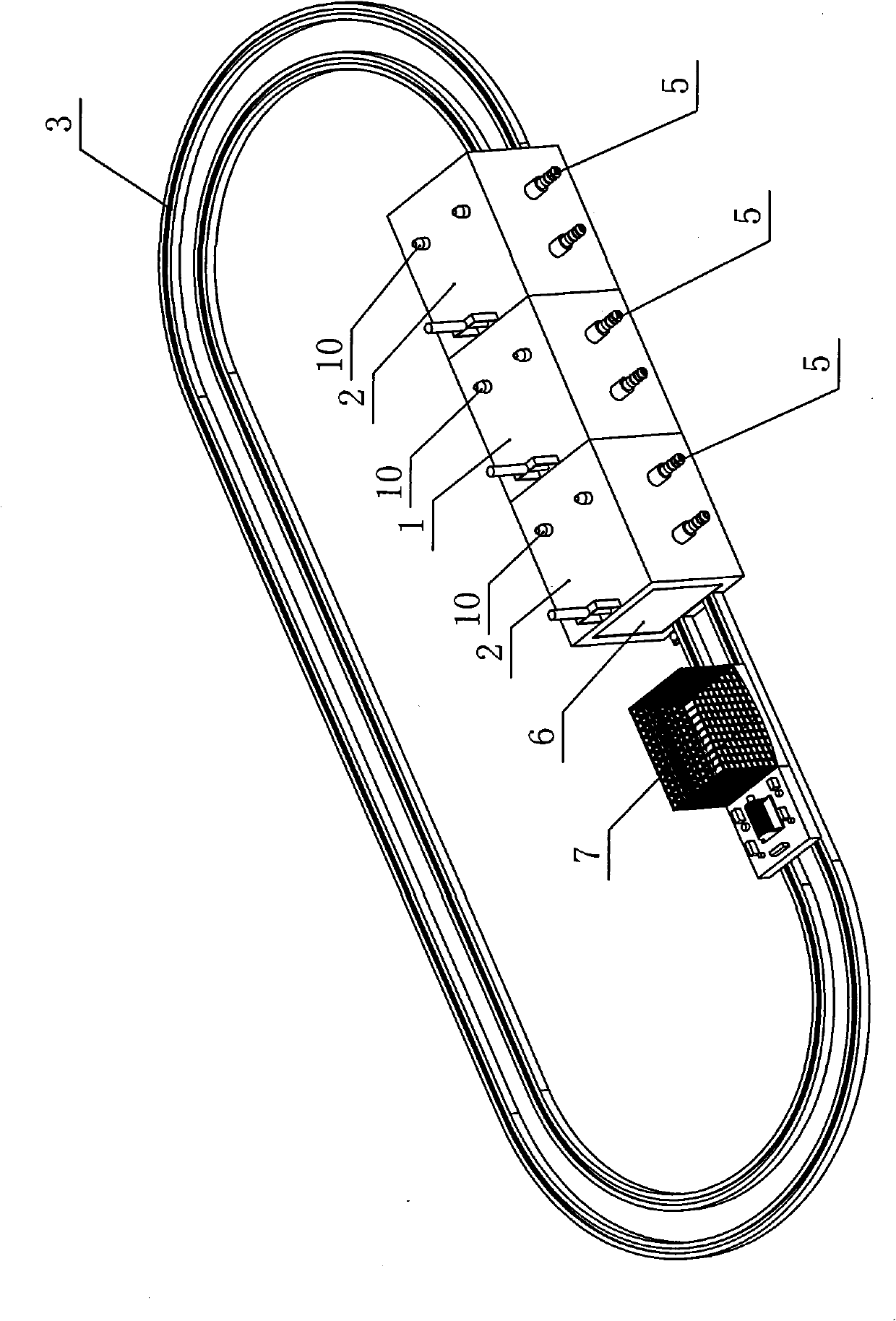
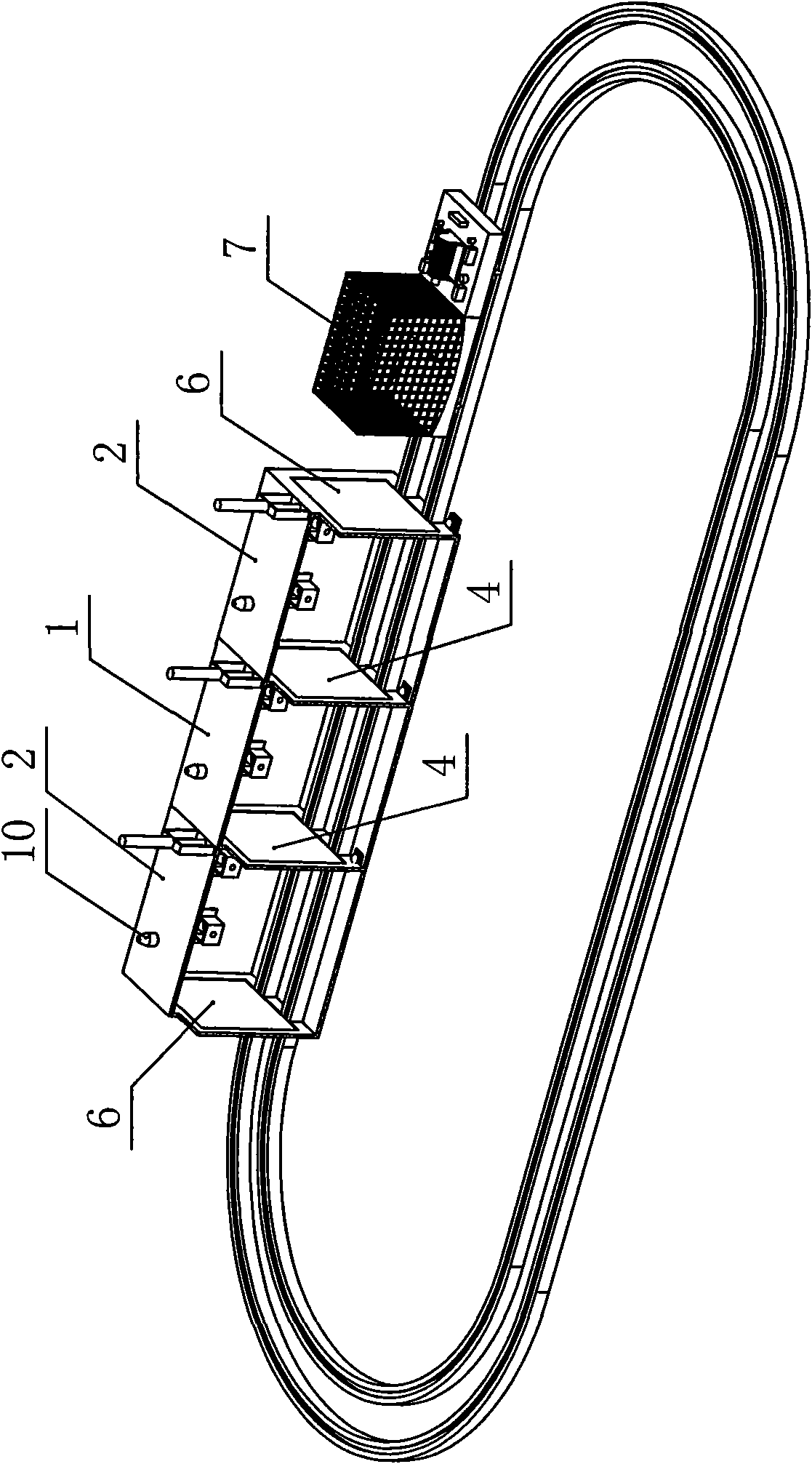
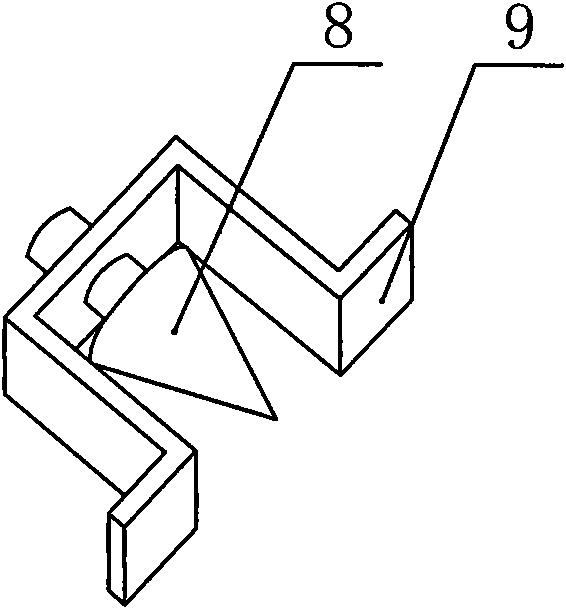
[0014] Such as figure 1 As shown, the ring track type intermittent hypoxia rat breeding cabin includes a hypoxic breeding cabin 1 composed of an airtight cabin. Of course, the hypoxic breeding cabin 1 can have an observation window, and can also be made of transparent materials as a whole. Respectively connected with a buffer cabin 2 and the raising cage track 3 that an airtight cabin constitutes on the opposite sides of the hypoxic feeding cabin 1, the gas input hole 5 is also provided on the side wall of the door cabin of the buffer cabin 2, and the buffer cabin Between the cabin 2 and the hypoxic breeding cabin 1, there is an isolation cabin door 4 that isolates them. The buffer cabin 2 is also provided with a buffer cabin door 6 to isolate from the outside world. , the buffer cabin 2 and the isolation cabin door 4 into the hypoxic breeding cabin 1, and form a closed ring. Isolation cabin door 4 and buffer cabin door 6 will have good sealability, prevent air leakage from ...
PUM
 Login to View More
 Abstract
Description
Claims
Application Information
 Login to View More