

Method for clustering districts, communication network and resource scheduling system
A technology for communication network and wireless resource scheduling, which is applied in the field of multi-cell clustering method and its communication network and resource scheduling system, which can solve the problems of no CoMP, no cooperation, and no CoMP allowed, so as to reduce switching frequency and reduce backhaul cost , the effect of reducing processing complexity
- Summary
- Abstract
- Description
- Claims
- Application Information
AI Technical Summary
Problems solved by technology
Method used
Image

Examples
Embodiment Construction
[0043] The present invention is discussed in detail below with reference to the accompanying drawings.
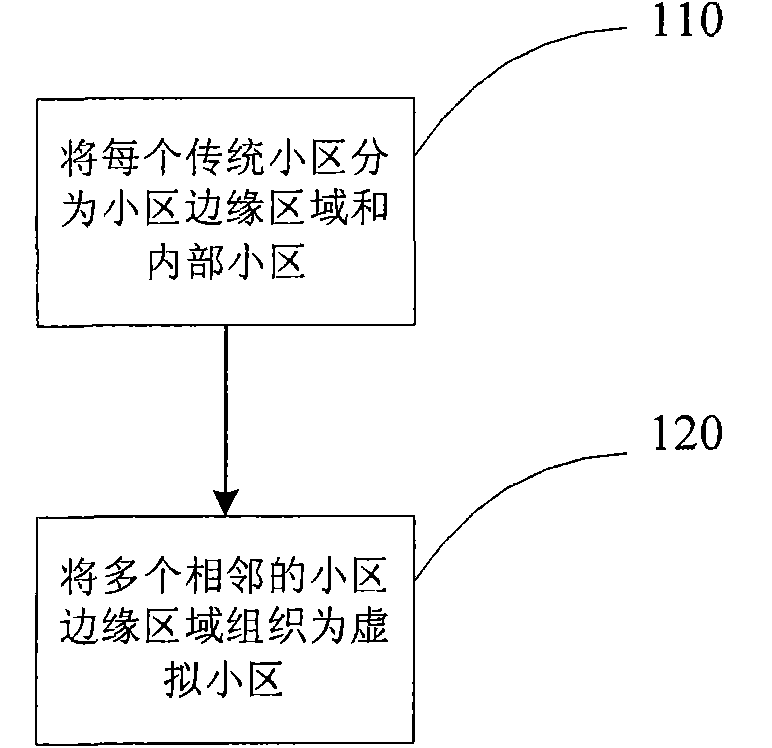
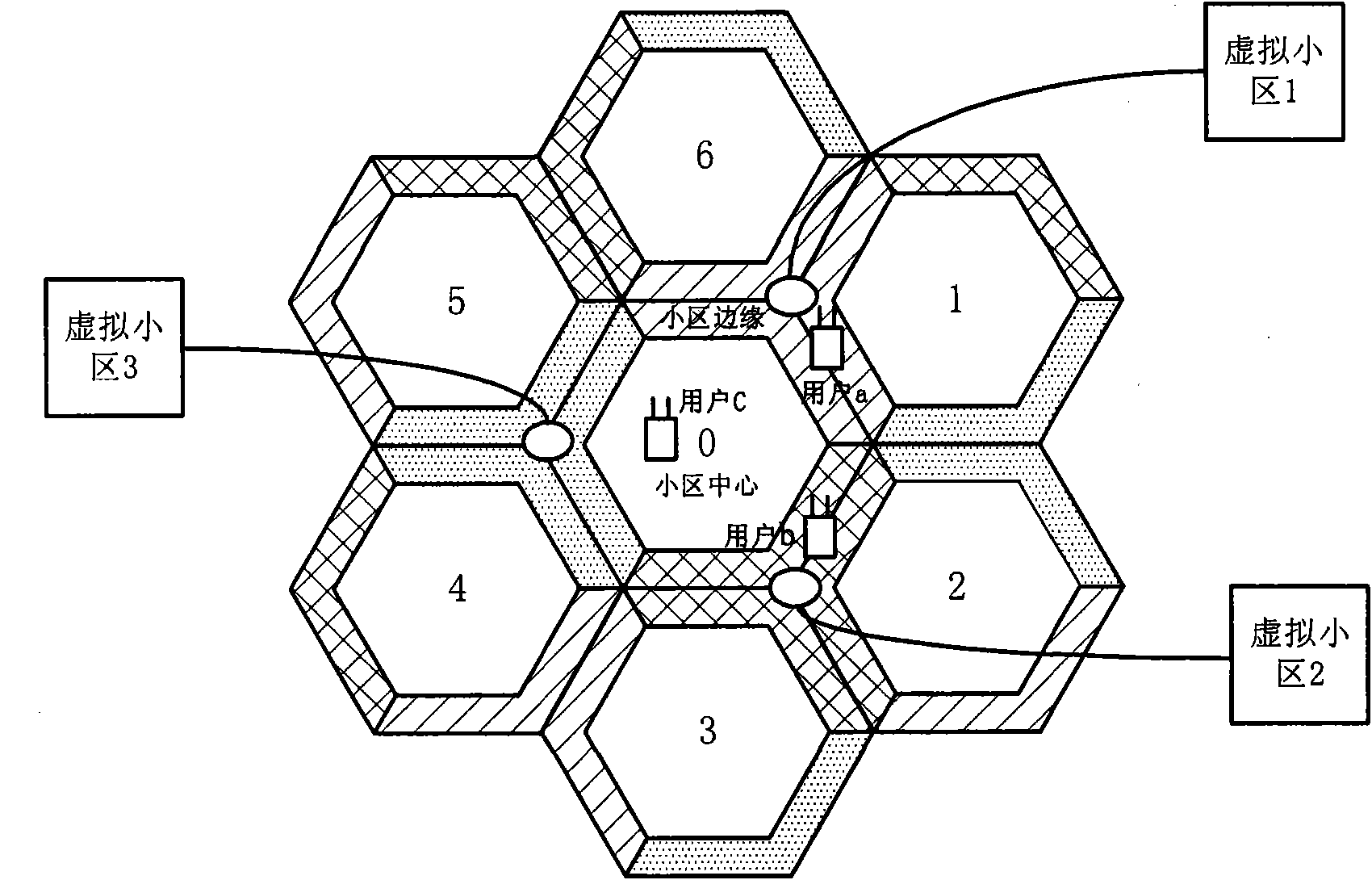
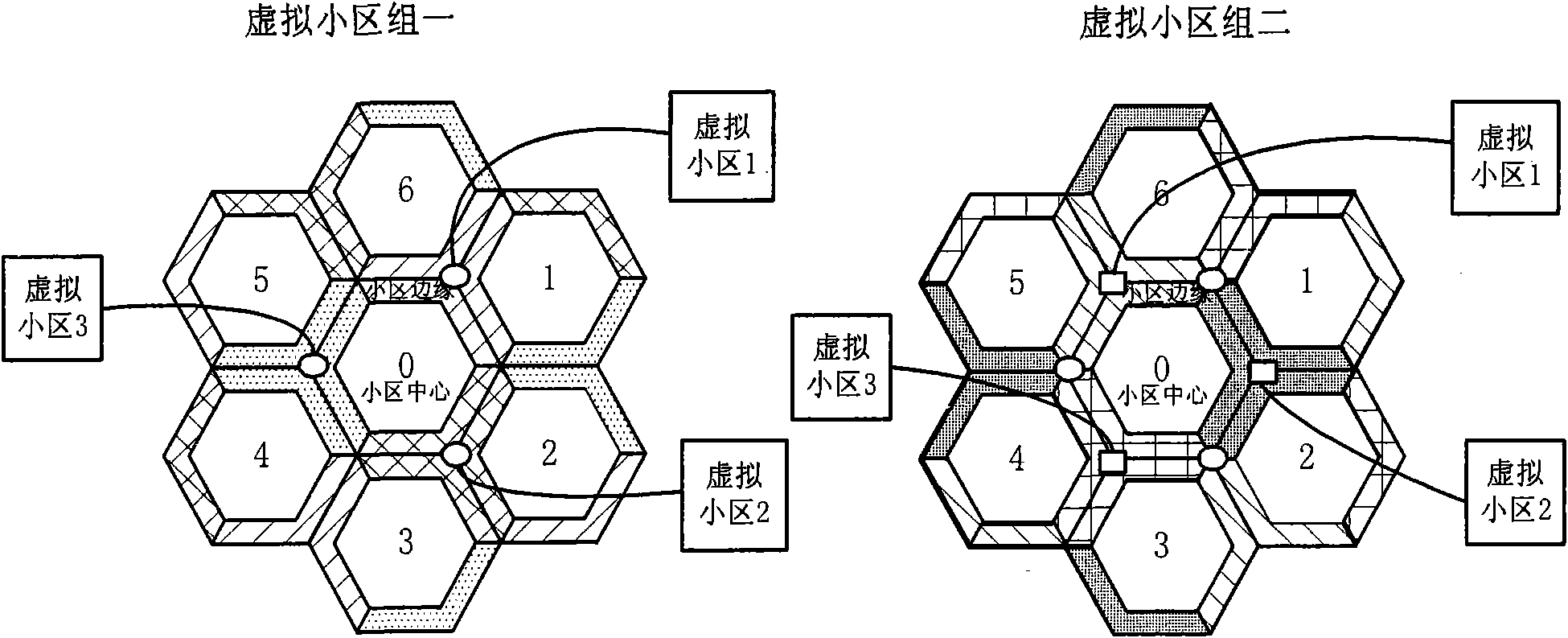
[0044]The invention provides a multi-cell clustering method, which includes: dividing each cell into a cell edge area and an internal cell according to the wireless position of the cell; organizing multiple adjacent cell edge areas into virtual cells.
[0045] figure 1 A multi-cell clustering method based on virtual cells is shown. Such as figure 1 As shown, in step 110, each cell is divided into a cell edge area and an internal cell according to the radio location of the cell.
[0046] The division criterion is: if the path loss difference between the location and the own cell and the adjacent cell is smaller than the threshold, then the radio location is at the edge of the cell. The set of all wireless positions satisfying this condition is the cell edge area, and the part of the cell except the cell edge area is the internal cell. The threshold can be configured as r...
PUM
 Login to View More
 Abstract
Description
Claims
Application Information
 Login to View More