
Device for mutual locking of two switches, especially circuit breaker
A circuit breaker and switch technology, which is applied to the parts of protection switches, electric switches, protection switches, etc., can solve the problems of manufacturing tolerances and huge wear, and achieve the effect of compact implementation
- Summary
- Abstract
- Description
- Claims
- Application Information
AI Technical Summary
Problems solved by technology
Method used
Image

Examples
Embodiment Construction
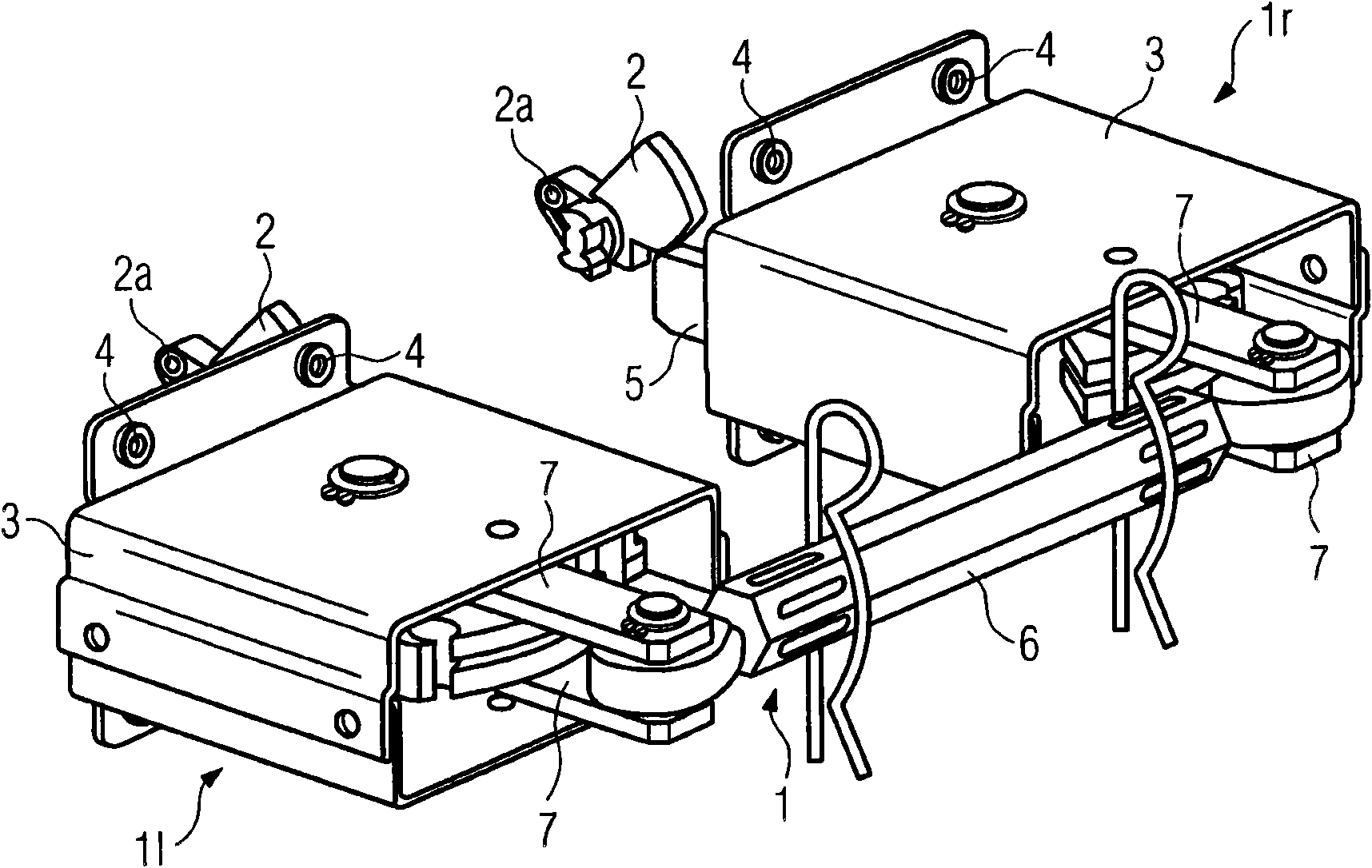
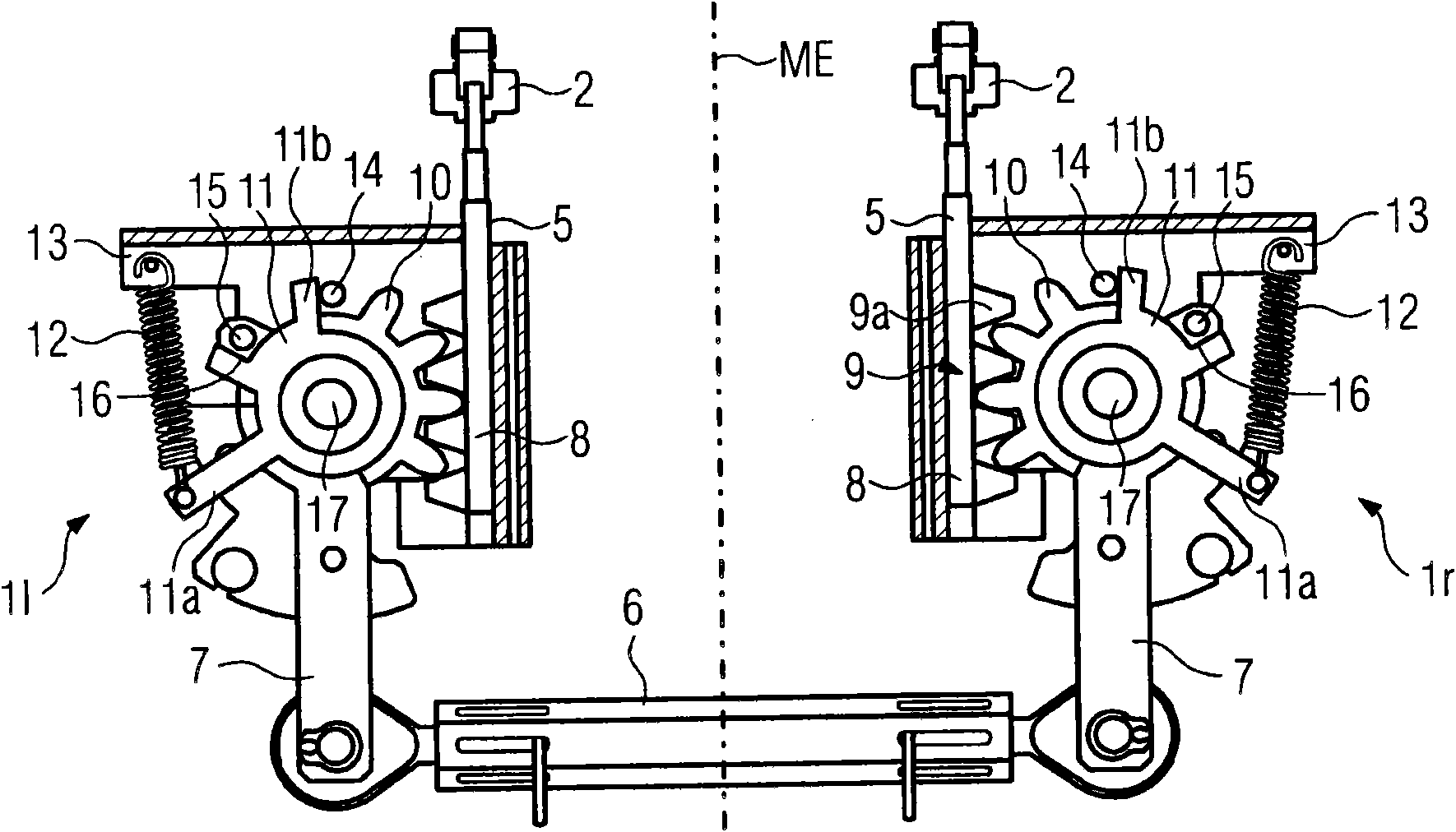
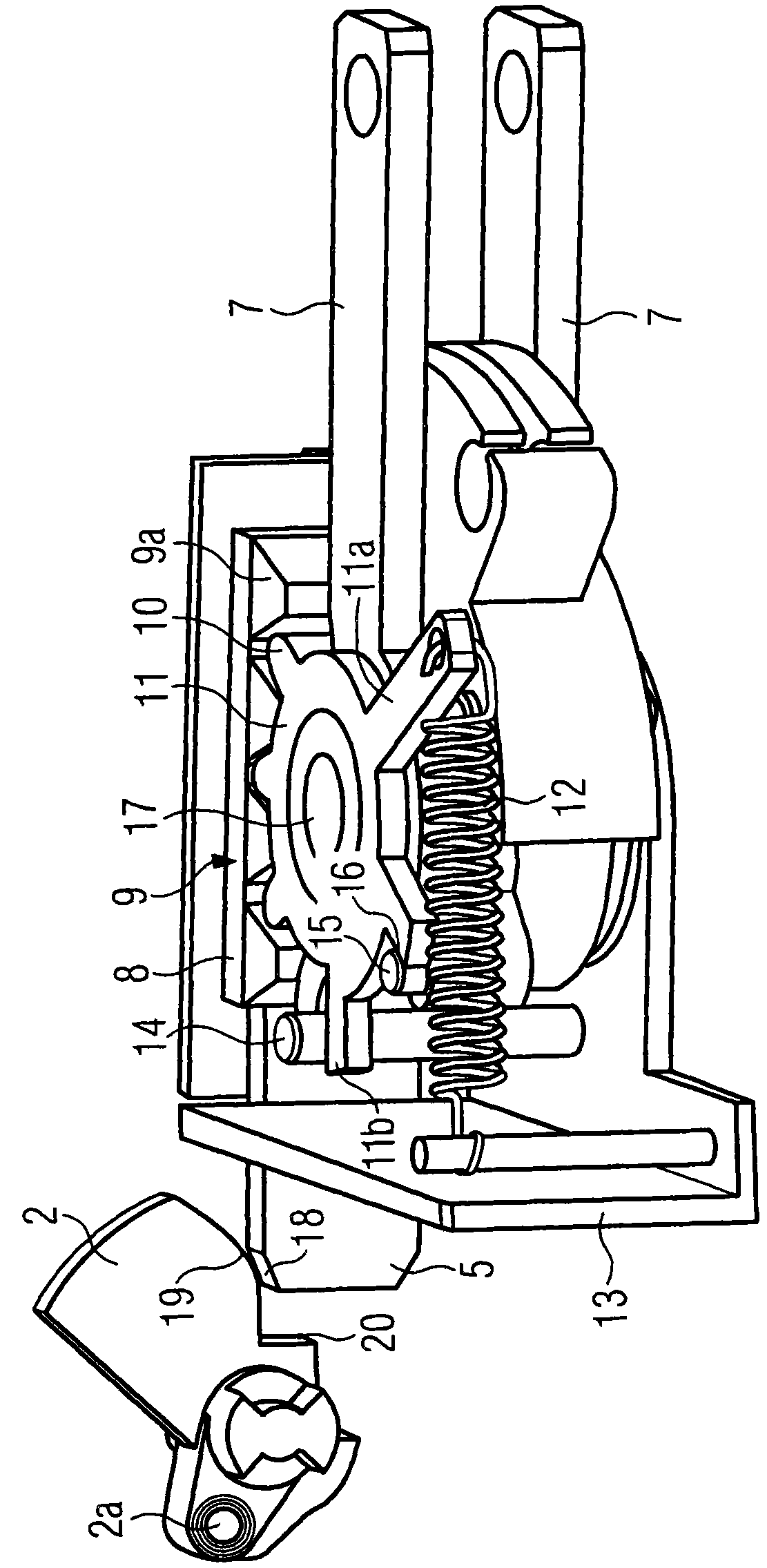
[0018] figure 1 A device 1 for interlocking two circuit breakers, hereinafter referred to as switches, is shown. For simplification reasons, in figure 1 Only the control plate 2 of the two switches is shown in simplified form, which can be pivoted about the axis 2a by a drive shaft of the switch, also not shown. Two switches are fastened adjacent to each other on corresponding mounting plates, that is to say on the rear of the switches, to which they are fastened by means of corresponding fastening plates (for example corner plates). figure 1 Through holes 4 for fixing screws are shown. Control sheet 2 (according to figure 1 Shown on the left) thus belongs to the left switch, and correspondingly the right control piece 2 belongs to the right switch. The device consists of two components, component 11 is the left switch and another component is assigned to the right switch. The two components 11 , 1r each have a frame 13 which here at the same time has the function of the ...
PUM
 Login to View More
 Abstract
Description
Claims
Application Information
 Login to View More