
Method for preparing low-adhesion super-hydrophobic surface on steel substrate
A super-hydrophobic surface, low-adhesion technology, used in devices for coating liquids on surfaces, special surfaces, coatings, etc., which can solve the problems of long processing time, inability to prepare large areas, and long processing time by chemical deposition methods. Achieve high hydrophobicity and anti-adhesion, easy large-area preparation, and improve corrosion resistance
Patent Information
- Authority / Receiving Office
- CN · China
- Current Assignee / Owner
- Publication Date
- 2012-08-08
- Estimated Expiration
- Not applicable · inactive patent
Smart Images
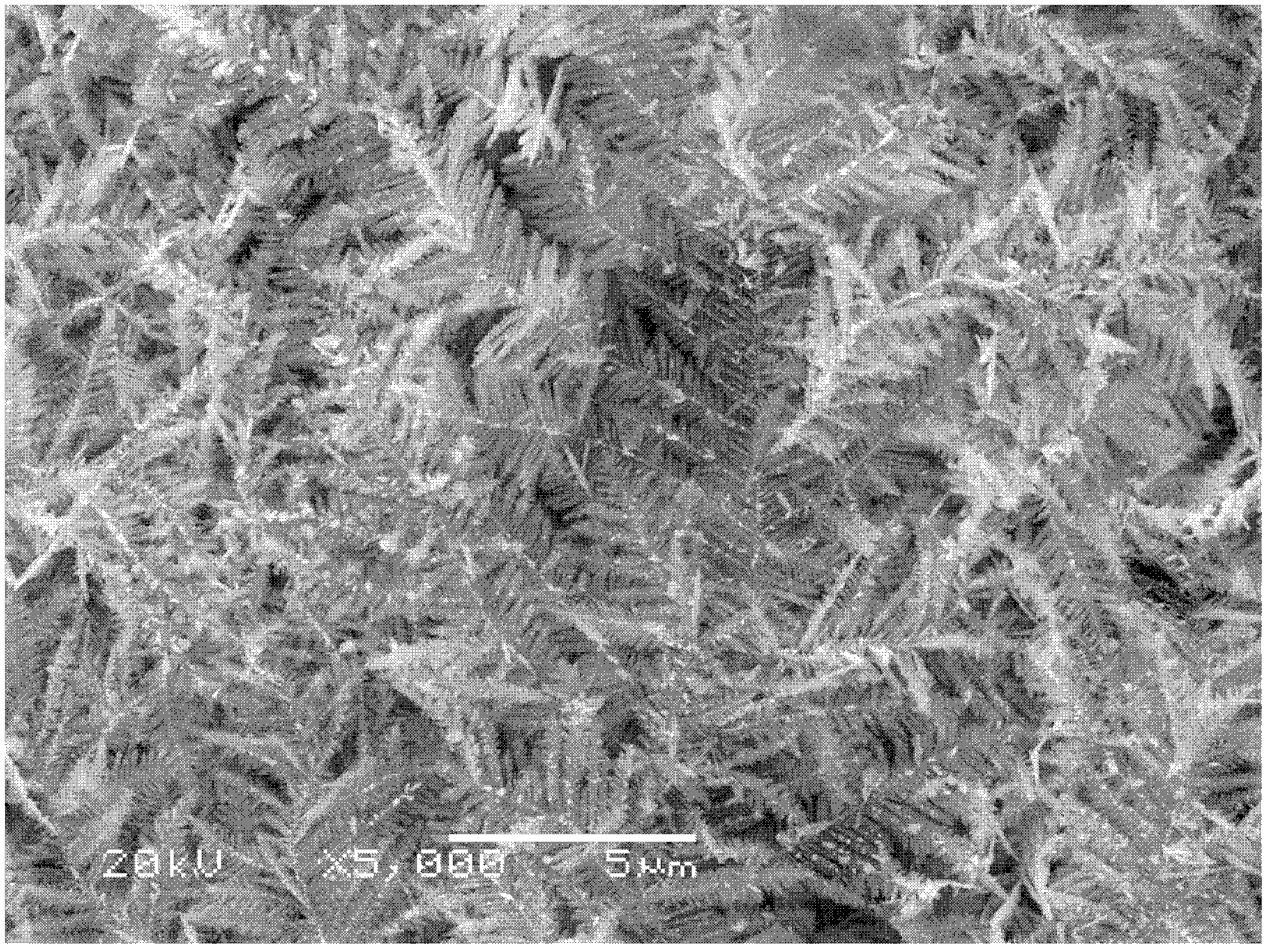
Figure 1 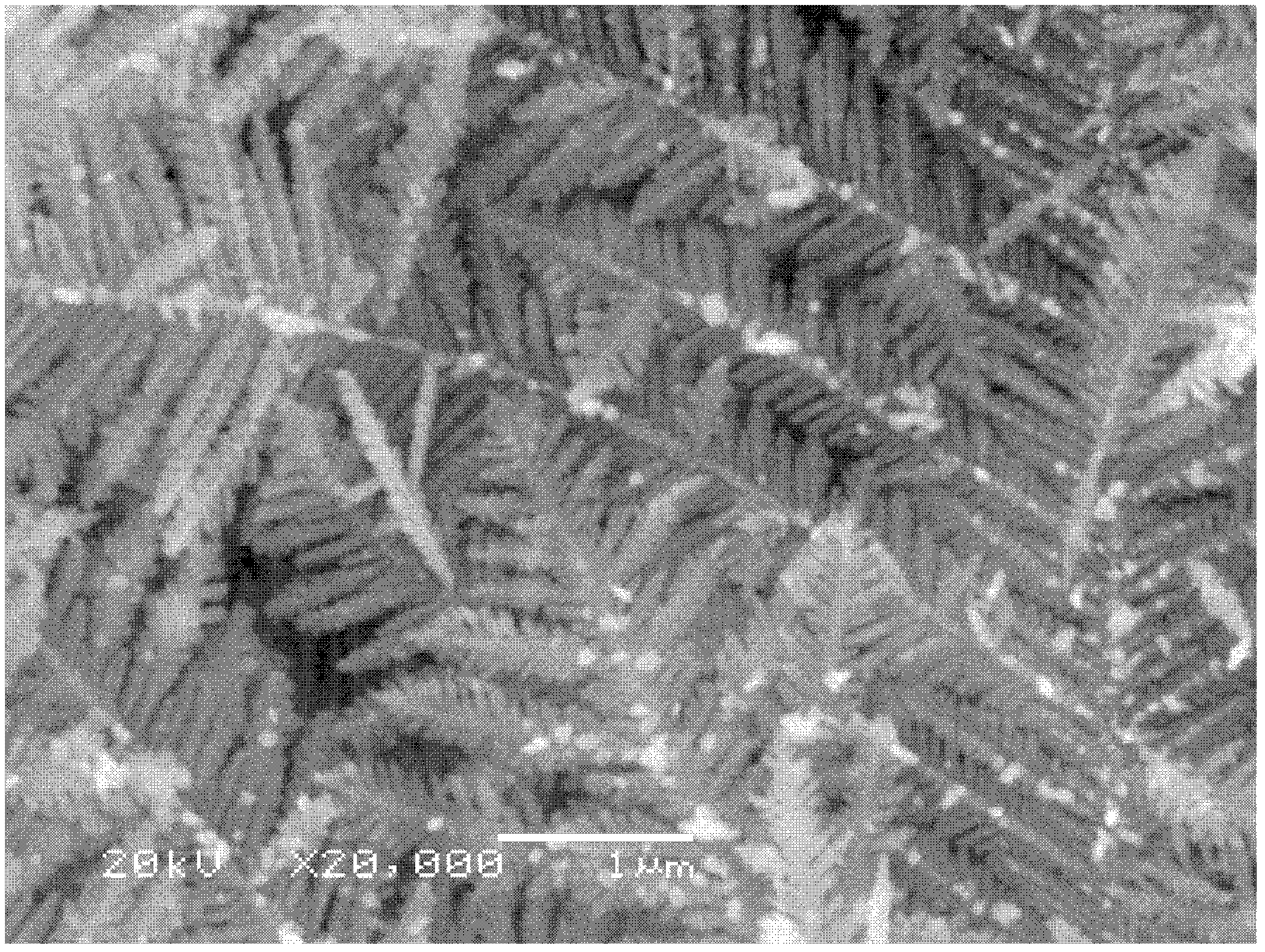
Figure 2 
Figure 3
Abstract
Description
technical field
[0001] The invention relates to a method for preparing a low-adhesion superhydrophobic surface on a steel substrate, and belongs to the fields of functional materials, metal surface modification and protection. Background technique
[0002] A low-adhesion superhydrophobic surface refers to a surface on which a water droplet has a contact angle greater than 150° and a rolling angle less than 10°. Because of its self-cleaning, drag reduction, corrosion resistance, anti-icing and frosting and other characteristics, it has extremely broad application prospects in the fields of military, communication, aviation, energy and biomedicine. The lotus leaf is a typical representative of low-adhesion superhydrophobic surfaces in nature. Although the superhydrophobic self-cleaning phenomenon of lotus leaves was documented more than a thousand years ago, its mechanism has not been elucidated until recent years. Barthlott and Jiang's research found that the low-adhesion s...
Examples
Embodiment 1
[0020] Add a certain amount of fluorosilane into a beaker filled with 0.03mol / L silver nitrate aqueous solution to prepare an aqueous silver nitrate solution containing 1 wt% fluorosilane, and ultrasonically vibrate for 30 minutes in an ultrasonic cleaner to distribute the fluorosilane evenly in the solution. A carbon steel plate with a size of 30×40mm was ultrasonically cleaned with absolute ethanol for 1 min, and then polished with 100# and 400# metallographic sandpaper to remove surface oxides. The polished carbon steel plate was ultrasonically cleaned with deionized water for 1 min. After drying, soak it in 1mol / L CuSO 4 Put it in the aqueous solution for 20 seconds to evenly coat the surface with a layer of copper, and then soak it in the above-mentioned aqueous solution containing 1wt% fluorosilane and 0.03mol / L silver nitrate for 2 minutes. Rinse with deionized water after removal. After blow-drying, low-stick superhydrophobicity is available. Scanning electron micro...