
Tandem mass spectrometry analysis method performed in ion traps
An analysis method, tandem mass spectrometry technology, applied in the direction of material analysis, material analysis, and measuring devices through electromagnetic means, can solve demanding and complex problems, and achieve the effect of enriching information and simplifying experimental devices and methods
- Summary
- Abstract
- Description
- Claims
- Application Information
AI Technical Summary
Problems solved by technology
Method used
Image

Examples
Embodiment 1
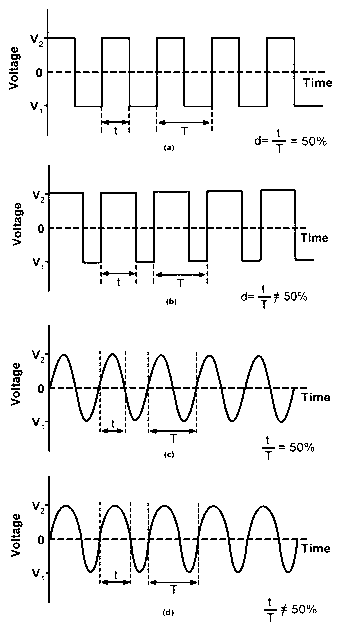
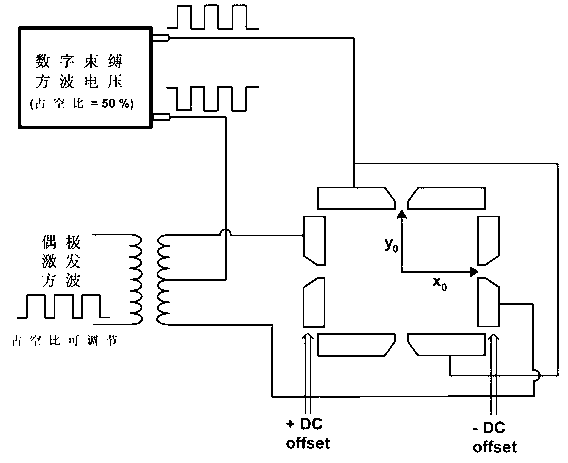
[0053] This technical scheme uses a digital square wave voltage to drive the ion trap, and realizes the collision-induced dissociation of parent ions by changing the duty cycle of the dipole excitation voltage. This scheme has been verified experimentally, and the specific content is as follows.
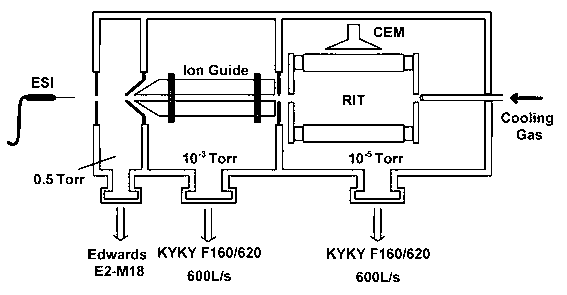
[0054] The ion trap in this scheme selects the rectangular ion trap for testing. The instrument experiment platform is shown in Figure 2. The electrospray ionization source-rectangular ion trap mass spectrometer system (ESI-RIT-MS) is designed and manufactured by our laboratory. The instrument is composed of a three-stage differential vacuum system, and the vacuum degree in the third-stage vacuum chamber where the ion trap is located can reach 3×10 -3 Pa. The ions generated by the electrospray ionization source enter the secondary vacuum chamber through the sampling cone, and then enter the rectangular ion trap through a quadrupole ion guide with a length of 200 mm to complete the m...
PUM
 Login to View More
 Abstract
Description
Claims
Application Information
 Login to View More