

PET calibrations with varying coincidence windows
A technology for calibrating phantoms and time windows, which is applied in radiation measurement, instruments for radiological diagnosis, diagnosis, etc., can solve the problems of time consumption and achieve the effect of reducing calibration time
- Summary
- Abstract
- Description
- Claims
- Application Information
AI Technical Summary
Problems solved by technology
Method used
Image

Examples
Embodiment Construction
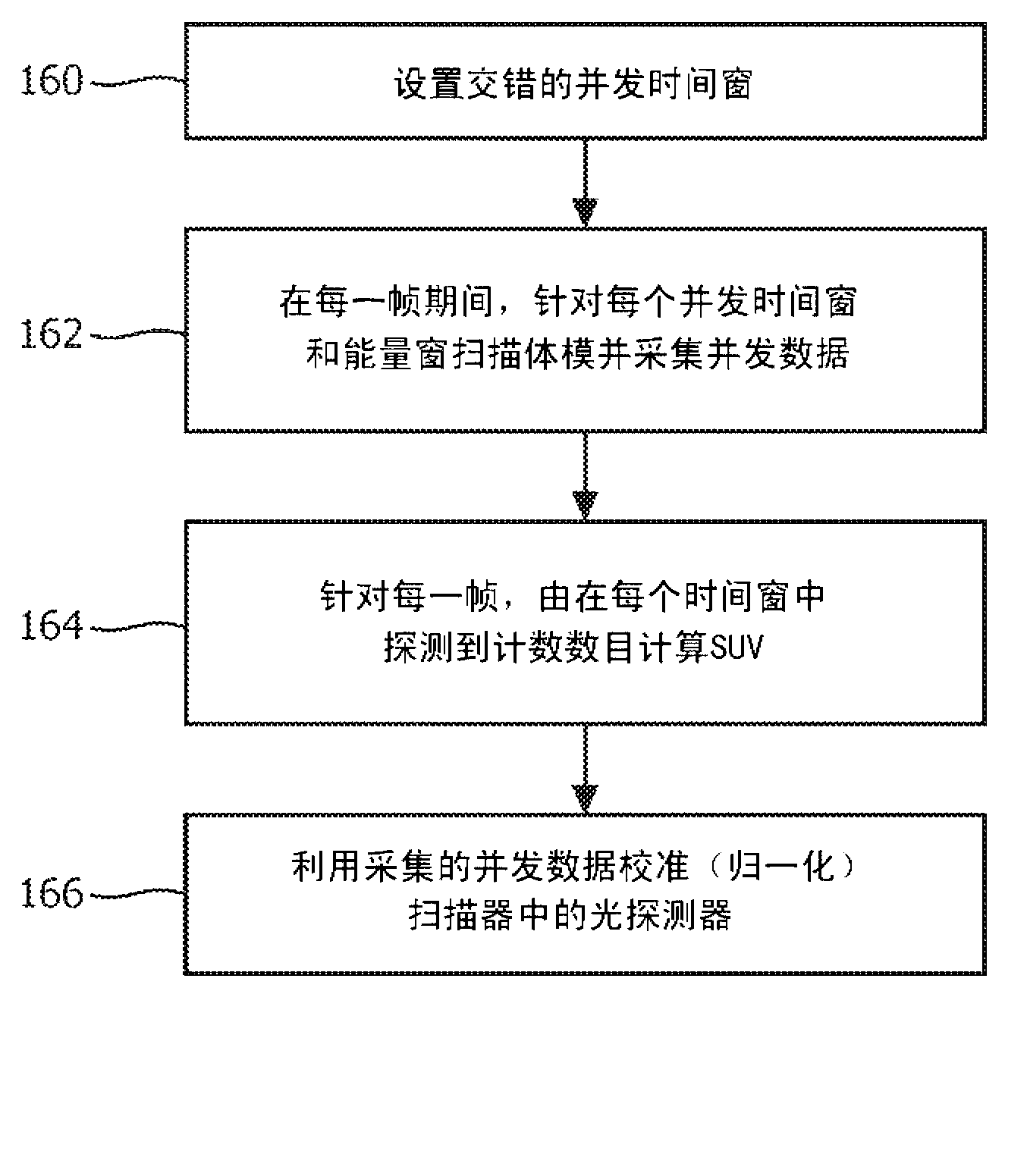
[0019] The subject innovation overcomes the time-consuming and labor-intensive problem of scanner calibration by interleaving the setting of concurrent time windows in SUV calibration to reduce the calibration duration. In another embodiment, the calibration duration is reduced by taking SUV and normalized calibration acquisitions at the largest concurrency window and post-processing the data for the desired concurrency window.
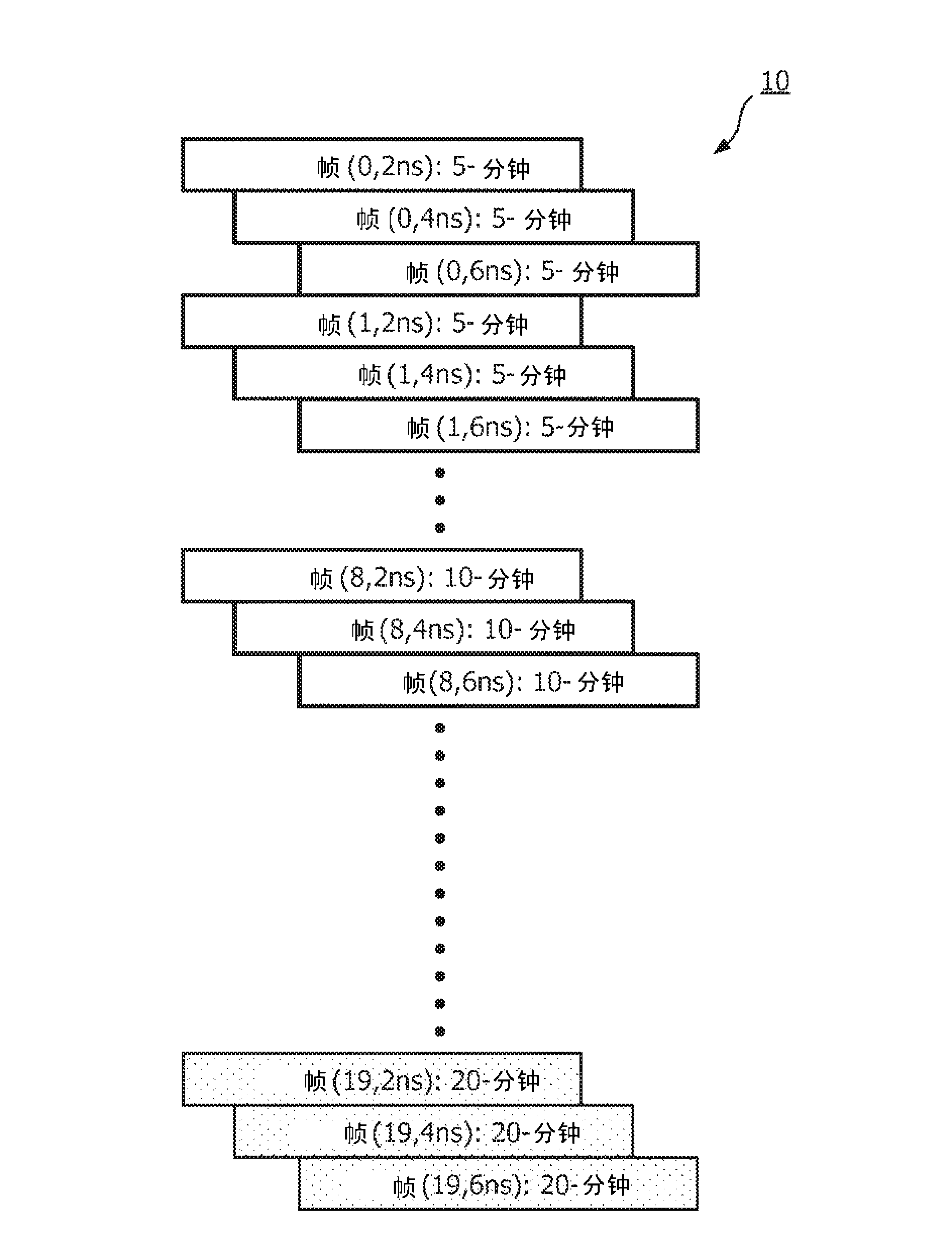
[0020] figure 1 A standard uptake value (SUV) acquisition sequence 10 is shown that uses a staggered concurrent window setup for single SUV calibration and normalization across multiple concurrent windows, thereby eliminating the need for separate SUV and Normalization calibration required. exist figure 1 In , three staggered time windows (eg, 2ns, 4ns, and 6ns) are shown for 20 frames (labeled 0-19). Each frame is divided into three parts, each part corresponding to one of the time windows. In this way, random events in the PET scanner are reduce...
PUM
 Login to View More
 Abstract
Description
Claims
Application Information
 Login to View More