Low-carbon olefine oligomerization catalyst and preparation method thereof
What is AI technical title?
AI technical title is built by Patsnap AI team. It summarizes the technical point description of the patent document.
A low-carbon olefin and catalyst technology, which is applied in the field of low-carbon olefin superimposed catalyst and its preparation field, can solve the problems of high temperature resistance of resin catalyst, easy falling off of sulfonic acid group, poor catalytic activity, etc., and achieves good stability and high performance. Catalytic activity, the effect of improving stability
Active Publication Date: 2015-06-10
KAIRUI ENVIRONMENTAL PROTECTION TECH
View PDF1 Cites 5 Cited by
Summary
Abstract
Description
Claims
Application Information
AI Technical Summary
This helps you quickly interpret patents by identifying the three key elements:
Problems solved by technology
Method used
Benefits of technology
Problems solved by technology
[0006] In view of the deficiencies in the prior art, the technical problem to be solved by the present invention is to overcome the defects that the sulfonic acid group of the traditional styrene-based cation exchange resin is easy to fall off, the resin catalyst is not resistant to high temperature, the selectivity is not good, and the catalytic activity is poor.
Method used
the structure of the environmentally friendly knitted fabric provided by the present invention; figure 2 Flow chart of the yarn wrapping machine for environmentally friendly knitted fabrics and storage devices; image 3 Is the parameter map of the yarn covering machine
View more
Image
Smart Image Click on the blue labels to locate them in the text.
Viewing Examples
Smart Image
Click on the blue label to locate the original text in one second.
Reading with bidirectional positioning of images and text.
Smart Image
Examples
Experimental program
Comparison scheme
Effect test
Embodiment 1
[0031] 1). Suspension polymerization:
[0032] Step 1) Preparation of water phase:
[0033] In parts by weight, add 100 parts of water, 0.5 parts of polyvinyl alcohol, and 2 parts of inorganic dispersants into the reactor, and stir evenly;
[0034] Step 2) Preparation of oil phase:
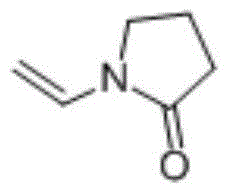
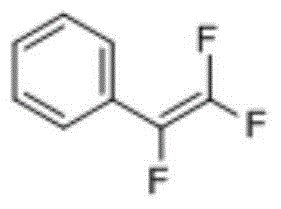
[0035] In parts by weight, 100 parts of styrene and 10 parts of divinylbenzene monomers are added with N-vinylpyrrolidone accounting for 3% of the total monomers and trifluorobenzene accounting for 1% of the total monomers. Ethylene participates in the polymerization, then add 2 parts of peroxide initiator, 35 parts of porogen, and stir evenly;
[0036] Step 3) Suspension Polymerization:
[0037] Add the oil phase solution prepared in step 2) to the reaction kettle with the prepared water phase in step 1), stir, then react at 70°C for 16 hours, discharge after the reaction, and wash the obtained polymerized white balls to The water is clear, and the porogen is extracted after drying.
[0038]...
Embodiment 2
[0041] In step 2), N-vinylpyrrolidone, which accounts for 1% of the total amount of monomers, is added, and the other steps are exactly the same as in Example 1, and the sample number is KR02.
Embodiment 3
[0043] In step 2), N-vinylpyrrolidone, which accounts for 5% of the total amount of monomers, is added, and the other steps are exactly the same as in Example 1, and the sample number is KR03.
the structure of the environmentally friendly knitted fabric provided by the present invention; figure 2 Flow chart of the yarn wrapping machine for environmentally friendly knitted fabrics and storage devices; image 3 Is the parameter map of the yarn covering machine
Login to View More
PUM
Login to View More
Abstract
The invention relates to a low-carbon olefine oligomerization catalyst and a preparation method thereof. A monomer N-vinyl pyrrolidone and trifluorostyrene are added to participate into polymerization in a polymerization process, and then sulfonated to generate the syrene cation exchange resin containing pyrrolidone in a skeleton. The catalyst disclosed by the invention has a high temperature resistant characteristic, is good in stability and yield of liquid products, and still can keep high catalytic activity after running for a long period of time. The resin catalyst disclosed by the invention is suitable for C3 and C4 olefine oligomerization reaction, so as to prepare C6-C16 olefins, and is especially suitable for a technology for producing nonene and laurylene by virtue of propylene oligomerization, a technology for producing a high-octane gasoline by C4 olefin oligomerization, a technology for producing isooctane by virtue of isobutene dimerization, and the like.
Description
technical field [0001] The invention relates to a catalyst and a preparation method thereof, in particular to a low-carbon olefin composite catalyst and a preparation method thereof. technical background [0002] Superposition, also known as oligomerization, is a process in which two or more low-molecular-weight olefins catalyze the synthesis of a larger olefin molecule. In petroleum refineries, it is often used in the processing and utilization of refinery gas to superimpose propylene and butene to form a mixture of dimers, trimers and tetramers. The lamination process is divided into selective lamination and non-selective lamination according to the composition of raw materials. Macroporous strongly acidic ion exchange resins are currently widely used superposition catalysts at home and abroad. Snamprogetti, Fortum, UOP, CDTECH, etc. all use macroporous strong acidic ion exchange resins in the superposition reaction technology of C4 light olefins as a catalyst. [0003]...
Claims
the structure of the environmentally friendly knitted fabric provided by the present invention; figure 2 Flow chart of the yarn wrapping machine for environmentally friendly knitted fabrics and storage devices; image 3 Is the parameter map of the yarn covering machine
Login to View More
Application Information
Patent Timeline
Application Date:The date an application was filed.
Publication Date:The date a patent or application was officially published.
First Publication Date:The earliest publication date of a patent with the same application number.
Issue Date:Publication date of the patent grant document.
PCT Entry Date:The Entry date of PCT National Phase.
Estimated Expiry Date:The statutory expiry date of a patent right according to the Patent Law, and it is the longest term of protection that the patent right can achieve without the termination of the patent right due to other reasons(Term extension factor has been taken into account ).
Invalid Date:Actual expiry date is based on effective date or publication date of legal transaction data of invalid patent.


 Login to View More
  Login to View More