Reducing turbocharged engine overheating

A turbocharger and engine technology, applied in engine components, combustion engines, engine control, etc., can solve the problem of not keeping the temperature of the cylinder head below the melting point of the engine metal

A turbocharger and engine technology, applied in engine components, combustion engines, engine control, etc., can solve the problem of not keeping the temperature of the cylinder head below the melting point of the engine metal

CN104047737AActive Publication Date: 2014-09-17FORD GLOBAL TECH LLC

Image

Smart Image Click on the blue labels to locate them in the text.
Viewing Examples
Smart Image
  • Reducing turbocharged engine overheating
  • Reducing turbocharged engine overheating
  • Reducing turbocharged engine overheating

Examples

Experimental program
Comparison scheme
Effect test

Embodiment Construction

[0017] The present description relates to a method of deactivating one or more engine cylinders while limiting engine load in response to coolant loss in a turbocharged engine. In one example, the method includes deactivating one or more engine cylinders while limiting one or more active cylinder loads while maintaining engine speed below a threshold engine speed, and while maintaining engine cylinders below a third threshold temperature. In this manner, engine cylinder overheating may be mitigated while maintaining vehicle drivability and vehicle operability over a range of engine operating conditions.

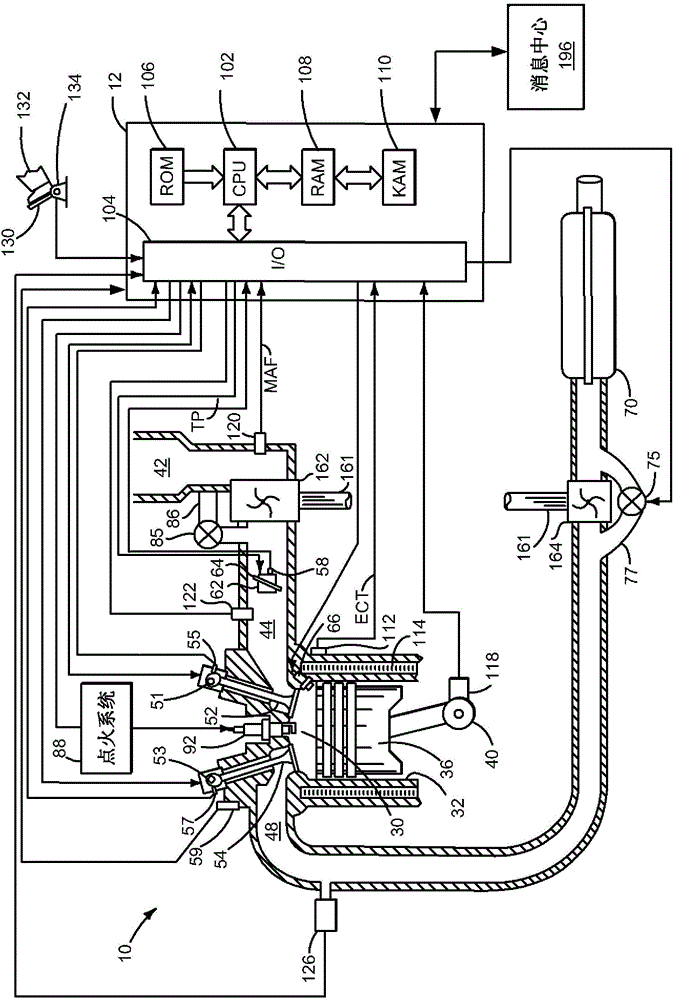
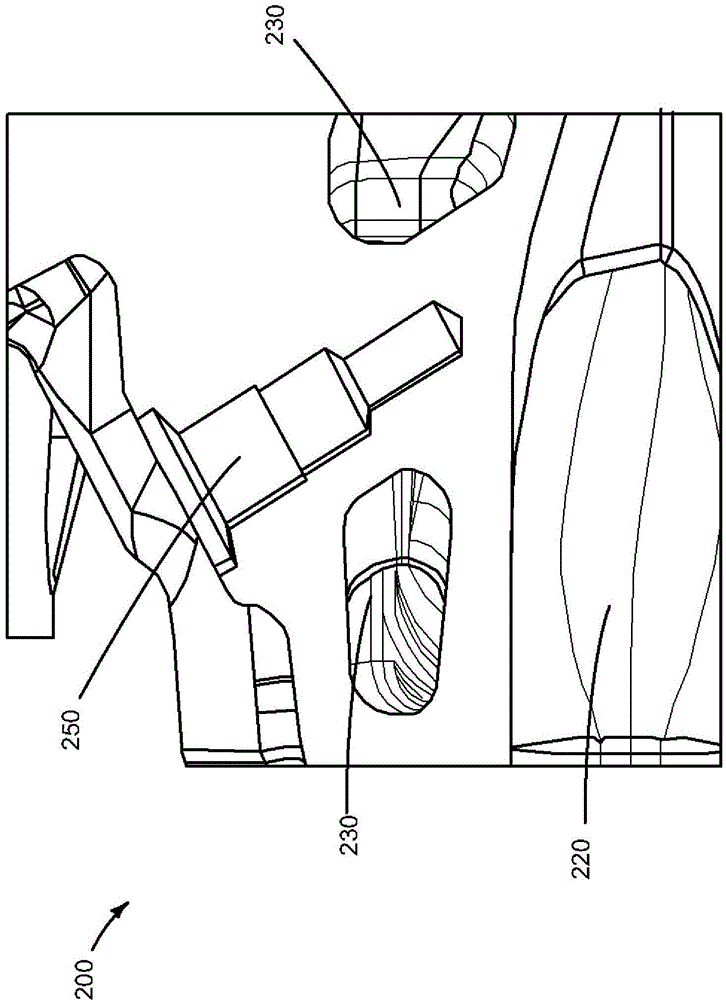
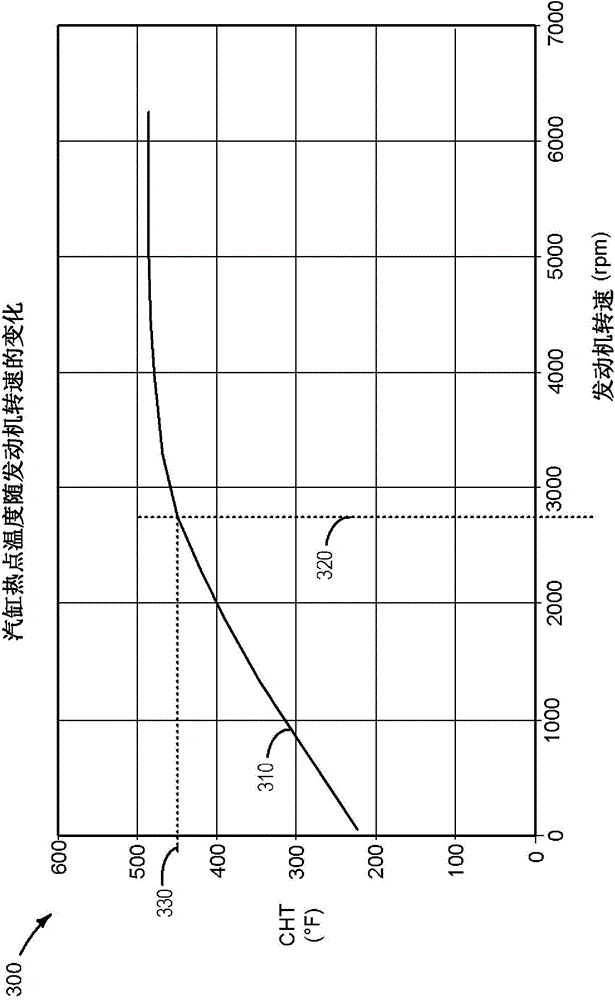
[0018] figure 1 An example of a turbocharged engine is shown, including an intake compressor, exhaust turbine, wastegate, and engine controller. figure 2 An example of an exhaust manifold temperature sensor that may be used to provide an indication of engine cylinder head temperature is shown. Figure 3-5 are example curves for cylinder head temperature versus engine speed...

the structure of the environmentally friendly knitted fabric provided by the present invention; figure 2 Flow chart of the yarn wrapping machine for environmentally friendly knitted fabrics and storage devices; image 3 Is the parameter map of the yarn covering machine
Login to View More

PUM

No PUM Login to View More

Abstract

A method comprising in response to coolant loss in a turbocharged engine, deactivating one or more engine cylinders while limiting engine load of one or more active cylinders based on an engine speed, and a cylinder head temperature.

Description

technical field [0001] The present invention relates to reducing overheating of turbocharged engines. Background technique [0002] Engines may be cooled by circulating a coolant fluid, such as water, through passages in the engine. Engine metal components can overheat in the event of cooling system degradation (e.g. water pump degradation) or coolant loss (e.g. due to coolant system leaks). [0003] Gebby et al. (US 7,204,235) address overheating in the event of cooling system degradation by alternately closing each bank of fuel injectors of the engine cylinders and air cooling the deactivated engine banks with unburned charge air. Alternately deactivating each bank of cylinders may provide a portion of engine torque for vehicle operation. [0004] The inventors herein have recognized potential problems with the above approach. That is, with turbocharged and other high-specific power output engines, traditional fail-safe cooling strategies such as deactivation of alterna...

Claims

the structure of the environmentally friendly knitted fabric provided by the present invention; figure 2 Flow chart of the yarn wrapping machine for environmentally friendly knitted fabrics and storage devices; image 3 Is the parameter map of the yarn covering machine
Login to View More

Application Information

Patent Timeline
17 Sep 2014
Publication
CN104047737A
IPC
F02D17/02; F02D9/00; F02D28/00; F02B37/00
CPC
F02D17/02; Y02T10/144; F02D13/06; Y02T10/12; F01P5/14; F02D17/04; F02D35/025; F02D41/22
Inventors
K·维拉德; J·E·罗林格