
Gesture segmentation method and system based on global expectation-maximization algorithm
A technology with maximum expectation algorithm and gesture, applied in the field of human-computer interaction image information processing, it can solve the problems of skin-color object interference, misjudgment, and distinction, and achieve the effect of reducing the amount of calculation and the number of iterations.
Patent Information
- Authority / Receiving Office
- CN · China
- Patent Type
- Applications(China)
- Current Assignee / Owner
- Publication Date
- 2016-03-16
Smart Images
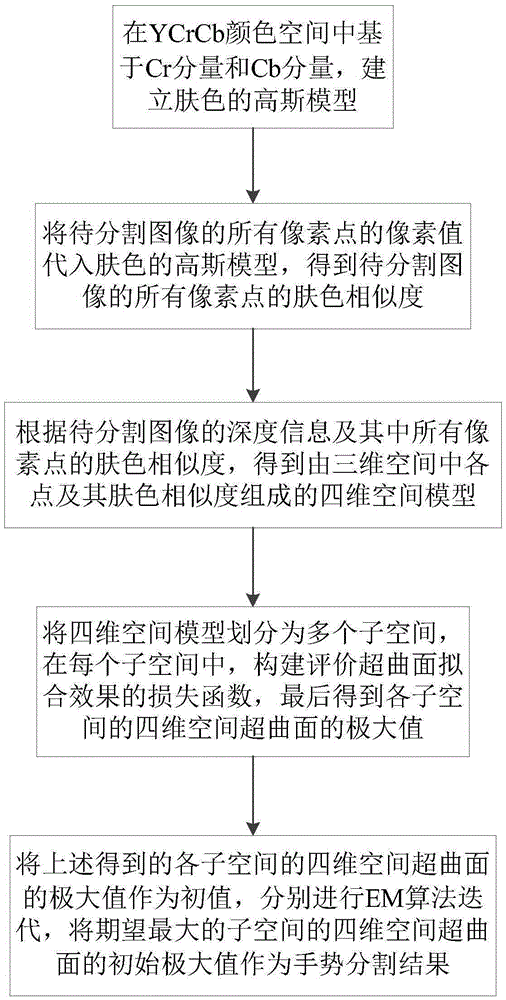
Figure 1 
Figure 2 
Figure 3
Abstract
Description
technical field
[0001] The invention belongs to the technical field of human-computer interaction image information processing, and more specifically, relates to a gesture segmentation method and system based on a global expectation maximum algorithm. Background technique
[0002] Biometric recognition based on image information is a hot spot in computer vision research in recent years. Among them, the recognition of human biometrics has inevitably become the main research content. Further, gesture recognition research is an important research content of human biometrics. , which mainly segments, tracks and recognizes different gestures from image data, and describes and understands them. Gesture recognition technology originates from the research of digital image processing and machine learning algorithms, and gesture segmentation is the foundation and precursor of the gesture recognition research pipeline, which has a decisive impact on the final gesture recognition result...
Examples
Embodiment Construction
[0034] In order to make the object, technical solution and advantages of the present invention clearer, the present invention will be further described in detail below in conjunction with the accompanying drawings and embodiments. It should be understood that the specific embodiments described here are only used to explain the present invention, not to limit the present invention. In addition, the technical features involved in the various embodiments of the present invention described below can be combined with each other as long as they do not constitute a conflict with each other.
[0035] Such as figure 1 As shown, the gesture segmentation method based on the global expectation maximum algorithm in the embodiment of the present invention includes the following steps:
[0036] (1) Using the MCG-Skin data set of the Multimedia Computing Research Group of the Institute of Computing Technology, Chinese Academy of Sciences, based on the Cr component and Cb component in the YCr...