

Trace template self-adaption method based on variance estimation
A variance estimation and adaptive technology, applied in computing, image data processing, instruments, etc., can solve the problem that the template cannot be adaptively changed.
- Summary
- Abstract
- Description
- Claims
- Application Information
AI Technical Summary
Problems solved by technology
Method used
Image

Examples
Embodiment Construction
[0036] The present invention will be described in detail below in conjunction with the accompanying drawings. The following examples do not limit the invention. Without departing from the spirit and scope of the inventive concept, changes and advantages that can be imagined by those skilled in the art are all included in the present invention.
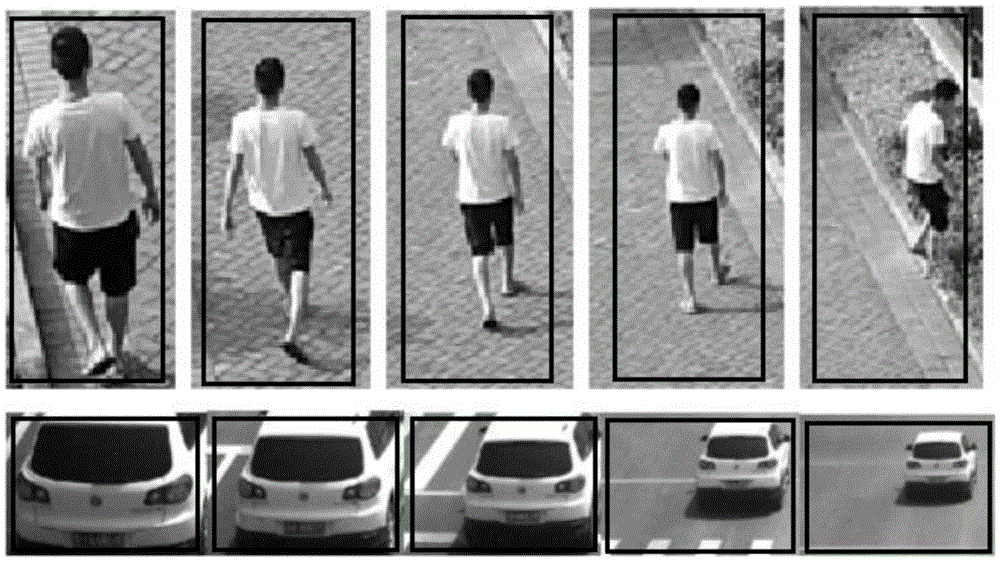
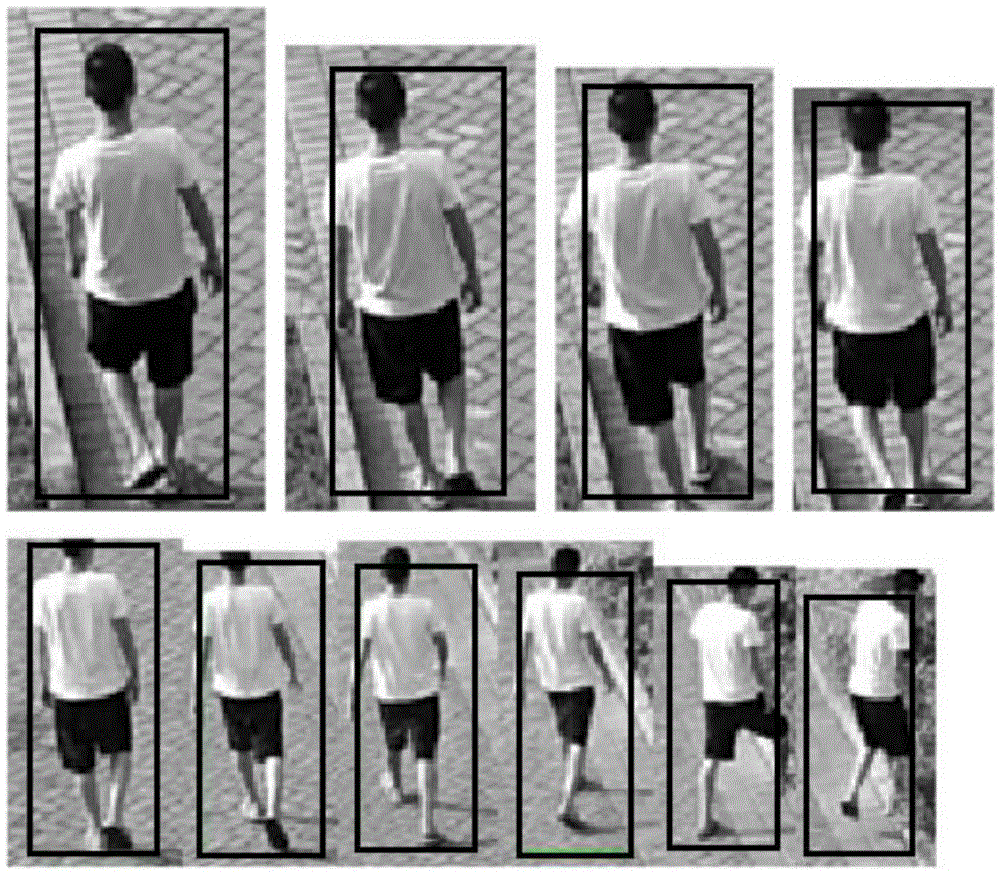
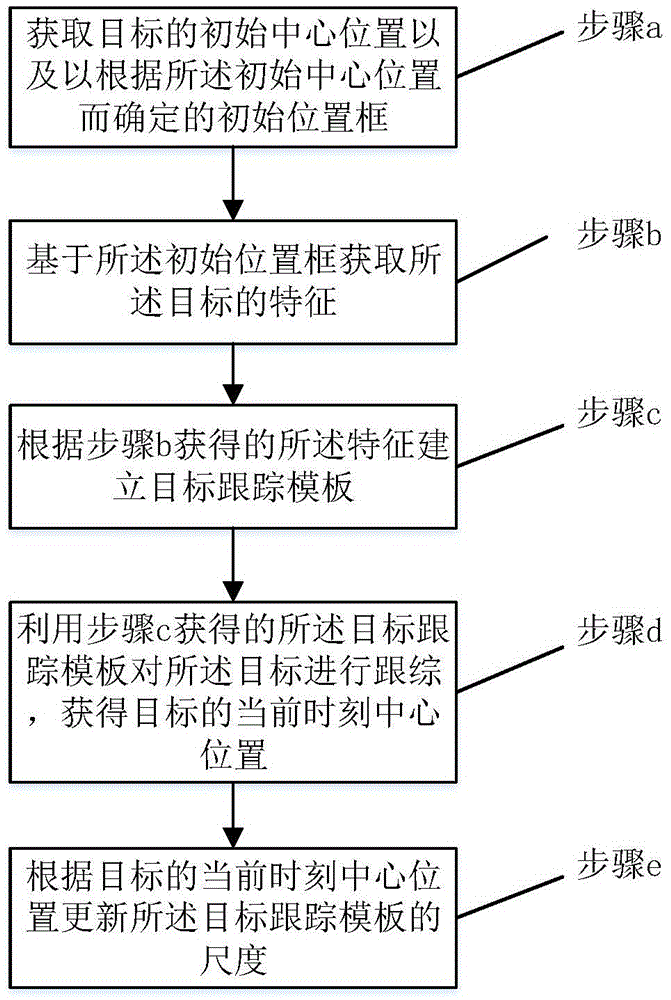
[0037] join below Figure 1-3 The tracking template adaptive method based on variance estimation of the present invention will be described in detail. Such as image 3 As shown, the present invention includes the following steps.
[0038] Step a: Obtain the initial center position of the target and the initial position frame determined according to the initial center position, the initial center position is denoted as x * .
[0039] In step a, the initial center position and the initial position frame can be obtained by the following method:
[0040] 1. In the occasion with human-computer interaction function, manually determine ...
PUM
 Login to View More
 Abstract
Description
Claims
Application Information
 Login to View More