Reactive compensation and current zero-crossing distortion free modulation method of single-phase grid connected inverter
A modulation method and inverter technology, applied in reactive power compensation, reactive power adjustment/elimination/compensation, AC network circuits, etc., can solve problems such as grid-connected current distortion and grid-connected current’s own zero-crossing distortion
- Summary
- Abstract
- Description
- Claims
- Application Information
AI Technical Summary
Problems solved by technology
Method used
Image

Examples
Embodiment Construction
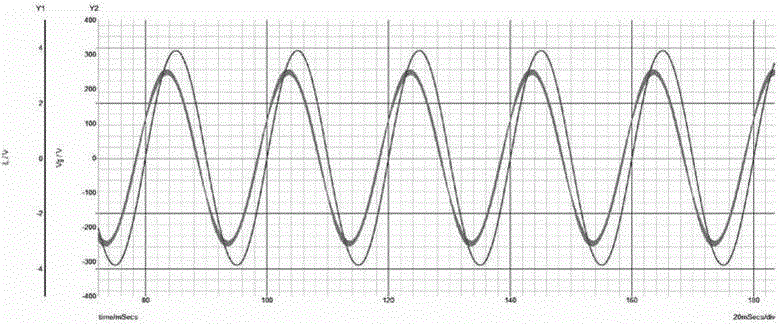
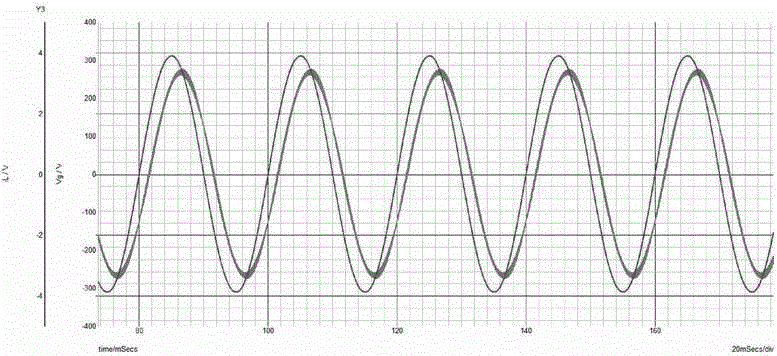
[0026] 1 for figure 2 When the grid voltage is ahead of the grid-connected current (a few cycles refer to 2-10 switches and cycles), the division of the time period is not directly divided according to the zero point of the voltage and current.
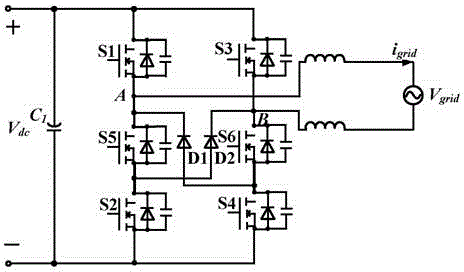
[0027] 2 What is different from other patents is T 1 Corresponding time period: several switching cycles before grid voltage crosses zero, grid voltage zero crossing to grid-connected current zero crossing, several switching cycles after current zero crossing; at T 1 During the time period, S6 is normally on, S1 and S4 work in the SPWM high-frequency state, S5 and S1 are out of phase, and S2 and S3 are normally off; when the grid works in mode 1, mode 5 and mode 6, the grid-connected current is The freewheeling direction is negative when it is negative, and D1 freewheeling when the grid-connected current is positive.
[0028] 3 The grid voltage and grid-connected current are both positive, and the difference from other patents is t...
PUM
 Login to View More
 Abstract
Description
Claims
Application Information
 Login to View More
 - R&D
- Intellectual Property
- Life Sciences
- Materials
- Tech Scout
- Unparalleled Data Quality
- Higher Quality Content
- 60% Fewer Hallucinations
Browse by: Latest US Patents, China's latest patents, Technical Efficacy Thesaurus, Application Domain, Technology Topic, Popular Technical Reports.
© 2025 PatSnap. All rights reserved.Legal|Privacy policy|Modern Slavery Act Transparency Statement|Sitemap|About US| Contact US: help@patsnap.com