IDH2 (isocitrate dehydrogenase 2) mutant inhibitor and application thereof
What is AI technical title?
AI technical title is built by Patsnap AI team. It summarizes the technical point description of the patent document.
A technology of solvents and compounds, applied in the field of medicine, can solve problems such as cell metabolism disorders
Active Publication Date: 2017-06-09
JIANGSU PROVINCE INST OF TRADITIONAL CHINESE MEDICINE
View PDF3 Cites 3 Cited by
Summary
Abstract
Description
Claims
Application Information
AI Technical Summary
This helps you quickly interpret patents by identifying the three key elements:
Problems solved by technology
Method used
Benefits of technology
Problems solved by technology
Another view is that the structure of 2-HG is similar to that of α-KG, and it can competitively inhibit the targets of α-KG, such as histonedemethylase, TET1 / 2 hydroxymethyl The methylation of DNA and histone directly affects the expression and differentiation of mRNA, leading to the disorder of cellmetabolism
Method used
the structure of the environmentally friendly knitted fabric provided by the present invention; figure 2 Flow chart of the yarn wrapping machine for environmentally friendly knitted fabrics and storage devices; image 3 Is the parameter map of the yarn covering machine
View more
Image
Smart Image Click on the blue labels to locate them in the text.
Viewing Examples
Smart Image
Click on the blue label to locate the original text in one second.
Reading with bidirectional positioning of images and text.
Smart Image
Examples
Experimental program
Comparison scheme
Effect test
Embodiment 1
[0070] Example 1: Compounds against IDH 2 / R140Q inhibitory activity assay
[0071] IDH 2 The / R140Q mutant can catalyze the conversion of α-KG to 2-HG and simultaneously oxidize NADPH to NADP+ . Therefore, the inhibitory activity of the compound on the IDH2 / R140Q mutant can be determined by detecting the consumption value of NADPH.
[0072] The detailed method is: add the reaction solution containing 25mM Tris (pH7.4), 150mM NaCl, 10mM MgCl2, 0.03% BSA in a 96-well plate, add 100ng / mL IDH 2 / R140Q and different concentrations of compounds were incubated at 30°C for 1 hour, then 1 mMα-KG and 10 μM NADPH were added, the total system was 200 μL, and the absorbance value of NADPH was continuously detected within 16 hours using a Thermo microplate reader at 30°C and 340 nM wavelength. The final concentration gradient of the compound was set to (10000, 5000, 1000, 500, 100, 50, 10, 5, 1, 0.5, 0.1, 0.01) nM, and the inhibitory activity IC of the compound on IDH2 / R140Q was calcula...
Embodiment 2
[0073] Example 2: Compounds against IDH 2 / R172K inhibitory activity assay
[0074] IDH2 / R172K mutant can catalyze the conversion of α-KG to 2-HG and simultaneously oxidize NADPH to NADP + . Therefore, the inhibitory activity of the compound on the IDH2 / R172K mutant can be determined by detecting the consumption value of NADPH.
[0075] Detailed measurement method with reference to embodiment 1.
Embodiment 3
[0076] Example 3: Compounds against wild-type IDH 2 Inhibitory Activity Determination of
[0077] Wild-type IDH2 in NADP + Under the auxiliary effect, the isocitrate ICT is catalyzed into α-KG, accompanied by the generation of NADPH. Therefore, the inhibitory activity of the compound on IDH2 can be determined by detecting the increase of NADPH.
[0078] The detailed method is as follows: add a reaction solution containing 50mM Tris (pH7.4), 5mM MgCl2, 0.03% BSA to a 96-well plate, add 100ng / mL IDH2 and compounds of different concentrations, incubate at 30°C for 1 hour, and then add 200μM ICT and 200 μM NADP + , the total system was 200 μL, and the change in the absorbance value of NADPH within 16 hours was continuously detected at 30° C. and 340 nM wavelength using a Thermo microplate reader. The final concentration gradient of the compound was set to (10000, 5000, 1000, 500, 100, 50, 10, 5, 1, 0.5, 0.1, 0.01) nM, and the inhibitory activity IC of the compound on IDH2 was ...
the structure of the environmentally friendly knitted fabric provided by the present invention; figure 2 Flow chart of the yarn wrapping machine for environmentally friendly knitted fabrics and storage devices; image 3 Is the parameter map of the yarn covering machine
Login to View More
PUM
Login to View More
Abstract
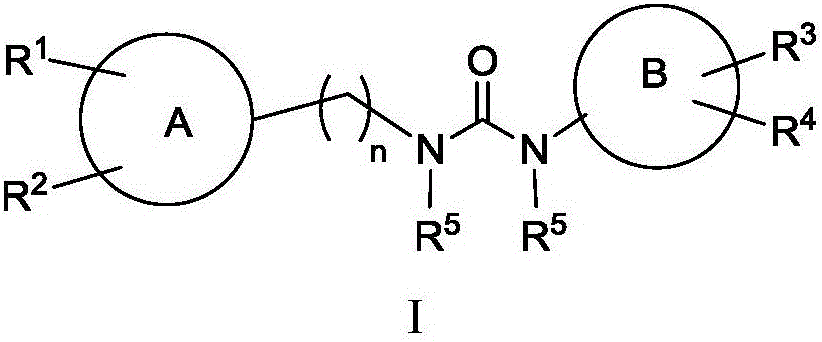
The invention relates to a compound of formula I shown in the description and its pharmaceutically salts, solvents and hydrates, as well as a pharmaceutical composition comprising the compound of formula I and application thereof as an IDH (isocitrate dehydrogenase 2) mutant inhibitor in the preparation of drugs for treating IDH mutation related diseases.
Description
technical field [0001] The invention belongs to the field of medicine, and in particular relates to an IDH mutant inhibitor and its application in preparing medicine. Background technique [0002] One of the important features of cancer is the alteration of the cell's intrinsic metabolism, and the tricarboxylic acid cycle is an important pathway that affects metabolism. It has been found that there are three enzyme mutations in the tricarboxylic acid cycle that are closely related to cancer. They are succinate dehydrogenase, fumarate hydratase, and recently discovered isocitrate dehydrogenase (Isocitrate dehydrogenase, IDH). The IDHs expressed in human cells are divided into three categories: IDH1 in the cytoplasm and IDH2 and IDH3 in the mitochondria. Cancer-related mutations mainly occur in IDH1 and IDH2. Acute myeloid leukemia (AML) is a malignant tumor disease with abnormal proliferation of myeloid leukocytes, which is highly heterogeneous, and its incidence gradually i...
Claims
the structure of the environmentally friendly knitted fabric provided by the present invention; figure 2 Flow chart of the yarn wrapping machine for environmentally friendly knitted fabrics and storage devices; image 3 Is the parameter map of the yarn covering machine
Login to View More
Application Information
Patent Timeline
Application Date:The date an application was filed.
Publication Date:The date a patent or application was officially published.
First Publication Date:The earliest publication date of a patent with the same application number.
Issue Date:Publication date of the patent grant document.
PCT Entry Date:The Entry date of PCT National Phase.
Estimated Expiry Date:The statutory expiry date of a patent right according to the Patent Law, and it is the longest term of protection that the patent right can achieve without the termination of the patent right due to other reasons(Term extension factor has been taken into account ).
Invalid Date:Actual expiry date is based on effective date or publication date of legal transaction data of invalid patent.



 Login to View More
  Login to View More