
Intelligent reconnaissance monitoring optoelectronic system
A photoelectric system and intelligent technology, which is applied in closed-circuit television systems, components of television systems, televisions, etc., can solve problems that cannot meet the needs of obtaining information, restrict communication bandwidth limitations, etc., and achieve the guarantee of filling capacity and large monitoring range Effect
- Summary
- Abstract
- Description
- Claims
- Application Information
AI Technical Summary
Problems solved by technology
Method used
Image

Examples
Embodiment Construction
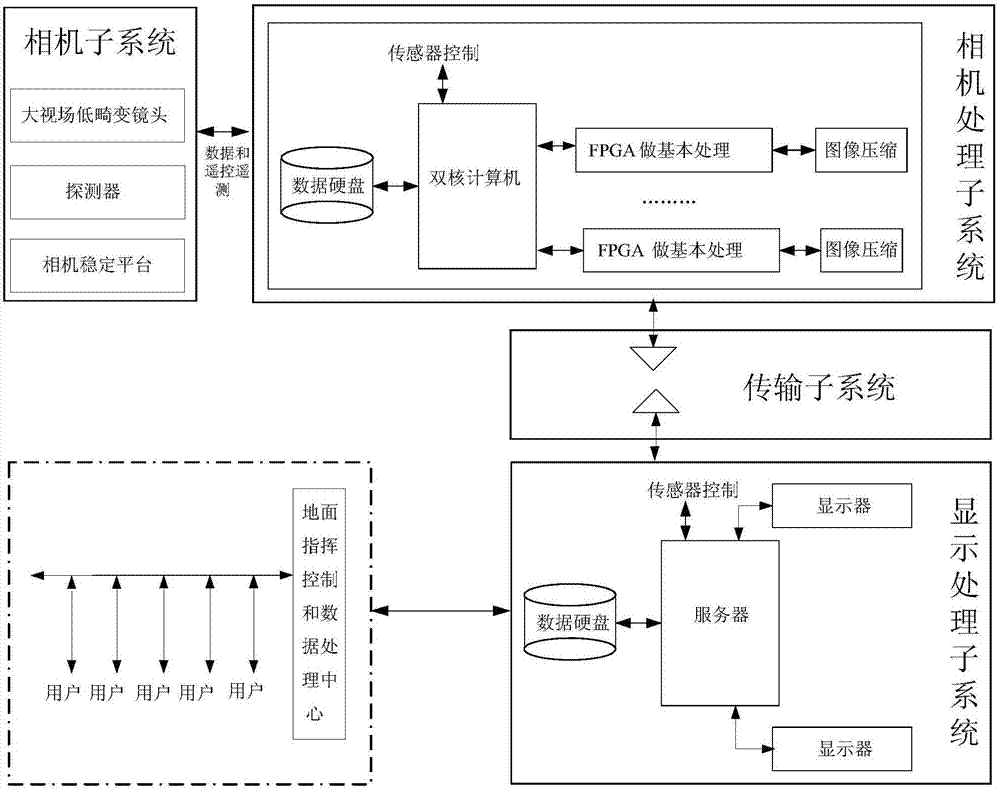
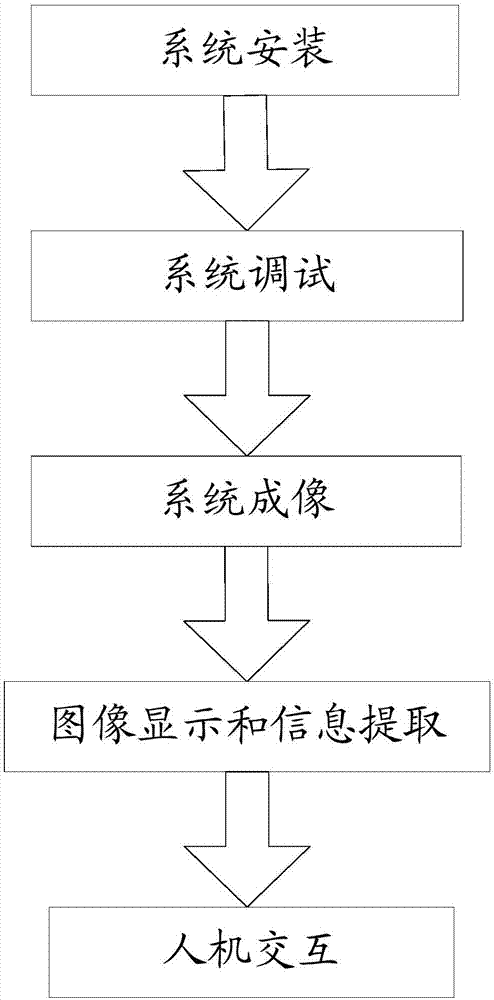
[0029] Such as Figure 1-3 As shown, an intelligent reconnaissance and surveillance photoelectric system includes: a camera subsystem, a camera processing subsystem, a transmission subsystem, and a display processing subsystem.
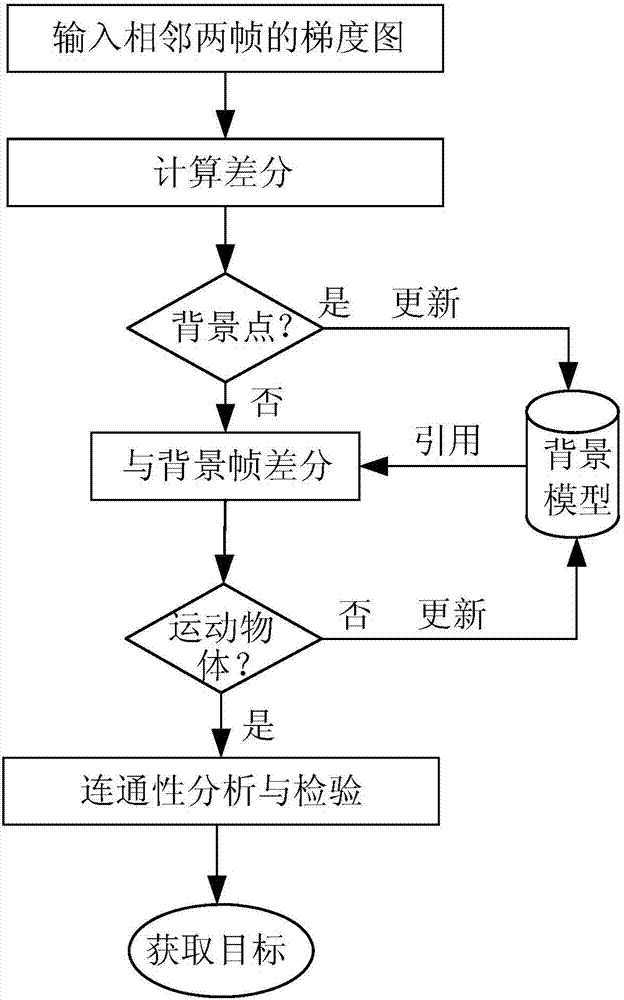
[0030] The camera subsystem includes a lens, a detector and a camera stabilization platform. The lens and the detector are arranged in the camera. The lens is a large field of view low distortion lens, and the large field of view low distortion lens can make different directions enter the lens. The light can be incident on the surface of the detector vertically or approximately vertically, increasing the light sensitivity of the detector and ensuring the clarity of the image; the detector is used to convert the optical information signal into an electronic signal image information, which consists of a single block with a small pixel size and a large surface Array devices or multiple detectors are spliced to form a large-format detector back, which c...
PUM
 Login to View More
 Abstract
Description
Claims
Application Information
 Login to View More