
Detecting method of nucleic acid mass spectrum for liver cancer susceptibility gene early screening
A technology of nucleic acid mass spectrometry and liver cancer, which is applied in the field of gene detection and can solve problems affecting the sensitivity of liver cancer
- Summary
- Abstract
- Description
- Claims
- Application Information
AI Technical Summary
Problems solved by technology
Method used
Image

Examples
Embodiment 1
[0140] Example 1: Feasibility analysis of SNPs of human liver cancer susceptibility-related genes and screening of gene mutation sites related to liver cancer
[0141] The inventors of the present invention searched NCBI domestic and foreign genome-wide association study (genome-wide association study, GWAS) research literature and related patents (patent literature 5 and non-patent literature 11, etc., including but not limited to This), while searching the GWAS Catalog database and cancer-related databases such as COSMIC, CIViC, ICGC, and MYCANCER GENOME, screened out more than 1,000 positive samples from the Asian population and more than 500 positive samples from the Chinese population in the GWAS study. The inventors screened and evaluated the liver cancer-related sites verified in the research, and selected 4 liver cancer hotspot mutations and 23 single nucleotide polymorphism sites that are significantly related to the risk of liver cancer in Asian populations , and are...
Embodiment 2
[0160] Embodiment 2: Detection of liver cancer cell lines by the technology of the present invention
[0161] 1. Research object
[0162] It is feasible to select 6 liver cancer cell lines (all of which can be purchased from ATCC) with known mutation sites SNU-475, C3A, PLC / PRF / 5, SK-HEP-1, SNU-387, and SUN-449 for the detection method For sex analysis, normal human genome DNA (gDNA) (extracted from the oral mucosa tissue of normal people in Wuhan General Hospital of Guangzhou Military Region) was set up as a negative control, and water (H 2 0) as a blank control.
[0163] 2. Experimental steps
[0164] (1) Extract DNA to obtain a DNA extract;
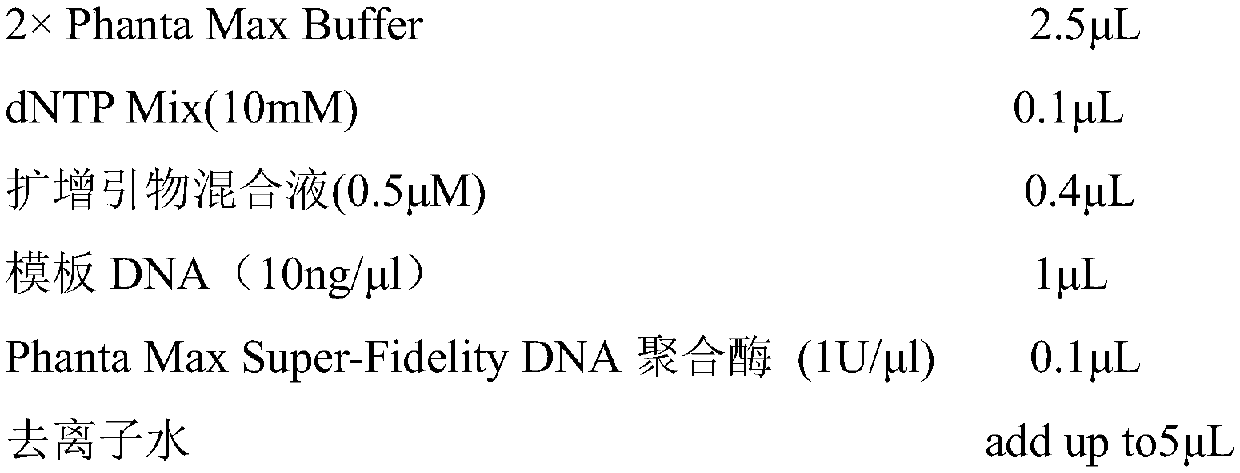
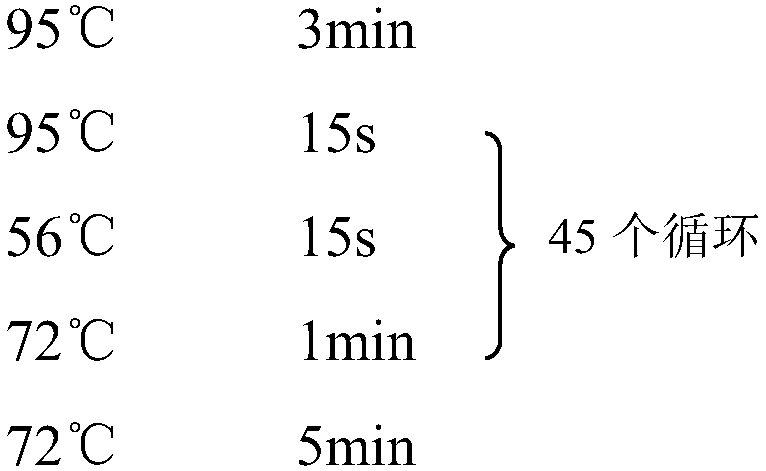
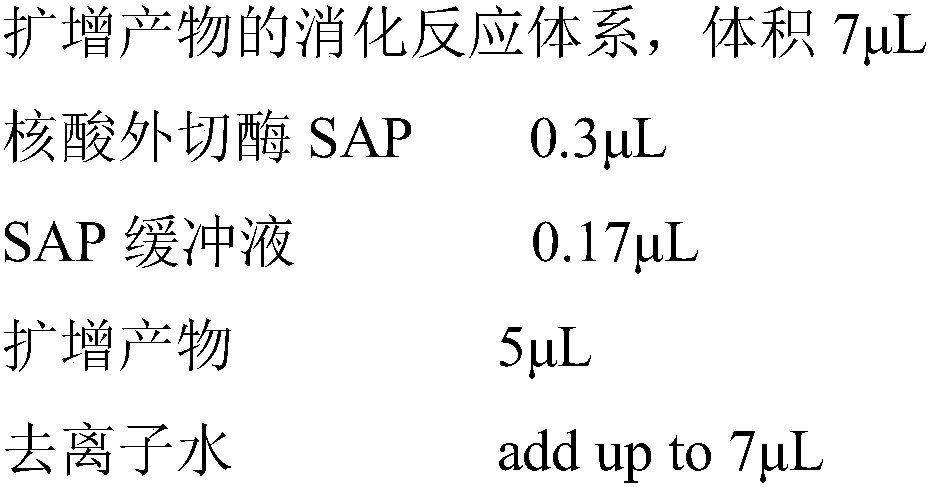
[0165] (2) As shown in Table 1, respectively mix 19 pairs of amplification primers of P1 group, 7 pairs of amplification primers of P2 group and 1 pair of amplification primers of P3 group, and add the mixed specific amplification primers to DNA Extract the solution, and then carry out PCR amplification reaction in the amplificatio...
Embodiment 3
[0190] Example 3: Detection of SNPs and mutation sites of genes related to early diagnosis of liver cancer in peripheral blood samples
[0191] 1. Research object
[0192] In this study, peripheral venous blood samples from Wuhan General Hospital of Guangzhou Military Command were used for genetic testing of samples, and the number of cases was 30. The control group was a sample of healthy people from local health checkups.
[0193] 2. Experimental steps
[0194] The specific steps of applying the technology of the present invention to detect the SNPs and mutation sites of genes related to the early diagnosis of liver cancer in peripheral blood samples are as follows:
[0195] (1) Use the rapid extraction kit to extract cfDNA:
[0196] (a) Take 200 μl of collected peripheral blood and put it into a 1.5ml centrifuge tube. Add 200 μl of binding solution CB, shake it upside down vigorously immediately, and mix well, then add 20ul proteinase K (20mg / ml) solution, shake it upsi...
PUM
 Login to View More
 Abstract
Description
Claims
Application Information
 Login to View More