A Method of Adaptive Time-Frequency Transformation of Polynomial Phase Signal Based on Simulated Annealing

A phase signal, simulated annealing technology, applied in the field of signal analysis, can solve problems such as practical operation and operation process of modern optimization algorithms that are not specified in detail
CN107622035BActive Publication Date: 2020-07-17PLA PEOPLES LIBERATION ARMY OF CHINA STRATEGIC SUPPORT FORCE AEROSPACE ENG UNIV

Patent Information

Authority / Receiving Office
CN · China
Patent Type
Patents(China)
Current Assignee / Owner
PLA PEOPLES LIBERATION ARMY OF CHINA STRATEGIC SUPPORT FORCE AEROSPACE ENG UNIV
Publication Date
2020-07-17

Smart Images

  • Figure 1
    Figure 1
  • Figure 2
    Figure 2
  • Figure 3
    Figure 3
Patent Text Reader

Abstract

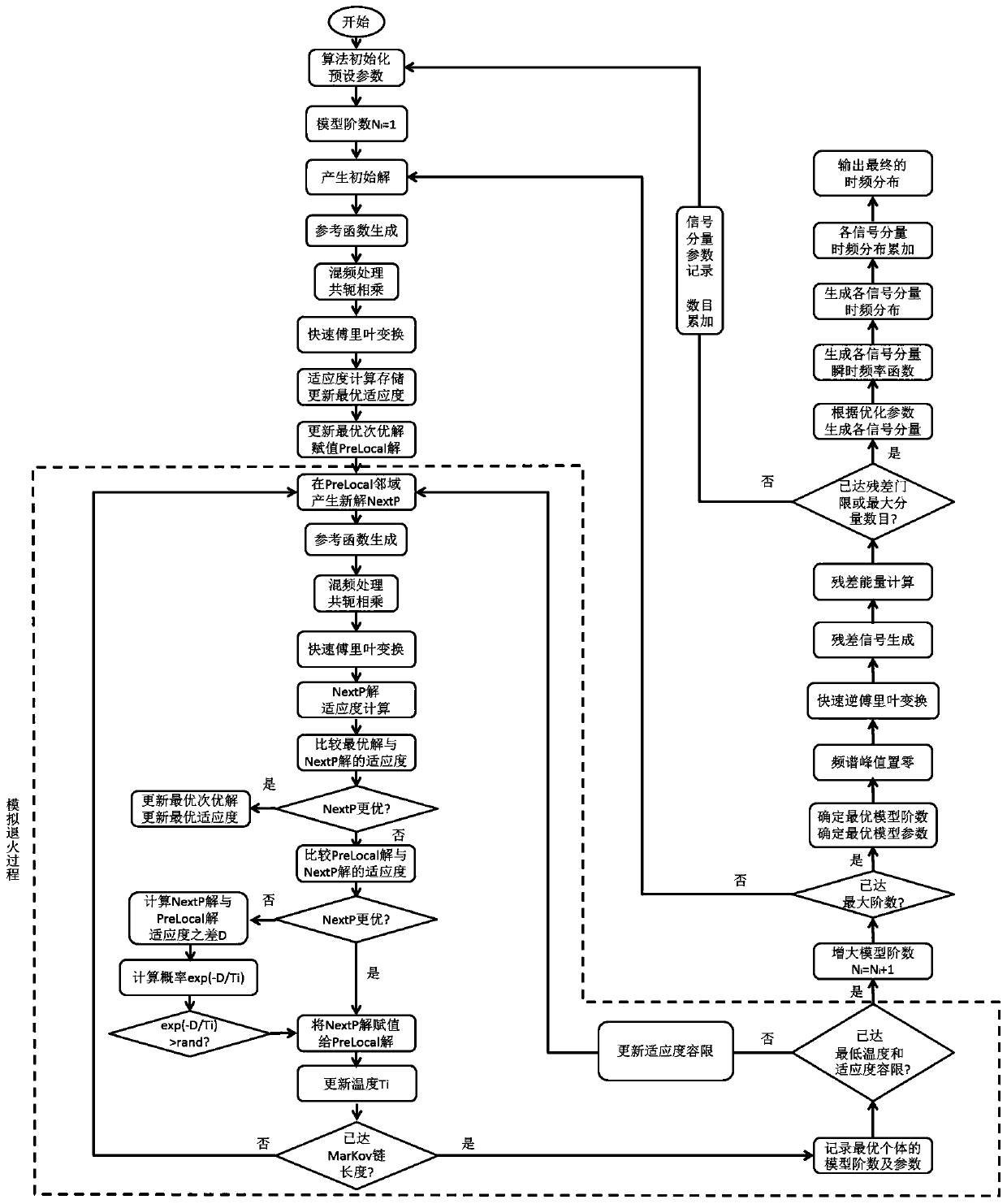
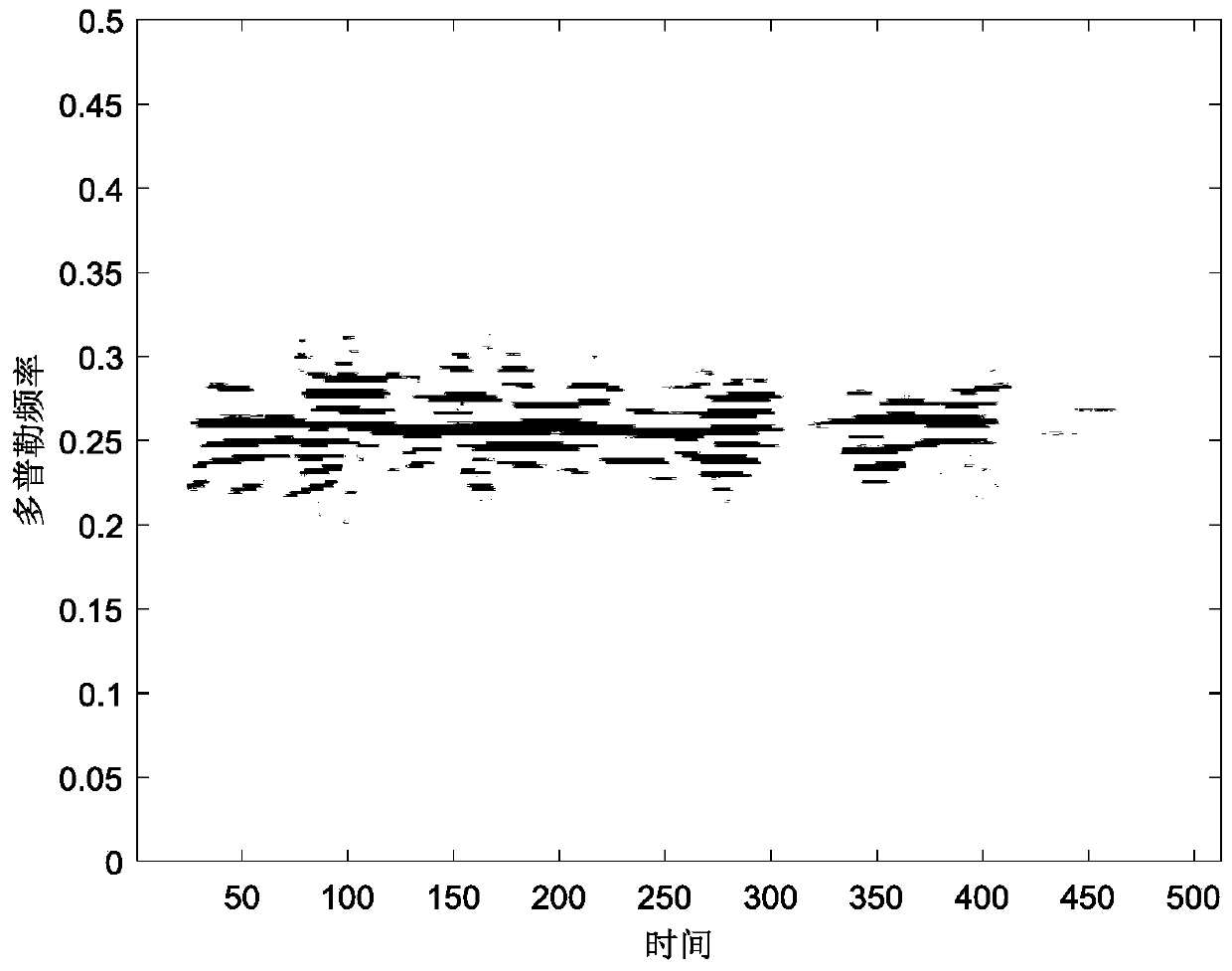
The invention provides an adaptive time-frequency transform method of polynomial phase signal on the basis of simulated annealing, and can finish the time-frequency decomposition of the polynomial phase signal. Each signal component obtained by decomposition is a single component which only corresponds to one frequency point at any moment; then, the instantaneous frequency values of each signal component and each moment are used; only a Sinc function responded by a main lobe is retained to directly calculate and generate corresponding signal frequency distribution at a corresponding moment; across term defect in traditional time-frequency transform that one moment corresponds to the non single component of a plurality of frequency points is overcome; and finally, time-frequency distribution with an optimal time-frequency combined resolution ratio without any cross term interference is finally output. The method has the advantages of simple principle and convenience in operation, the adverse effect of the cross term interference and the loss of the time-frequency combined resolution ratio of a classical time frequency analysis method can be overcome, and the time-frequency analysisquality and benefit of a non-stationary polynomial phase signal can be effectively improved.
Need to check novelty before this filing date? Find Prior Art

Description

technical field

[0001] The invention belongs to the field of signal analysis, in particular to a polynomial phase signal adaptive time-frequency transformation method based on simulated annealing. Background technique

[0002] Many natural and artificial signals, such as speech, biomedical signals, waves propagating in dispersive media, mechanical vibrations, animal sounds, music, radar, sonar signals, etc., are typical non-stationary signals, which are characterized by continuous Time is limited, and the frequency is time-varying, non-stationary, nonlinear, non-uniform, non-structural, non-deterministic, non-integrable, non-reversible, amorphous, irregular, non-continuous, non-smooth, non-periodic, non-smooth symmetrical features. Joint time-frequency analysis (joint time-frequency analysis, referred to as time-frequency analysis) focuses on the time-varying characteristics of real signal components, and expresses a one-dimensional time signal in the form of a two-dimensio...

Claims

the structure of the environmentally friendly knitted fabric provided by the present invention; figure 2 Flow chart of the yarn wrapping machine for environmentally friendly knitted fabrics and storage devices; image 3 Is the parameter map of the yarn covering machine
Login to View More