
A signal peptide that can be used to improve secretion efficiency and its application
A signal peptide and efficiency technology, applied in the field of signal peptides, can solve the problems of differences in the secretion efficiency of the same protein, and achieve the effects of increased secretion, secretion expression, and improved enzyme activity
- Summary
- Abstract
- Description
- Claims
- Application Information
AI Technical Summary
Problems solved by technology
Method used
Image

Examples
Embodiment 1
[0029] Example 1 Screening of Signal Peptides Efficiently Secreted and Expressed by β-galactosidase
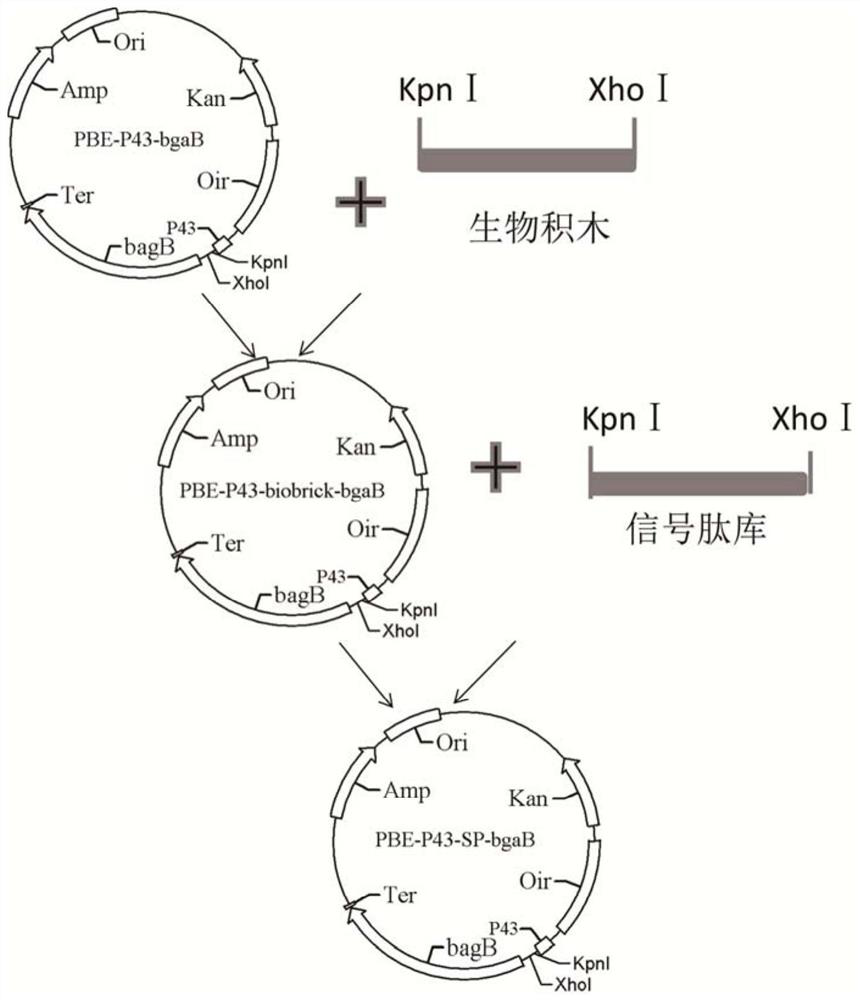
[0030] With reference to the method of (Christian Degering et.Al, 2010), by constructing the expression vector that various signal peptides combine with β-galactosidase coding gene (bgaB) from Bacillus subtilis homologous protein signal peptide library, combine A high-throughput screening method to obtain signal peptides that improve the secretion effect of β-galactosidase to varying degrees from clones, specifically including the following steps:
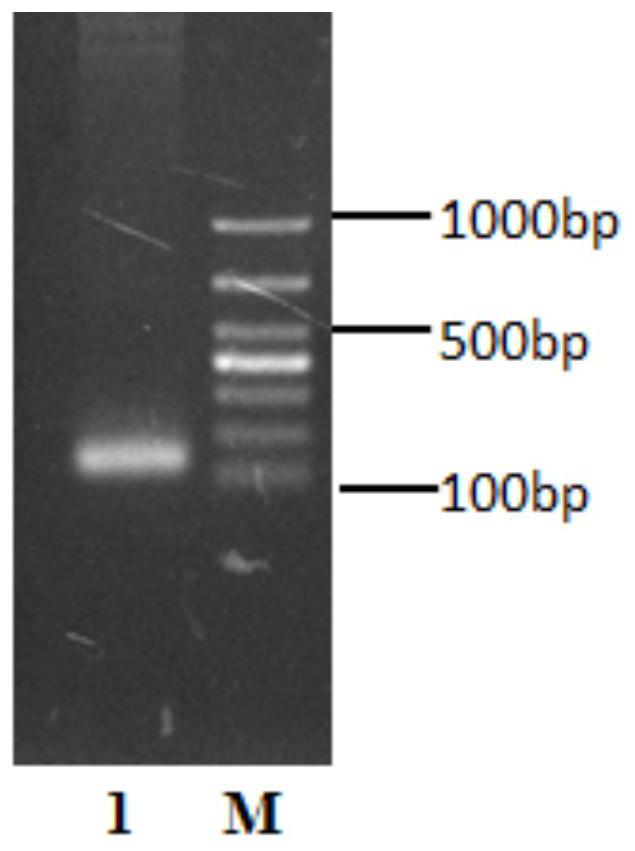
[0031] (1) Construction of pBEp43-biobrick-bgaB vector: The PCR fragment of biobrick (biological building block) obtained by annealing and extending two artificially synthesized fragments of SEQ ID NO.3 and SEQ ID NO.4 has restriction sites KpnI and XhoI, and used Restriction endonuclease digested and purified 100bp PCR product (such as figure 1 ) into the same endonuclease position of the plasmid pBE-P43-bgaB (according to the pa...
Embodiment 2
[0036] The detection of embodiment 2 signal peptide expression levels
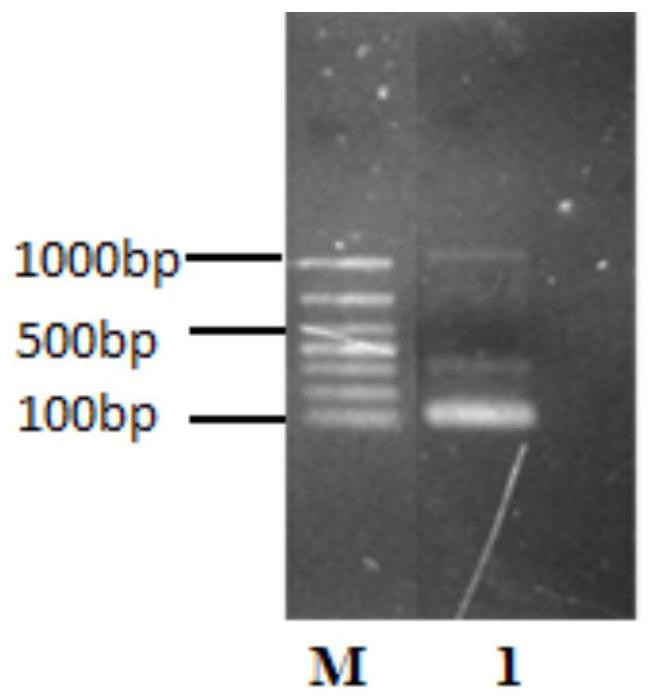
[0037] (1) Construction of MTG (transglutaminase) extracellular expression plasmid: the plasmid pBEp43-proMTG (according to the patent literature: Pan Li et al. A recombinant Bacillus subtilis and its method for producing transglutaminase. CN201210052578 .2[P].2012.Construction) as an expression plasmid, using the pBEp43-SPyocA-bgaB plasmid obtained in Example 1 above as a template, primers F-SPyocA (5'-GAGAGGAATGTCGACATGAAGAAAAAGAGAAAAGGCTGTT-3'), R-SPyocA (5' -CGTTGTCCATCTCGAGGGCGATGACAAAGACAAAAATCAT-3′) amplifies about 100bp SPyocA fragment (see image 3 ). The signal peptide (SPyocA fragment) and the plasmid (pBEp43-proMTG) were connected by the In-fusion method (see the HiFi DNA Assembly Master Mix of NEBuilder for the specific operation method), and the MTG expression extracellular plasmid pBEp43-SPyocA-proMTG was constructed (see Figure 4 ). First transform into Escherichia coli (E.coli JM110) b...
PUM
 Login to View More
 Abstract
Description
Claims
Application Information
 Login to View More