
Multi-end flexible DC power grid fault positioning method and system
A DC power grid and fault location technology, which is applied in the direction of fault location and fault detection according to conductor type, can solve the problems of no multi-terminal flexible DC power grid fault location method, etc., and achieve high practical value, accurate identification, and simple principle.
- Summary
- Abstract
- Description
- Claims
- Application Information
AI Technical Summary
Problems solved by technology
Method used
Image


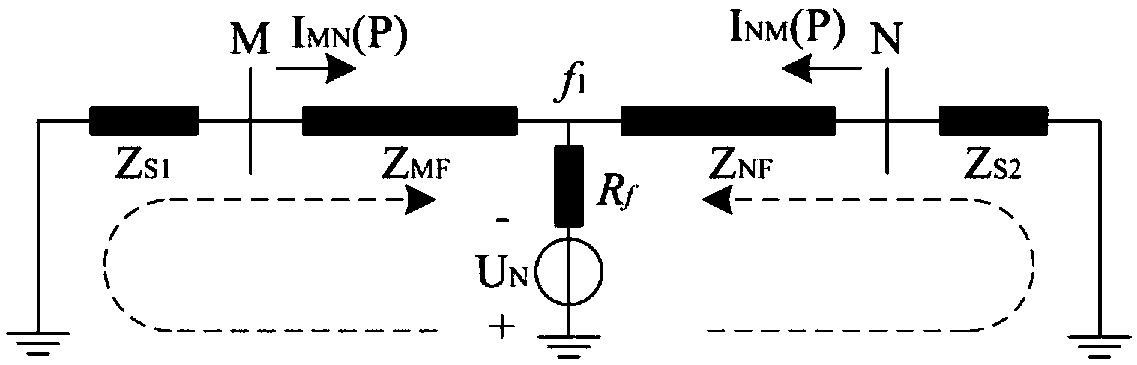
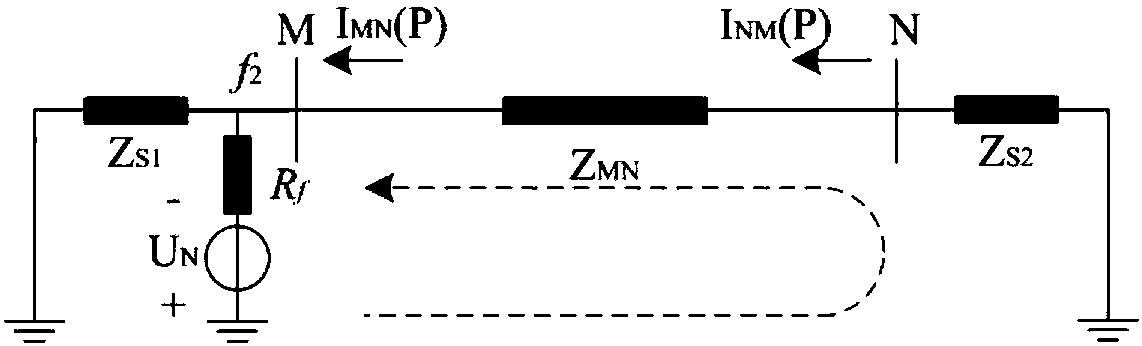
Examples
Embodiment Construction
[0068] The present invention will be further described below in conjunction with accompanying drawing.
[0069] The invention discloses a multi-terminal flexible DC power grid fault location method, such as Figure 6 shown, including the following steps:
[0070] (1) The positive and negative current traveling wave signals are collected in real time on both sides of each DC line, and filtered;
[0071] (2) Extract the positive and negative current traveling wave data of the DC line, and after wavelet transform, calculate the wavelet transform modulus maximum value;
[0072] (3) Establish wavelet transform modulus maxima data validity inspection criterion, record the size, sign, and arrival time of the first wavelet transform modulus maxima satisfying the criterion, for subsequent steps;
[0073] (4) Establish fault pole identification criteria, and carry out fault pole identification based on the difference in modulus maximum value of current traveling wave wavelet transform...
PUM
 Login to View More
 Abstract
Description
Claims
Application Information
 Login to View More