Supercharge Your Innovation With Domain-Expert AI Agents!

Multiaxial-inlay knitted fabric base material production method, multiaxial-inlay knitted fabric base material, and fiber-reinforced composite material

A manufacturing method and multi-axial technology, applied in the directions of non-woven fabrics, warp knitting, textiles and papermaking, etc., can solve the problems of reduced strength and elastic modulus of formed parts, and reduced surface smoothness of formed parts. High volume, good surface smoothness, small mesh effect

Inactive Publication Date: 2018-08-03
MITSUBISHI CHEM CORP
View PDF10 Cites 1 Cited by
  • Summary
  • Abstract
  • Description
  • Claims
  • Application Information

AI Technical Summary

Problems solved by technology

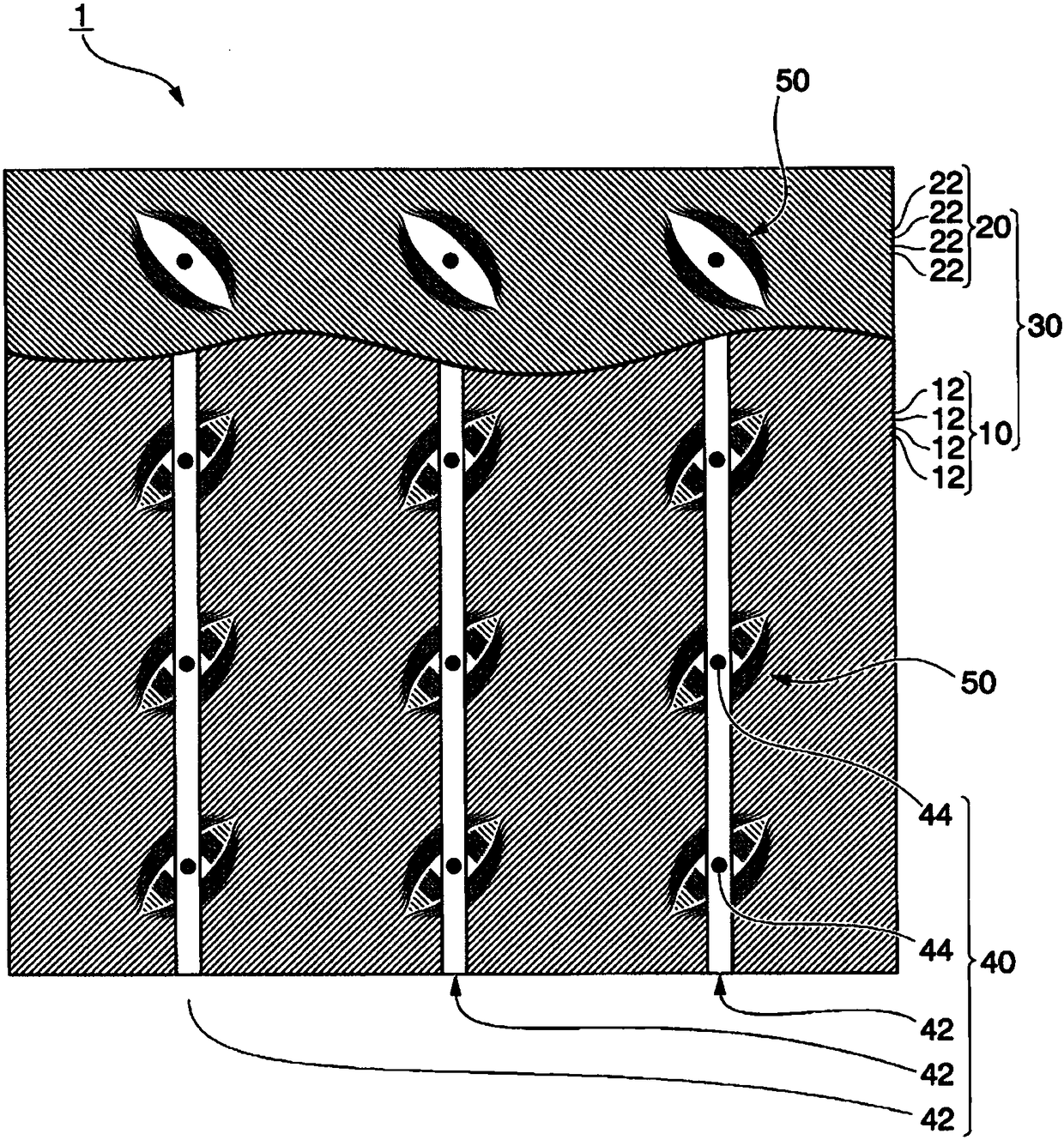
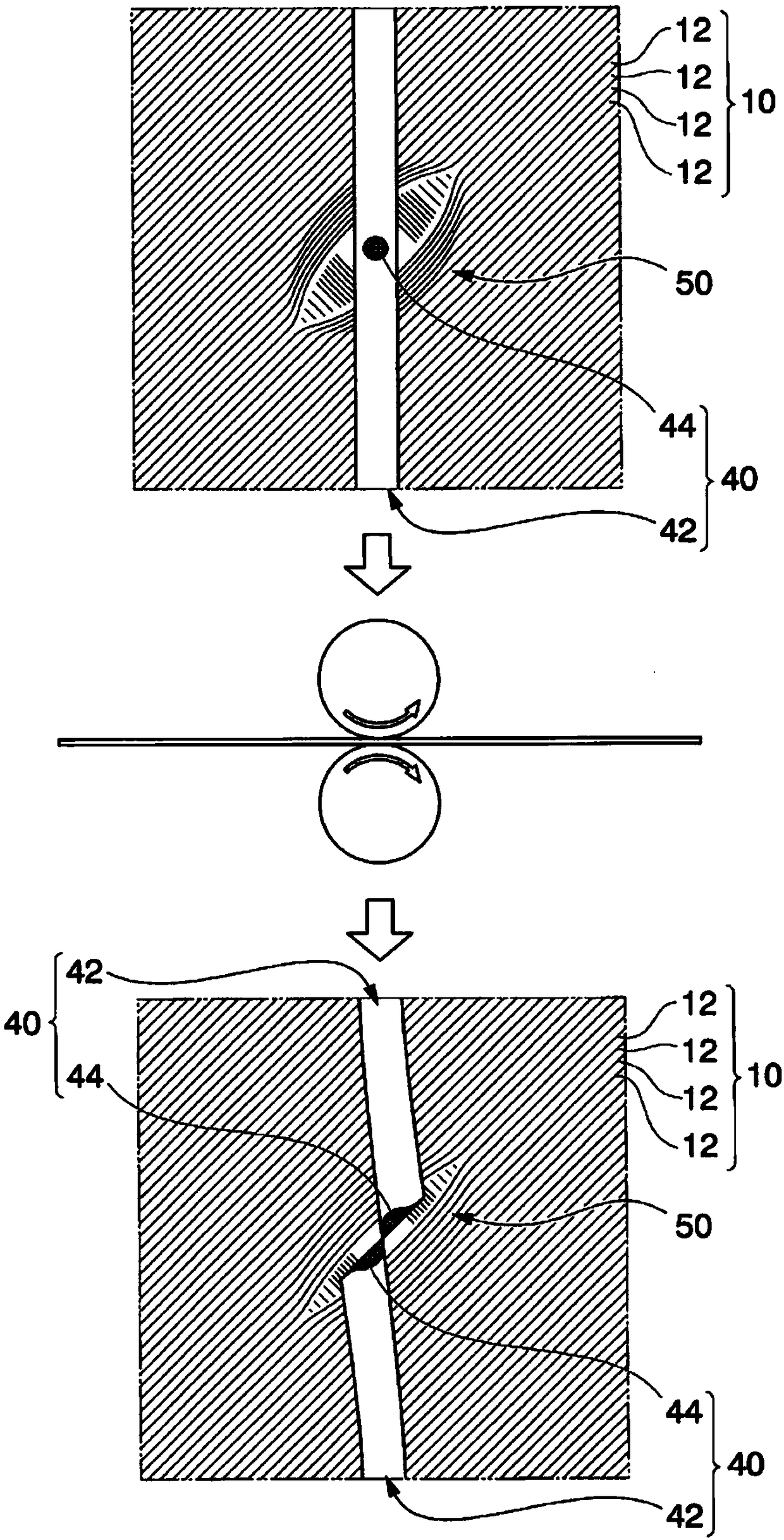
[0007] However, in the case of multiaxial insertion into the braided fabric base material, at the portion where the suture penetrates the reinforcing fiber sheet, the reinforcing fiber is pushed away by the suture, resulting in a roughly diamond-shaped void where no reinforcing fiber exists around the suture. area, so-called mesh
Therefore, when the matrix resin composition impregnated into the multiaxially inserted braided fabric base material is cured, the mesh portion becomes a cause of resin sink marks, which causes a problem that the surface smoothness of the molded article decreases.
In addition, there will also be a problem that the strength and elastic modulus of the molded product will decrease due to the bending of the reinforcing fiber.

Method used

the structure of the environmentally friendly knitted fabric provided by the present invention; figure 2 Flow chart of the yarn wrapping machine for environmentally friendly knitted fabrics and storage devices; image 3 Is the parameter map of the yarn covering machine
View more

Image

Smart Image Click on the blue labels to locate them in the text.
Viewing Examples
Smart Image
  • Multiaxial-inlay knitted fabric base material production method, multiaxial-inlay knitted fabric base material, and fiber-reinforced composite material
  • Multiaxial-inlay knitted fabric base material production method, multiaxial-inlay knitted fabric base material, and fiber-reinforced composite material
  • Multiaxial-inlay knitted fabric base material production method, multiaxial-inlay knitted fabric base material, and fiber-reinforced composite material

Examples

Experimental program
Comparison scheme
Effect test

Embodiment 1

[0124] As the reinforcing fiber, carbon fiber (manufactured by Mitsubishi Rayon Co., Ltd., Pyrofil (Pyrofil, registered trademark) TRW40 50L) was used, and the basis weight of the reinforcing fiber was 150 g / m 2 The reinforced fiber sheet is made of a plurality of reinforced fibers along one axial direction.

[0125]The two obtained reinforcing fiber sheets are stacked such that the axial directions of the reinforcing fibers are orthogonal to each other to form a multiaxial stack.

[0126] Braided polyester thread (manufactured by Tenzler GmBH, dtex78f36text.roh halbmatt, 78dtex, 36F (filament), glass transition temperature 80°C, melting point 220°C, density 1.4g / cm 3 , the nominal diameter of 84.2μm) of the chain knitted structure of the restraining braid, the direction of the reinforcing fibers is +45° / -45° with respect to the reference direction of the multi-axial insertion braid base material to constrain the multi-axial stacks, making them all together to make things lik...

Embodiment 2

[0133] A multiaxial insert knitted fabric base material was obtained in the same manner as in Example 1, except that a single-bar warp knitted constrained knitted fabric was used as the constrained knitted fabric.

[0134] The width of the mesh of the resulting multiaxially inserted woven fabric substrate was 37.3 μm.

Embodiment 3

[0139] A multiaxially inserted knitted fabric base material was obtained in the same manner as in Example 1, except that the load line load in the rolling process was set to 30 N / cm.

[0140] The width of the mesh of the resulting multiaxially inserted woven fabric substrate was 58.3 μm.

the structure of the environmentally friendly knitted fabric provided by the present invention; figure 2 Flow chart of the yarn wrapping machine for environmentally friendly knitted fabrics and storage devices; image 3 Is the parameter map of the yarn covering machine
Login to View More

PUM

PropertyMeasurementUnit
thicknessaaaaaaaaaa
glass transition temperatureaaaaaaaaaa
Login to View More

Abstract

The purpose of the present invention is to provide: a highly efficient method for producing a multiaxial-inlay knitted fabric base material; a multiaxial-inlay knitted fabric base material that is excellent in surface smoothness and enables to produce a molded article of high strength and elastic modulus; and a fiber-reinforced composite material comprising the multiaxial-inlay knitted fabric basematerial. Provided are: a multiaxial-inlay knitted fabric base material production method that comprises conducting a pressurization and heating treatment under specific conditions to a multiaxial-inlay knitted fabric base material precursor (1) that includes a multiaxial stack (30), and a stitching thread (42) which is disposed so as to restrain the multiaxial stack (30) and which may be formedinto a restraining knitted fabric (40); and a multiaxial-inlay knitted fabric base material, in which the width of the openings (50) between the reinforcement fibers constituting the multiaxial-inlayknitted fabric base material is equal to or less than the nominal diameter of the stitching thread (42) that may be formed into the restraining knitted fabric (40).

Description

technical field [0001] The invention relates to a manufacturing method of a multiaxially inserted braided base material, a multiaxially inserted braided base material and a fiber-reinforced composite material. [0002] This application claims priority based on Japanese Patent Application No. 2015-243446 for which it applied in Japan on December 14, 2015, and incorporates the content into this specification. Background technique [0003] Fiber-reinforced composite materials composed of various reinforcing fibers and various matrix resins are lightweight and have good mechanical properties, so they are widely used in aerospace applications (aircraft parts, etc.), automotive applications (automotive parts), sports Applications (sporting goods, bicycle parts, etc.), construction applications (reinforcement materials for buildings, etc.), general industrial applications, etc. [0004] As a method for producing a fiber-reinforced composite material, for example, there is known a ...

Claims

the structure of the environmentally friendly knitted fabric provided by the present invention; figure 2 Flow chart of the yarn wrapping machine for environmentally friendly knitted fabrics and storage devices; image 3 Is the parameter map of the yarn covering machine
Login to View More

Application Information

Patent Timeline
no application Login to View More
Patent Type & Authority Applications(China)
IPC IPC(8): D04H3/04B32B5/00B32B5/02B32B5/06B32B5/12D04B21/14
CPCB32B5/00B32B5/02B32B5/12D04B21/14D04H3/04D04B21/165B32B5/06D10B2403/02412D10B2505/02B32B5/026B32B5/26B32B37/06B32B37/10D04B21/145
Inventor 原田耕志伊藤稔之
Owner MITSUBISHI CHEM CORP
Features
  • R&D
  • Intellectual Property
  • Life Sciences
  • Materials
  • Tech Scout
Why Patsnap Eureka
  • Unparalleled Data Quality
  • Higher Quality Content
  • 60% Fewer Hallucinations
Social media
Patsnap Eureka Blog
Learn More