
A express sorting method based on genetic algorithm
A genetic algorithm and population technology, applied in the field of express sorting based on genetic algorithm, can solve problems such as unsuitable express delivery services, and achieve the effects of avoiding repeated sorting, reducing the probability of express damage, and saving sorting costs
Patent Information
- Authority / Receiving Office
- CN · China
- Patent Type
- Patents(China)
- Current Assignee / Owner
- Publication Date
- 2021-10-15
Smart Images
Figure 1 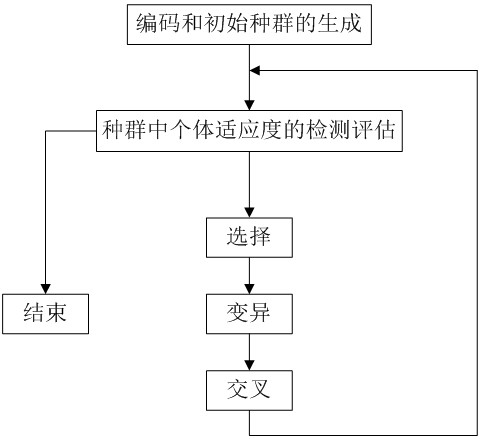
Figure 2 
Figure 3
Abstract
Description
technical field
[0001] The invention relates to the technical field of express sorting, in particular to a genetic algorithm-based express sorting method. Background technique
[0002] With the popularization and development of Internet technology, e-commerce and online shopping are booming. As an important supporting business, the express delivery industry has developed rapidly, and the business volume of express delivery service companies has grown rapidly. Today's express delivery service companies can no longer meet the current growing express delivery business needs. In order to reduce the intermediate operation links, the express delivery company needs to classify the express delivery of different destinations, pack them into bags and transport them in a unified manner. However, traditional manual sorting is easy to cause misclassification and wrong packaging, which affects the time limit for signing and receiving express parcels.
[0003] At present, in the delivery...
Examples
Embodiment 1
[0068]
[0069] Algorithm 1 is the optimal subset selection algorithm, which uses genetic algorithm to obtain M subsets in the set, and then selects an optimal individual from the subset. Lines 1 to 3 of the algorithm are initialized, where the first line represents the encoding of the set P2, the second line generates an initial population of M, and the third line crosses the initial population to obtain a new population twice the number of the initial population; Lines 4 to 8 represent the T generation of population inheritance, in which the 8th line selects better individuals for inheritance, the 9th line evolution includes crossover and mutation; the last 10th line selects the best individual from the last generation of population.
[0070] £ is the unpacking rate, that is, the ratio of the number of packages that can be unpacked and reorganized in the current sorting center to the total number of packages.