Recombinant G-17 protein, gene for encoding recombinant protein and application of gene for encoding recombinant protein

A recombinant protein and protein technology, applied in the application, genetic engineering, plant genetic improvement and other directions, to achieve the effect of improving the probability, enhancing the detection sensitivity, saving time and economic cost

CN111116730APending Publication Date: 2020-05-08南京拂晓生物科技有限公司
6 Cites 0 Cited by

Patent Information

Authority / Receiving Office
CN · China
Current Assignee / Owner
Publication Date
2020-05-08

Smart Images

  • Figure 1
    Figure 1
  • Figure 2
    Figure 2
  • Figure 3
    Figure 3
Patent Text Reader

Abstract

The invention provides recombinant G-17 protein, a gene for encoding the recombinant protein and application of the gene for encoding the recombinant protein. An amino acid sequence of the recombinantG-17 protein is shown in SEQ ID NO: 1 as shown in the description, and a base sequence of the gene for encoding the recombinant G-17 protein is shown in SEQ ID NO: 2 as shown in the description. According to the recombinant G-17 protein, the gene for encoding the recombinant protein and application of the gene for encoding the recombinant protein, after a G-17 antigen epitope sequence is connected with a sequence of a B cell epitope of insulinoma-related protein IA-2 and a Th2 cell epitope of a C terminal of P277 through flexible fragments, the amino acid sequence of the recombinant G-17 protein is formed; and mice are immunized against the recombinant G-17 protein, and an ELISA detection antibody titer value reaches 1:106, so that specific detection and recognition of G-17 are achieved,not only is the detection sensitivity enhanced, but also distortion of a detection result is avoided, the probability of subsequent screening of a high-specificity antibody is improved, and the time and the economic cost are saved.
Need to check novelty before this filing date? Find Prior Art

Description

Technical field

[0001] The invention belongs to the technical field of biological products, and particularly relates to a recombinant G-17 protein, a gene encoding the recombinant protein, and applications thereof. Background technique

[0002] Gastrin is a gastrointestinal hormone secreted mainly by G cells in the gastric antrum and duodenum. It plays an important role in regulating the function of the digestive tract and maintaining its structural integrity. In the human body, more than 95% of gastrin with biological activity is α-amidated gastrin, which mainly contains two isomers G-17 and G-34, of which 80% to 90% are G-17. G-17 is only secreted by G cells in the gastric antrum. Therefore, G-17 is an important indicator of gastric mucosal damage. It combines with cholecystokinin receptor (CCKR) and exerts its biological function through a series of signal transduction. It is mainly involved in stimulating gastric acid secretion and nourishing the mucosa of the gastrointestin...

Examples

Embodiment

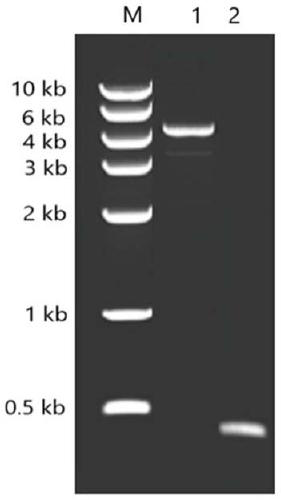
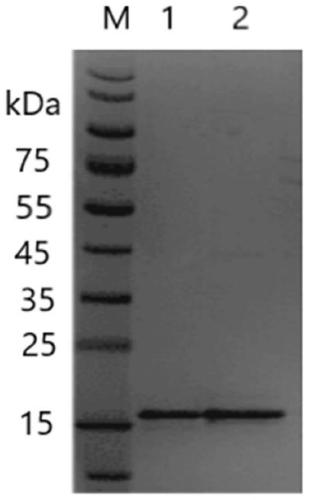
[0024] With G-17 as the target antigen, the epitope sequence is connected with the B cell epitope of insulinoma-associated protein IA-2 and the C-terminal Th2 cell epitope sequence of P277 through a flexible fragment (five consecutive glycines) to form The amino acid sequence of the recombinant G-17 protein is shown in SEQ ID NO.:1; the base sequence of the gene encoding the recombinant G-17 protein is shown in SEQ ID NO.:2.

[0025] This embodiment provides a method for preparing the recombinant G-17 protein, which includes the following steps:

[0026] (1) Construction of recombinant expression vector

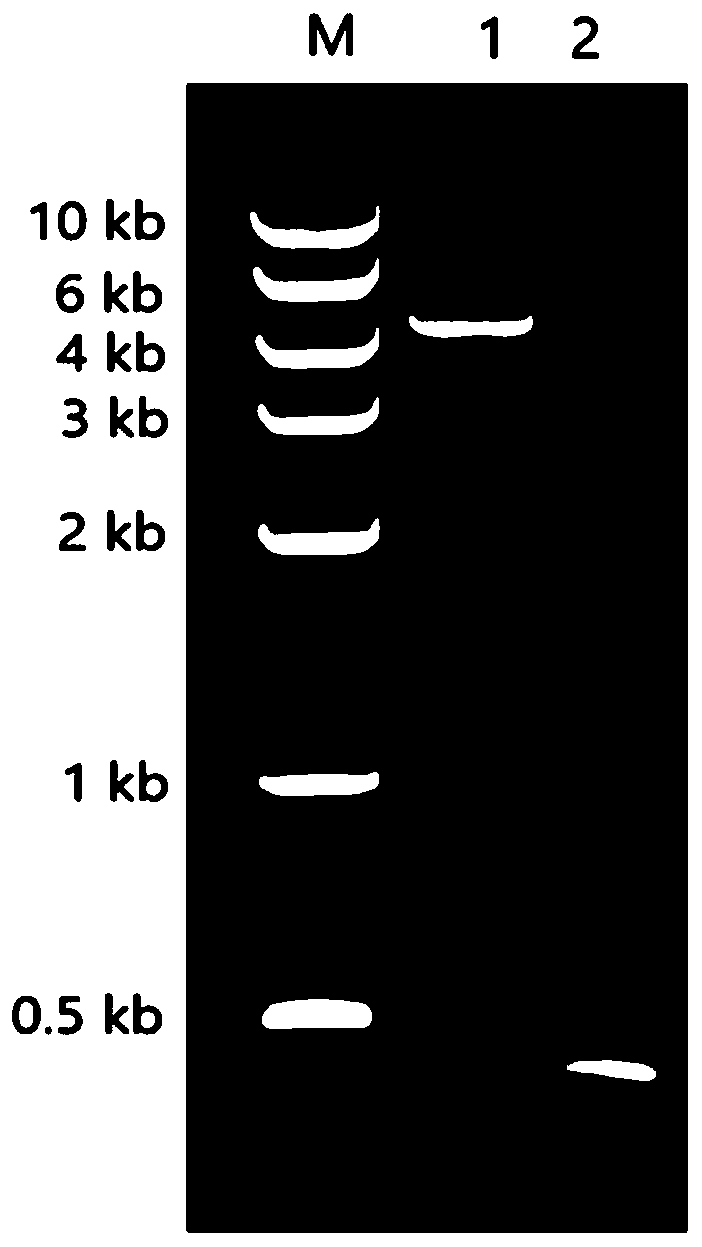
[0027] The pMD19-T vector and pET-28a(+) vector (TaKaRa) containing the target gene were digested with restriction enzymes NcoI and EcoRI (New England BioLabs) at 37°C for 12 hours, and the products were digested separately Perform 1% agarose gel electrophoresis, and cut the gel to recover the target gene and pET-28a(+) vector (the gel recovery kit used in this example is from Tian...