

Electric power protective clothing
A technology of protective clothing and electric power, which is applied in the field of electric protective clothing, can solve the problems of less functionality and inability to realize auxiliary functions, etc., and achieve the effect of avoiding influence and maintaining dryness
Patent Information
- Authority / Receiving Office
- CN · China
- Patent Type
- Applications(China)
- Current Assignee / Owner
- Publication Date
- 2021-02-19
- Estimated Expiration
- Not applicable · inactive patent
Smart Images
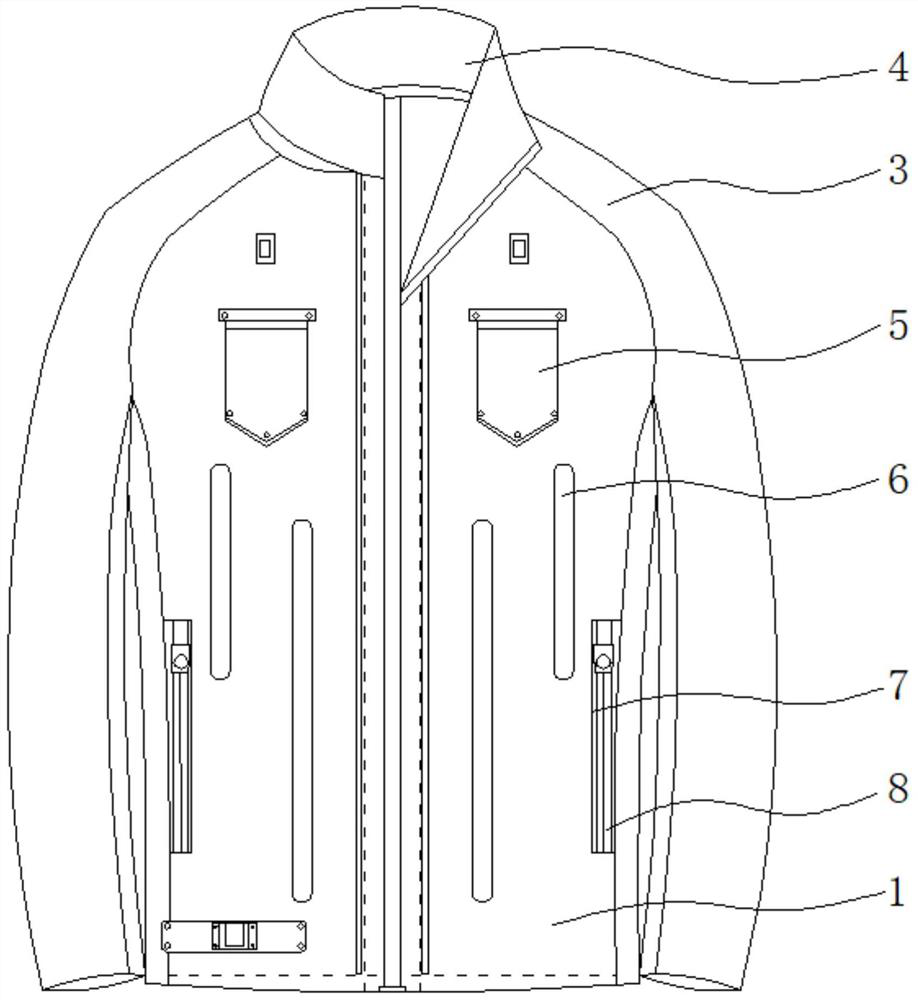
Figure 1 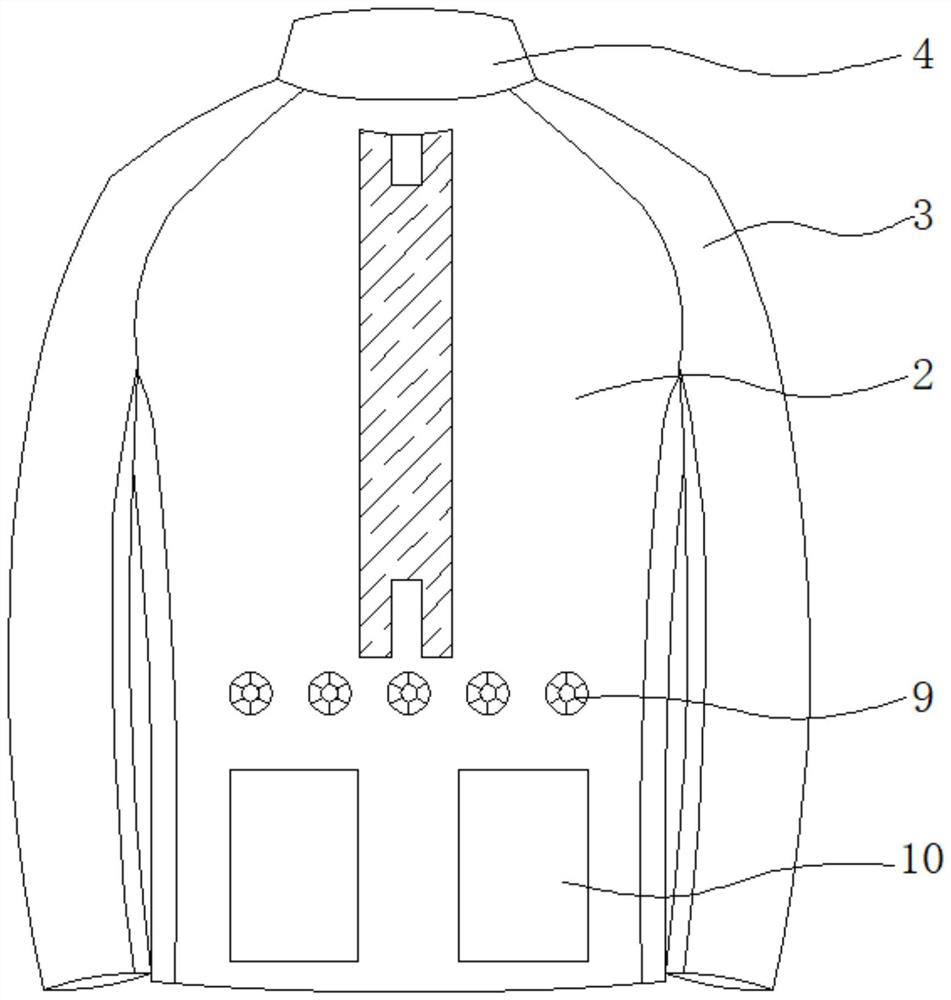
Figure 2 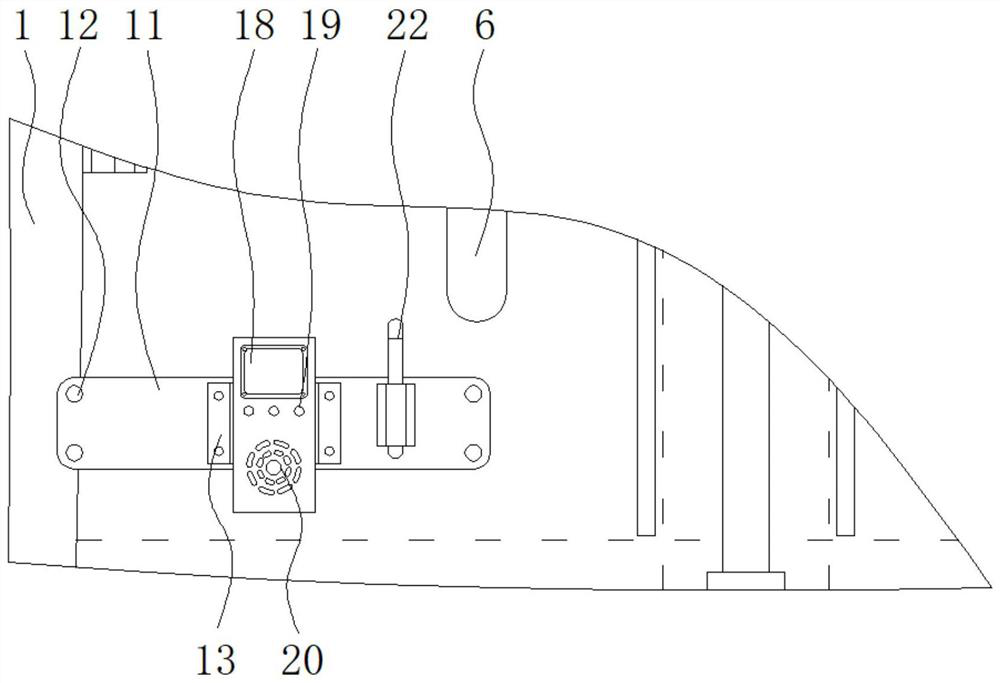
Figure 3
Abstract
Description
technical field
[0001] The invention relates to the technical field of electric protective clothing, in particular to electric protective clothing. Background technique
[0002] The types of protective clothing include fire protection clothing, industrial protective clothing, medical protective clothing, military protective clothing and protective clothing for special groups. Protective clothing is mainly used in fire protection, military industry, shipbuilding, petroleum, chemical industry, painting, cleaning and disinfection, laboratories According to the protective function, it can be divided into healthy protective clothing, such as radiation protection clothing, cold protection clothing, heat insulation clothing and antibacterial clothing, etc.; safety protective clothing, such as flame retardant clothing, flame retardant protective clothing, arc protective clothing, anti Electrostatic suits, bulletproof suits, stab-proof suits, spacesuits, diving suits, acid-proof suit...
Examples
Embodiment Construction
[0028] The following will clearly and completely describe the technical solutions in the embodiments of the present invention with reference to the accompanying drawings in the embodiments of the present invention. Obviously, the described embodiments are only some, not all, embodiments of the present invention.
[0029] In the description of the present invention, unless otherwise stated, the meaning of "plurality" is two or more; the terms "upper", "lower", "left", "right", "inner", "outer" , "front end", "rear end", "head", "tail", etc. indicate the orientation or positional relationship based on the orientation or positional relationship shown in the drawings, and are only for the convenience of describing the present invention and simplifying the description, rather than Nothing indicating or implying that a referenced device or element must have a particular orientation, be constructed, and operate in a particular orientation should therefore not be construed as limiting ...