Small stabilized platform friction torque testing method based on force balance

A stable platform and friction torque technology, applied in the field of photoelectric detection, can solve problems such as inertial moment measurement interference, uneven speed, etc., and achieve the effects of improving accuracy, enhancing anti-interference ability, and broad application prospects

CN112504527AActive Publication Date: 2021-03-16LUOYANG INST OF ELECTRO OPTICAL EQUIP OF AVIC
7 Cites 3 Cited by

Patent Information

Authority / Receiving Office
CN · China
Patent Type
Applications(China)
Current Assignee / Owner
Publication Date
2021-03-16

Smart Images

  • Figure 1
    Figure 1
  • Figure 2
    Figure 2
  • Figure 3
    Figure 3
Patent Text Reader

Abstract

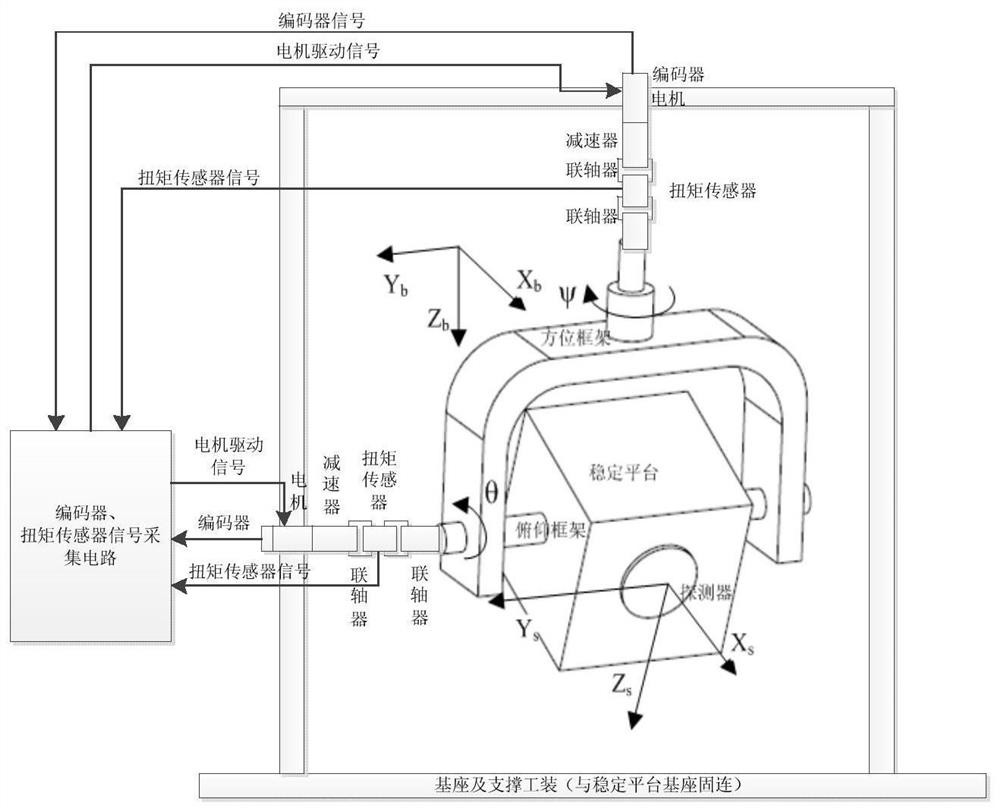
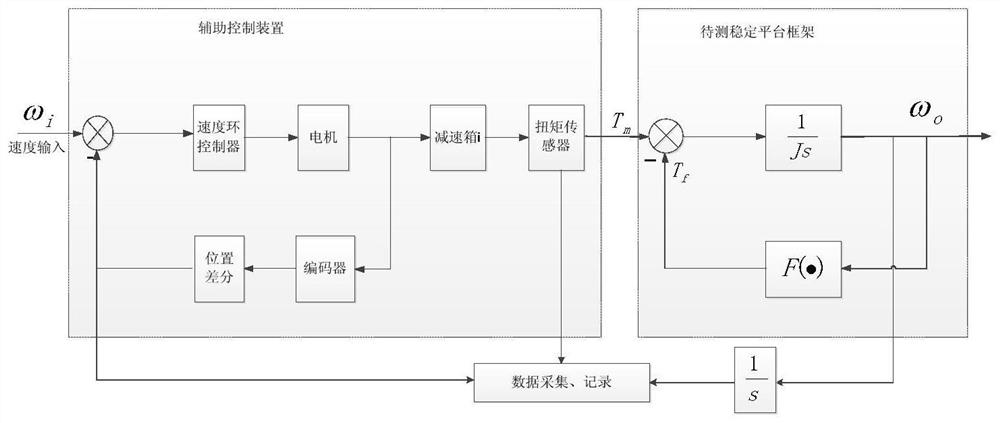
The invention relates to a small stabilized platform friction torque testing method based on force balance, a control device composed of a motor, an encoder, a reduction gearbox and a torque sensor isadded on a stabilized platform frame to provide accurate and uniform angular rotation, and the torque sensor is connected with the platform frame and the reduction gearbox through a coupling to drivethe frame to rotate at a uniform speed. The moment transmitted by the moment sensor and the friction moment of the stabilized platform frame keep moment balance. Friction torques at different speedsand different positions are obtained by collecting information of an encoder, a torque sensor and an angle sensor, so that consistency of optical machine installation and adjustment is evaluated, compensation is performed in a stability control algorithm, the anti-interference capability of the photoelectric stabilized platform is enhanced, and the accuracy of optical axis pointing is improved.
Need to check novelty before this filing date? Find Prior Art

Description

technical field

[0001] The invention relates to a test method for friction torque of a small stable platform based on force balance, and belongs to the technical field of photoelectric detection. Background technique

[0002] The main task of the airborne optoelectronic stabilization platform is to isolate the disturbance of the carrier base and ensure the stable orientation of the optical axis in the inertial space. However, the angular velocity and angular acceleration of the carrier base will be coupled to the optical axis through the relative relationship between the coordinate systems of the frame axes and the geometric constraints and frictional constraints between the axis systems. For a small photoelectric stabilized platform with a ratio of friction torque to moment of inertia greater than 20rad / s2, the friction torque will increase sharply relative to the platform inertia, and the coupling of friction constraints is particularly obvious, which has a crucial impact ...

Examples

Embodiment Construction

[0024] Now in conjunction with embodiment, accompanying drawing, the present invention will be further described:

[0025] A small stable platform friction torque test method based on force balance, by adding a control device consisting of a motor, encoder, reduction box, and torque sensor to the stable platform frame to provide accurate and uniform angular rotation, the torque sensor is connected to the platform through a coupling The frame and the reduction box drive the frame to rotate at a constant speed, and the torque transmitted by the torque sensor and the friction torque of the stable platform frame maintain a torque balance. By collecting information from encoders, torque sensors, and angle sensors, the friction torque at different speeds and different positions can be obtained, so as to evaluate the consistency of optical-mechanical assembly and adjustment, and compensate in the stability control algorithm to enhance the anti-interference ability of the photoelectric...